Dinner · Part 2 of 3: Instructions
Crispy Copycat Cane’s Chicken Fingers with Buttermilk Marinade Step-by-step instructions
- Prep
- Cook
- Total
- Serves
- 4
Before you start
Before you start, set up your workstation: have the buttermilk marinade ready, the flour mixture in a shallow dish, and a wire rack over a baking sheet nearby. Ensure the chicken is fully thawed if frozen. Preheat the oil in a deep skillet or Dutch oven to 350°F (175°C).
Have tongs and a deep-fry thermometer on hand. The marinade should be done at least two hours ahead, so plan accordingly. If you're short on time, even 30 minutes of marinating will add flavor, but the full two hours is best.
Ingredients at a glance (10)
- 2 lb chicken breast tenders
- 2 cups buttermilk
- 2 tbsp garlic powder
- 2 tbsp smoked paprika
- 1 tbsp kosher salt
- 1 tsp black pepper
- 2 cups all-purpose flour
- 1 tsp cayenne pepper
- 4 cups vegetable oil, for frying
- Cane's sauce, for dipping, to taste
Instructions
Marinate and Prep
- Marinate the ChickenIn a large bowl, whisk together the buttermilk, garlic powder, smoked paprika, salt, and black pepper. Add the chicken tenders and turn to coat evenly. Cover and refrigerate for at least 2 hours, or up to 8 hours for deeper flavor.Look for The marinade should be well combined and the chicken fully submerged.Tip For extra tang, add a splash of hot sauce to the marinade, though the video keeps it simple.
- Prepare the CoatingIn a shallow dish, whisk together the flour and cayenne pepper. Set aside. Place a wire rack over a baking sheet near the stove.Look for The flour mixture should be uniform and free of lumps.Tip Season the flour with a pinch of salt and pepper if desired, but the marinade already adds plenty of flavor.
After marinating, the chicken should be fully coated in the buttermilk mixture, which should look creamy and well-seasoned. The flour mixture should be uniform and seasoned. The oil should be heating up, and the wire rack ready. At this stage, the kitchen should smell of garlic, paprika, and buttermilk—a promising start.
Dredge and Fry
- Dredge the ChickenRemove the chicken from the marinade, letting any excess drip off. Dredge each tender in the flour mixture, pressing gently to adhere. Shake off any excess and place on the wire rack. Let the coated tenders rest for 5 minutes to help the coating stick.Look for The coating should be even and dry to the touch.Tip Do not overwork the coating; a light press is enough to get a craggy crust.
- Heat the OilPour the vegetable oil into a deep skillet or Dutch oven to a depth of about 1 inch. Heat over medium-high until a deep-fry thermometer registers 350°F (175°C).Look for The oil should shimmer and a pinch of flour should sizzle immediately.Tip Maintain the temperature between 325°F and 350°F while frying to ensure even cooking.
- Fry the ChickenCarefully add the chicken tenders to the hot oil in batches, without overcrowding. Fry for about 8 minutes, turning occasionally, until deep golden brown and puffy. The internal temperature should reach 165°F (74°C) when measured with an instant-read thermometer.Look for The crust should be deep golden brown and the chicken should feel firm but juicy.Safe temperature 165°F (74°C) internal temperature (poultry)Tip Fry in small batches to keep the oil temperature steady and achieve maximum crispiness.
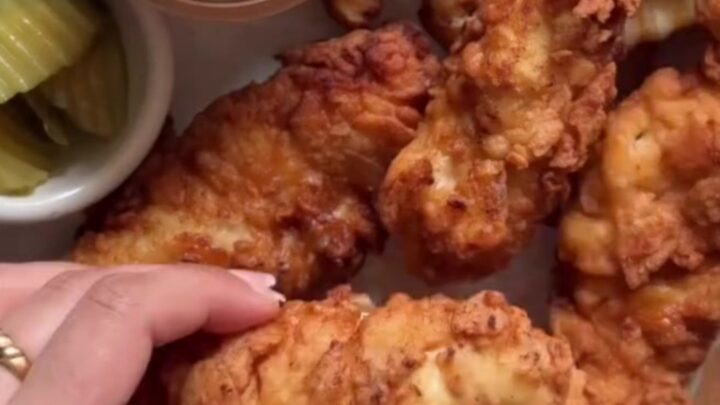
- Drain and RestUsing tongs, transfer the fried chicken tenders to a clean wire rack set over a baking sheet. Let them rest for 2 minutes before serving. This helps the crust stay crisp and the juices redistribute.Look for The tenders should be deeply golden with a craggy, shatteringly crisp surface.Tip Do not place the hot chicken on paper towels, as the steam will soften the crust.
The coated tenders should have a dry, even flour coating. As they fry, the crust will turn a deep golden brown and puff up slightly. The oil should maintain a steady 350°F (175°C), and the chicken should float when done.
The sound of sizzling and the aroma of fried chicken will fill the kitchen. Check that the internal temperature reaches 165°F (74°C) before removing.
Drain and Serve
- Dunk and ServeServe the hot chicken tenders immediately with Cane's sauce on the side for dipping. Dunk each tender deep into the sauce and enjoy the loud crunch.Look for The chicken should be piping hot and the sauce cool and creamy.Tip For the full experience, serve with extra sauce and maybe some crinkle-cut fries.
The fried tenders should be deeply golden with a craggy, shatteringly crisp crust. They should rest on the wire rack, allowing excess oil to drip away. The chicken should be juicy and steaming when cut into. Serve immediately with Cane's sauce for dipping, and enjoy the loud crunch with every bite.
Common mistakes
One common mistake is overcrowding the pan, which lowers the oil temperature and leads to greasy, soggy tenders. Fry in small batches, giving each piece room to float. Another is not letting the coated tenders rest before frying; this helps the flour adhere and prevents it from falling off.
Also, avoid using paper towels to drain the fried chicken, as the trapped steam will soften the crust. Finally, don't skip the thermometer—guessing the oil temperature can result in undercooked or burnt chicken.
How to tell it’s done
The chicken is done when the internal temperature reaches 165°F (74°C) and the crust is deep golden brown. To check, insert an instant-read thermometer into the thickest part of a tender without touching the bone. The crust should be puffy and shatteringly crisp when bitten.
If the chicken browns too quickly, lower the oil temperature slightly. Let the cooked tenders rest for a couple of minutes before serving to allow the juices to redistribute, ensuring each bite is moist and flavorful.
- Poultry: 165°F (74°C) in the thickest part
Up next · Part 3 of 3
4 variations · storage & make-ahead · 5 answers · printable card
Tips, FAQ & printable recipe (Part 3)← Back to the ingredients (Part 1)