Appetizers · Part 2 of 3: Instructions
Crispy Coconut Crusted Jumbo Shrimp with Mango Dip Step-by-step instructions
- Prep
- Cook
- Total
- Serves
- 4
Before you start
Before you start, make sure the shrimp are peeled and deveined, with tails on. If using a fresh coconut, grate it into fluffy shreds. Set up a plate with the shredded coconut for coating.
Have the oil in a large skillet and the mango dip ready in a serving bowl. Cut the lime into wedges. Pat the shrimp dry with paper towels – this helps the coconut stick better.
Ingredients at a glance (5)
- 1 lb jumbo tiger shrimp, peeled and deveined, tails on
- 2 cups fresh shredded coconut (from a solid white coconut meat block)
- 1 cup neutral oil (such as vegetable or canola), for frying
- 1 lime, cut into wedges
- 1 cup mango dip (store-bought or homemade)
Instructions
Prepare the Shrimp and Coconut
- Butterfly the ShrimpUsing a sharp knife, cut along the back of each shrimp, cutting almost but not all the way through, so the shrimp opens like a book. Remove the dark vein if present. Keep the tails intact. Pat the shrimp dry with paper towels.Look for The shrimp lie flat and even, with the tail still attached.Tip Cutting deeper helps the shrimp stay flat while frying.
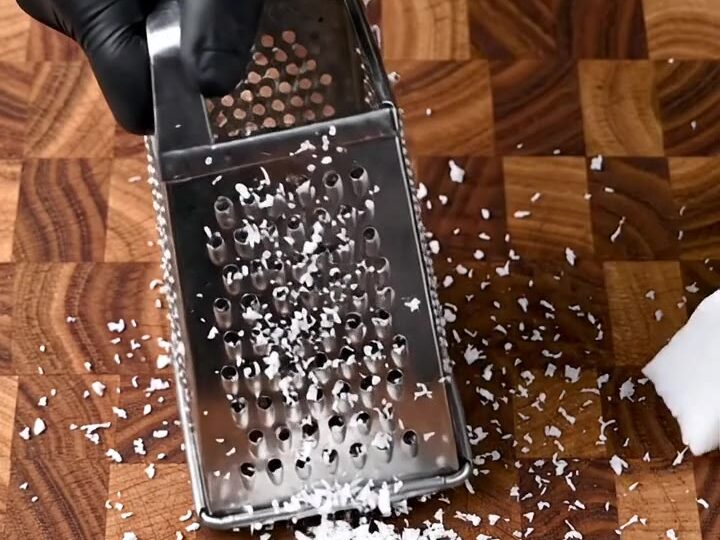
- Grate the CoconutIf using a fresh coconut meat block, grate it on the large holes of a box grater into a bowl. You need about 2 cups of fluffy shredded coconut.Look for The shredded coconut is light and fluffy, not wet or clumpy.Tip Fresh coconut gives the best texture and flavor.
The shrimp are butterflied flat, tails intact, and the fresh coconut is grated into a light, fluffy pile. The coconut should be dry enough to sprinkle, not clumping. Have everything within reach before you start frying.
Coat and Fry
- Coat the ShrimpPress each butterflied shrimp into the shredded coconut, coating both sides thoroughly. Gently press the coconut onto the shrimp so it adheres well.Look for Each shrimp is completely covered with a thick layer of coconut.Tip Don't skip pressing – it keeps the coating on during frying.
- Heat the OilPour the oil into a large skillet and heat over medium-high heat until shimmering. The oil should be hot but not smoking.Look for The oil shimmers and a small piece of coconut sizzles immediately.Tip If the oil smokes, lower the heat slightly.
Each shrimp is evenly covered with a thick layer of coconut. The oil shimmers, and when you add the shrimp, they sizzle immediately. The coating turns golden and crisp, and the shrimp are cooked through to 145°F (63°C).
Finish and Serve
- Fry the ShrimpPlace a batch of the coconut-crusted shrimp into the hot oil in a single layer, without overcrowding. Fry until golden brown and crispy, about 2-3 minutes per side, flipping with tongs. The shrimp should reach an internal temperature of 145°F (63°C).Look for The coconut coating turns deep golden brown and crisp.Safe temperature 145°F (63°C) internal temperature (shellfish)Tip Fry in batches to keep the oil temperature steady.
- Drain and SeasonRemove the shrimp from the oil with tongs and drain briefly on paper towels. Immediately squeeze fresh lime juice over the hot shrimp.Look for The shrimp are glistening with oil and lime juice.Tip Squeeze the lime while the shrimp are hot so the juice soaks in.
- Serve with Mango DipArrange the crispy coconut shrimp on a platter. Serve with the glossy orange mango dip on the side for dipping.Look for The shrimp are golden and crisp, the dip is glossy and orange.Tip For best flavor, dip each shrimp deeply into the mango dip.
The fried shrimp are drained briefly, then brightened with lime juice. They are golden, crunchy, and aromatic.
The mango dip is glossy and orange, ready for dipping. Serve immediately while the shrimp are still hot and crisp.
Common mistakes
One common mistake is overcrowding the pan – this lowers the oil temperature and makes the coating soggy. Fry in batches and let the oil come back to temperature between batches.
Another mistake is using dried coconut, which doesn't stick as well and can burn quickly. Press the fresh coconut firmly onto the shrimp, and don't skip the lime juice – it cuts through the richness.
How to tell it’s done
The shrimp are done when the coconut coating is deep golden brown and crispy, and the shrimp are opaque and firm to the touch.
To be safe, insert an instant-read thermometer into the thickest part of a shrimp – it should read 145°F (63°C). The shrimp will continue to cook slightly after removal, so don't over-fry them.
- Shellfish: 145°F (63°C) in the thickest part
Up next · Part 3 of 3
4 variations · storage & make-ahead · 5 answers · printable card
Tips, FAQ & printable recipe (Part 3)← Back to the ingredients (Part 1)