Breakfast · Part 2 of 3: Instructions
Crispy Cinnamon Roll French Toast with Cream Cheese Glaze Step-by-step instructions
- Prep
- Cook
- Total
- Serves
- 4
Before you start
Before starting, set the butter and cream cheese out to soften. Have all the ingredients measured and ready. Prepare a shallow dish for the custard and a large skillet or griddle.
If you have a wire rack, place it near the stove to hold the finished French toast. The recipe moves quickly once the cooking begins, so having everything in place makes the process smooth.
Ingredients at a glance (12)
- 6 tbsp unsalted butter, softened
- 1/2 cup packed brown sugar
- 1 1/2 tsp ground cinnamon
- 8 slices thick white bread (such as brioche or Texas toast)
- 4 large eggs
- 3/4 cup whole milk
- 1 tsp vanilla extract
- 2 tbsp unsalted butter, for the skillet
- 4 oz cream cheese, softened
- 1 cup confectioners' sugar
- 2-3 tbsp whole milk
- 1/2 tsp vanilla extract
Instructions
Prep the Stacks
- Make the Cinnamon Butter and CustardIn a small bowl, mash the softened butter with the brown sugar and cinnamon until smooth and well combined. Set aside. In a shallow dish, whisk the eggs, milk, and vanilla until fully blended and slightly frothy.Look for The cinnamon butter should be a spreadable paste; the custard should be a single, smooth liquid.Tip Use a fork to mash the butter mixture—it comes together faster than with a spoon.
- Spread and Stack the BreadLay the bread slices on a work surface. Spread a generous layer of the cinnamon butter over each slice, covering the entire surface. Stack the slices in pairs, buttered sides facing each other, to make 4 stacks. Trim the crusts with a chef's knife, cutting straight edges to reveal the layered interior.Look for The stacks should hold together and show a distinct cinnamon layer when trimmed.Tip Press the stacks gently while trimming so they don't slide apart.
- Dip the Stacks in CustardCarefully dip each bread stack into the custard, turning to coat all sides. Let the excess drip off for a few seconds. The bread should be soaked but not falling apart.Look for The bread is saturated but still holds its shape when lifted.Tip Use a wide spatula to transfer the dipped stacks to the skillet.
The cinnamon butter should be smooth and spreadable, and the custard should be a uniform, slightly frothy liquid. The bread stacks should be neatly trimmed, showing a distinct layer of cinnamon filling. The stacks should hold together when lifted, and the custard should cling to the bread without dripping excessively.
Sear Every Side
- Sear the Top and BottomHeat a large skillet over medium heat and add the butter for cooking. When the butter is foaming, place the dipped stacks in the skillet. Cook for 2-3 minutes per side, until deep golden brown and crisp. Use tongs to flip them carefully.Look for The exterior is golden brown and the butter sizzles around the bread.Safe temperature 160°F (71°C) internal temperature (egg dishes)Tip Don't overcrowd the skillet; cook in batches if needed.
- Sear the Vertical EdgesUse tongs to hold each stack upright and sear all four vertical edges, about 30 seconds per edge, until they are deep mahogany brown and shatteringly crisp. Work quickly to avoid burning.Look for The edges are deeply browned and sound crunchy when tapped.Safe temperature 160°F (71°C) internal temperature (egg dishes)Tip Keep the skillet at medium heat; if it smokes, lower it slightly.
- Transfer to a PlateTransfer the seared stacks to a plate. They should be crisp on every surface. If making multiple batches, keep the finished stacks warm in a low oven (200°F) while cooking the rest.Look for The stacks are uniformly golden brown and hold their shape.Tip Resting on a wire rack keeps them crisper than on a plate.
The French toast should be deeply golden brown on the top and bottom, and the vertical edges should be mahogany and crisp. The butter should sizzle gently, and the kitchen should smell of caramelized sugar and cinnamon. The stacks should feel firm and crunchy to the touch, with no soft or pale spots.
Glaze and Serve
- Make the Cream Cheese GlazeIn a small saucepan over low heat, combine the cream cheese, confectioners' sugar, milk, and vanilla. Whisk constantly until smooth and warm, about 2-3 minutes. If the glaze is too thick, add more milk a teaspoon at a time.Look for The glaze is smooth, pourable, and warm.Tip Warm the cream cheese to room temperature first to prevent lumps.
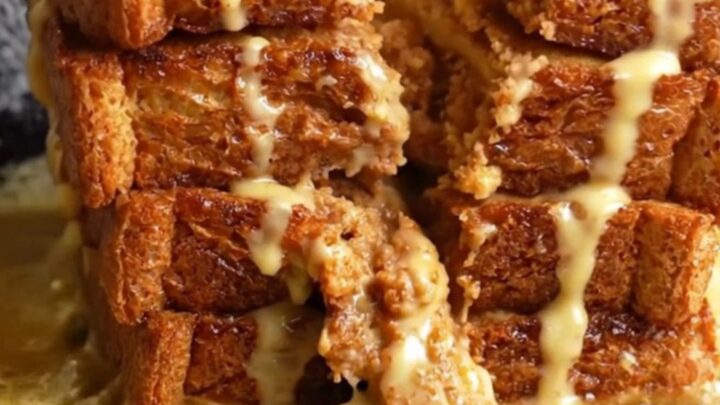
- Drizzle and ServePlace the French toast stacks on serving plates. Drizzle generously with the warm cream cheese glaze. Slice open with a knife to reveal the molten cinnamon sugar layers flowing from the center. Serve immediately.Look for The glaze drips over the crisp crust, and the cinnamon filling is visibly oozing.Tip For an extra touch, dust with a little extra cinnamon before serving.
The glaze should be smooth, warm, and pourable, with a tangy-sweet aroma. The French toast stacks should be plated and generously drizzled, with the glaze cascading down the sides.
When cut, the cinnamon filling should flow out slowly, and the first bite should produce a loud crunch followed by a creamy, custardy interior.
Common mistakes
A common mistake is using bread that is too thin or too soft, which can become soggy or fall apart. Choose thick slices and don't oversoak them. Another pitfall is cooking at too high a heat, which burns the exterior before the inside is set.
Keep the skillet at medium heat and adjust as needed. Finally, don't skip searing the edges—this step is what makes the crust shatteringly crispy, so take the time to do all four sides.
How to tell it’s done
The French toast is done when the exterior is deeply golden brown and crisp on all sides, and the internal temperature reaches 160°F (71°C) for the eggs. The edges should be dark mahogany and sound crunchy when tapped.
When you cut into a stack, the cinnamon filling should be molten and oozing, and the bread should be custardy but not raw. The glaze should be warm and smooth, drizzling easily over the top.
- Egg dishes: 160°F (71°C) in the thickest part
Up next · Part 3 of 3
4 variations · storage & make-ahead · 5 answers · printable card
Tips, FAQ & printable recipe (Part 3)← Back to the ingredients (Part 1)