Breakfast · Part 2 of 3: Instructions
Crispy Cast-Iron Corned Beef Hash with Eggs Step-by-step instructions
- Prep
- Cook
- Total
- Serves
- 2
Before you start
Before you start, make sure you have all the ingredients prepped: dice the corned beef, par-boil and dice the potatoes, and dice the onion and bell pepper. Pat everything dry with paper towels to remove excess moisture—this is crucial for achieving a crispy crust.
Have your cast-iron skillet ready and preheat it over medium-high heat. If you're making the horseradish chive crema from scratch, mix it now and set it aside. Also, crack the eggs into a small bowl to make adding them easier later.
Ingredients at a glance (7)
- 200 g diced cooked corned beef brisket
- 250 g par-boiled diced Yukon Gold potatoes
- 1 diced yellow onion
- 1 diced green bell pepper
- 30 g butter
- 2 large eggs
- Horseradish chive crema (store-bought or homemade), for drizzling, to taste
Instructions
Phase 1: Prep and Sear
- Prep the Hash BaseIn a large bowl, toss together the diced corned beef, par-boiled potatoes, onion, and green bell pepper until evenly combined. Pat the mixture dry with paper towels to remove excess moisture, which helps the hash crisp.Look for The mixture should be well combined and dry to the touch.Tip Cut the potatoes into 1/2-inch dice so they cook evenly and crisp nicely.
- Heat the SkilletPlace a 12-inch cast-iron skillet over medium-high heat and add the butter. Let it melt and foam until the foam subsides and the butter is sizzling but not browning.Look for The butter should sizzle immediately when you add the hash.Tip If the butter browns too quickly, reduce the heat slightly.
At this point, the hash mixture should be well combined and dry. The butter in the skillet should be sizzling and fragrant. When you add the hash, it should sizzle immediately, indicating the pan is hot enough.
After pressing the mixture down, you'll see the edges starting to brown and crisp within the first few minutes. The kitchen will smell of butter and beef, and the hash will begin to release from the pan as the crust forms.
Phase 2: Crisp and Cook
- Press and Cook UndisturbedAdd the hash mixture to the skillet and press it down firmly into an even layer using a spatula. Cook without stirring for 6 minutes over medium-high heat, about 400°F (200°C), until the bottom forms a deep mahogany crust.Look for The edges will look browned and crispy, and the hash will release easily from the pan.Tip Resist the urge to stir; pressing and leaving it alone is the key to a crust.
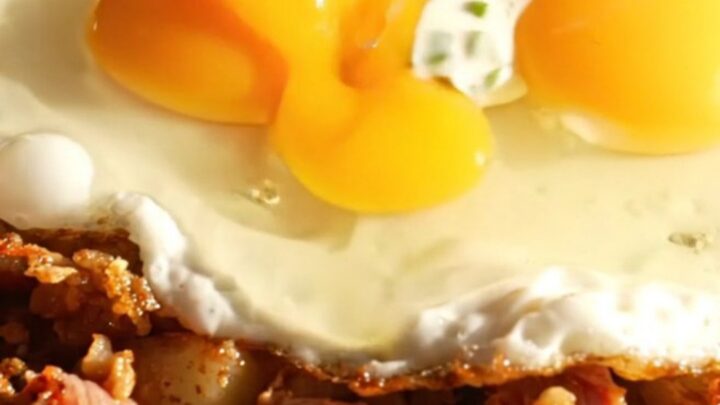
- Flip and Add EggsCarefully flip the hash in sections using a spatula, then press it down again. Crack the eggs over the top of the hash. Continue cooking for 2 to 3 minutes until the egg whites are set and the yolks are still glossy and slightly soft.Look for The egg whites should be opaque and set, while the yolks remain shiny and soft.Safe temperature 160°F (71°C) internal temperature (egg dishes)Tip If you prefer fully set yolks, cover the skillet for the last minute of cooking.
After six minutes, the bottom of the hash should be deeply browned and crispy. When you lift an edge with a spatula, you should see a dark mahogany crust. Flipping the hash in sections should be easy, and the crust should hold together. When you add the eggs, the whites will begin to set immediately, turning opaque. The yolks should remain glossy and soft. The hash should be sizzling and the eggs should smell rich and buttery.
Phase 3: Finish and Serve
- Drizzle with Crema and ServeRemove the skillet from the heat. Drizzle the horseradish chive crema over the top of the hash and eggs. Serve immediately while the hash is hot and crispy.Look for The crema should form ribbons over the crispy hash and eggs.Tip For a brighter flavor, add a little extra crema at the table.
The eggs should be cooked to your liking, with the whites fully set and the yolks still soft and glossy if you prefer. When you drizzle the horseradish chive crema over the top, it should create a beautiful contrast against the dark hash. The dish should look inviting, with the crispy crust visible at the edges and the crema adding a creamy, tangy note. Serve immediately to enjoy the contrast of textures and temperatures.
Common mistakes
One common mistake is stirring the hash too early. Resist the urge to peek or flip until the full six minutes have passed; stirring breaks up the crust and prevents it from forming. Another mistake is overcrowding the skillet. If you're making a larger batch, cook the hash in batches to ensure each piece gets good contact with the pan.
Also, be careful not to undercook the potatoes—they should be tender when pierced with a fork before you add them to the skillet. Finally, don't skip patting the ingredients dry; excess moisture will steam the hash instead of crisping it.
How to tell it’s done
The hash is done when the bottom is deeply browned and crisp, and the mixture is heated through. The eggs should be cooked to your preference; for safe consumption, cook them until the whites are set and the yolks are firm, reaching an internal temperature of 160°F (71°C).
If you prefer soft, runny yolks, that's fine, but be aware that the eggs will not be fully cooked through. Use pasteurized eggs if serving to anyone at higher risk. The hash itself should be sizzling and fragrant when you remove it from the heat.
- Egg dishes: 160°F (71°C) in the thickest part
Up next · Part 3 of 3
4 variations · storage & make-ahead · 5 answers · printable card
Tips, FAQ & printable recipe (Part 3)← Back to the ingredients (Part 1)