Desserts · Part 2 of 3: Instructions
Crispy Caramelized Croissant Waffles with Belgian Chocolate Step-by-step instructions
- Prep
- Cook
- Total
- Serves
- 2
Before you start
Before you begin, ensure your waffle iron is clean and lightly greased if necessary. Gather your sugars in a wide, shallow dish to make the coating process quick and easy.
Have your chocolate melted and ready to go so that the croffles can be served while they are still hot, as the texture is at its peak immediately after cooking. Ensure all ingredients are at room temperature for the best results.
Ingredients at a glance (5)
- 2 all-butter croissants, proofed
- 2 tbsp pearl sugar
- 2 tbsp demerara sugar
- 1/4 cup Belgian milk chocolate, melted
- 2 tbsp whipped cream
Instructions
Coating the pastry
- Prepare the croissantsCombine the pearl sugar and demerara sugar in a shallow bowl. Take each proofed all-butter croissant and roll it thoroughly in the sugar mixture until the exterior is completely coated on all sides. Ensure a generous amount of sugar adheres to the buttery surface to guarantee proper caramelization during the cooking process.Look for The croissant should be evenly coated with sugar granules.Tip Press the sugar into the dough slightly to help it stick.
The croissants should be entirely covered in a thick layer of pearl and demerara sugar. The sugar should be pressed into the crevices of the dough so that it adheres well. Check that there are no bare spots on the croissant, as these areas will not caramelize properly. The croissants should look uniformly textured and ready for the heat of the waffle iron.
Caramelizing the croffles
- Cook the crofflesPreheat the waffle iron to 360°F (182°C). Place the sugar-coated croissants into the center of the iron. Close the lid carefully and press down to ensure even contact. Cook for three minutes. The sugar will melt and caramelize, creating a golden, glass-like grid texture on the pastry. Ensure the eggs within the pastry dough reach an internal temperature of 160°F (71°C). Carefully remove the croffles using heat-resistant tongs.Look for The sugar should look dark golden and glass-like.Safe temperature 160°F (71°C) internal temperature (egg dishes)Tip Do not open the iron too early as the sugar needs time to set.
As the croffles cook, you will hear a distinct sizzling sound as the sugar melts and the butter renders. The aroma of toasted sugar and buttery pastry should fill the kitchen. Once the three minutes are up, the croffles should be a deep golden brown color and feel rigid. Check that the sugar has formed a continuous, glossy shell across the entire grid surface.
Finishing the dish
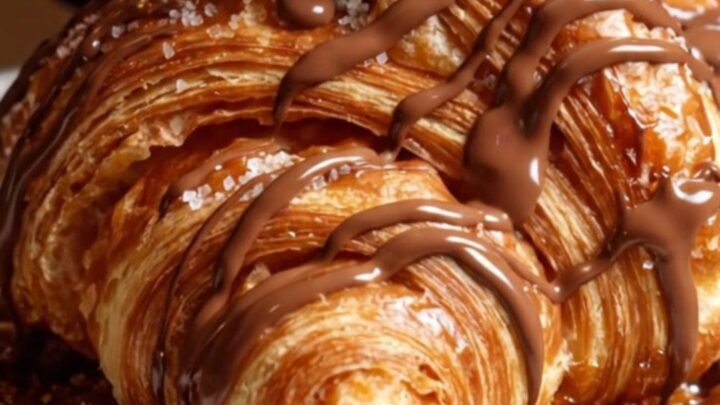
- Finish and servePlace the warm croffles on a serving plate. Drizzle generously with melted Belgian milk chocolate and add a dollop of whipped cream on top. Serve immediately while the exterior remains shatteringly crisp and the interior flaky. This ensures the best texture contrast between the molten chocolate and the caramelized sugar crust.Look for The chocolate should be glossy and slightly runny.Tip Drizzle the chocolate in a back-and-forth motion for an even coating.
The final croffles should look enticingly glossy with the melted chocolate drizzled over the top. The whipped cream should hold its shape against the heat of the croffle.
Check that the chocolate has covered the peaks and valleys of the waffle grid. The dish should be served immediately while the contrast between the hot, crunchy exterior and the cool, creamy topping is at its most pronounced.
Common mistakes
Avoid overcrowding the waffle iron, as this will prevent the pastry from caramelizing properly and may lead to a soggy texture. Do not open the waffle iron before the three-minute mark, as this can break the crust that is forming and cause the pastry to tear.
Additionally, ensure the heat is not too high, which can burn the sugar before the croissant is fully heated through, resulting in a bitter flavor profile.
How to tell it’s done
The croffles are done when the exterior sugar coating has transformed into a deep, golden-brown, glass-like grid. The pastry should feel firm and crisp to the touch, and you should hear a distinct crackle when you move it.
The interior will remain tender and flaky. Ensure the internal temperature of the pastry reaches 160°F (71°C) to ensure the egg-based dough is fully cooked through.
- Egg dishes: 160°F (71°C) in the thickest part
Up next · Part 3 of 3
2 variations · storage & make-ahead · 3 answers · printable card
Tips, FAQ & printable recipe (Part 3)← Back to the ingredients (Part 1)