Dinner · Part 2 of 3: Instructions
Crispy Buffalo Cauliflower Tacos Ready in 40 Minutes Step-by-step instructions
- Prep
- Cook
- Total
- Serves
- 4
Before you start
Before the oven even turns on, set out the full lineup: a rimmed baking sheet lined with parchment, a large mixing bowl, a skillet, tongs and a sharp knife. Cut the cauliflower into even, bite-sized florets and pat them completely dry — surface moisture is the enemy of crisp edges.
Measure the olive oil, cornstarch, garlic powder and smoked paprika into small dishes so the toss happens in one motion. Have the butter and hot sauce ready beside the stove, the romaine washed and shredded, the blue cheese crumbled, and the avocado ranch standing by.
Ingredients at a glance (11)
- 1 cauliflower head, cut into bite-sized florets
- 2 tbsp olive oil
- 2 tbsp cornstarch
- 1 tsp garlic powder
- 1 tsp smoked paprika
- 1/3 cup butter, melted
- 1/3 cup cayenne hot sauce
- 8 small flour tortillas, warmed or charred
- 2 cups romaine lettuce, shredded
- 1/2 cup blue cheese crumbles
- Avocado ranch, store-bought or made ahead, for serving
Instructions
Prep the cauliflower
- Heat the oven, line the panHeat the oven to 425°F (220°C) and line a rimmed baking sheet with parchment paper. Position a rack in the center. A properly hot oven and a roomy, uncluttered pan are what turn the cornstarch-dusted florets into crisp, caramelized pieces rather than steamed, pale cauliflower.Look for The oven should read a full 425°F on the dial or display before the pan goes in, with the parchment lying flat and nothing hanging over the edges.Tip Give the oven at least ten extra minutes beyond the preheat chime; many ovens run cool at first and that costs crispness later.
- Cut the cauliflower into floretsTrim the leaves and core from the cauliflower head, then break or cut it into bite-sized florets, each roughly the size of a large marble to a walnut. Aim for even sizing so every piece roasts at the same pace, and pat the florets thoroughly dry with a clean towel.Look for Every floret should be within about half an inch of the others in size, with dry surfaces and no wet, pulpy cut faces.Tip Slice thick stems flat so the pieces sit level on the pan; flat contact points brown better than rounded ones.
- Coat with oil and cornstarchIn a large mixing bowl, toss the florets with the olive oil, cornstarch, garlic powder and smoked paprika. Turn everything with clean hands or tongs until each piece wears a thin, dry, evenly dusty coat, with no bare white patches and no wet puddles collecting at the bottom of the bowl.Look for The florets should look matte and faintly orange, dusted edge to edge, with the bowl bottom nearly clean.Tip Add the cornstarch last, after the oil, so it clings to the slick surface instead of settling into the bowl.
By the end of this phase, the oven is holding a steady 425°F, the pan is lined and waiting, and every floret is evenly sized with a dry, matte, faintly orange coat of cornstarch and spices. Nothing should look wet or bare; the bowl bottom should be nearly clean. If any florets are noticeably larger than the rest, cut them down now — uneven pieces are the main reason some pieces char while others stay pale. Check that the rack sits in the center of the oven before the pan goes in, since a low rack scorches the undersides before the tops crisp.
Roast and sauce
- Roast until charred and crispSpread the coated florets across the prepared baking sheet with space between them, then roast for 18 minutes, turning once halfway through. The edges should blacken in spots and the coating should set into a thin, cracker-like shell. Pull the pan when the darkest edges are deep brown, not burnt.Look for Look for blistered, black-flecked edges, a firm shell that resists a light press, and a toasty, nutty smell from the paprika.Tip Crowding steams instead of roasting; use two pans rather than packing one if the florets touch.
- Build the buffalo butterSet a skillet over low heat and melt the butter gently, then pour in the cayenne hot sauce and whisk until the two come together as a glossy, uniform orange sauce. Keep the heat low so the butter does not separate or brown, and pull the pan as soon as the mixture looks smooth and pourable.Look for The sauce should gleam, coat a spoon in a thin even layer, and show no separate pools of butter or streaks of plain vinegar.Tip Low heat is the whole trick; high heat splits the emulsion and leaves a greasy ring around the sauce.
- Toss the florets in buffalo sauceTip the roasted florets into the skillet and turn them gently with a spatula until every piece is lacquered in the warm buffalo butter. Work quickly and lightly so the crisp shell stays intact, then let the sauced florets sit for a moment while the tortillas warm.Look for Each floret should shine edge to edge in orange gloss, with the coating still firm underneath and no sauce pooling at the pan bottom.Tip Fold rather than stir; vigorous tossing knocks the crisp shell loose and turns the coating into crumbs.
The florets come out of the oven with blistered, black-flecked edges and a shell that resists a gentle press — firm, crackly, nothing soggy. In the skillet, the butter and hot sauce should have come together into a single glossy orange emulsion with no separate butter pools or streaks, and the sauced florets should shine edge to edge while staying intact.
Before moving on, verify the sauce looks smooth and pourable, and that at least half the florets show real browning. If the sauce has split, pull the pan off the heat and whisk in a teaspoon of hot sauce to bring it back.
Warm tortillas and build tacos
- Char the tortillasWarm the flour tortillas directly over a gas flame for a few seconds per side, or in a dry skillet over medium-high heat, until blistered in spots and pliable. Stack them under a clean towel as they come off the heat so they steam softly and stay flexible for folding.Look for The tortillas should show scattered brown blisters, bend fully without cracking, and smell toasty rather than dry or stiff.Tip A brief char adds smoky depth, but ten seconds too long turns a tortilla into a cracker; stay close to the stove.
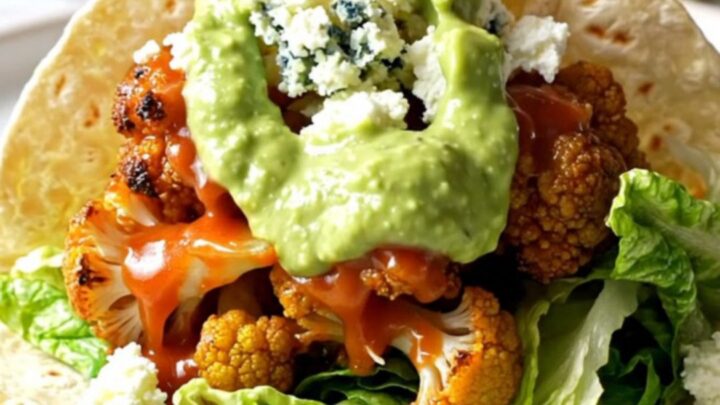
- Fill and drizzle the tacosLine each warm tortilla with a handful of shredded romaine, then add the sauced cauliflower, dividing it evenly. Scatter blue cheese crumbles over the hot florets so they soften slightly, and finish with a thick drizzle of avocado ranch. Serve immediately, while the edges are still crackling.Look for The finished taco should show layers — green romaine, glossy orange florets, white cheese, pale green drizzle — with the tortilla holding its fold.Tip Build the tacos at the table and let everyone sauce their own; the florets stay crispest when the dressing lands last.
The tortillas emerge from the flame or skillet with scattered brown blisters, bending fully without cracking, stacked under a towel to stay pliable. Each finished taco shows its layers — chilled romaine, glossy orange florets, softened blue cheese, a thick pale-green drizzle — and holds its fold without collapsing.
The first bite should crunch audibly from both the shell and the lettuce, with the buffalo heat answered by the cool ranch. If the tortillas crack at the fold, they needed more time under the towel; if they taste dry, they were left on the heat a few seconds too long.
Common mistakes
The most common failure is crowding the pan, which steams the florets and dissolves the cornstarch shell into a gummy coat — spread them out or use a second sheet. The second is skipping the towel-dry after cutting; wet surfaces steam before they can brown. Melting the butter over high heat splits the sauce into greasy pools, so keep the burner low and whisk patiently. Tossing the florets too vigorously in the skillet knocks the crisp coating loose; fold gently instead.
How to tell it’s done
The cauliflower is done when its edges are deeply browned and blackened in spots, the cornstarch shell feels firm under a light press, and the kitchen smells toasty and nutty rather than sulfurous. Undercooked florets look pale and bend without resistance; overdone ones turn uniformly dark and dry.
The buffalo butter is right when it gleams and pours in a smooth ribbon with no separated fat rings. A finished taco holds its fold, shows distinct layers of romaine, orange florets, cheese and dressing, and delivers an audible crunch at the first bite.
Up next · Part 3 of 3
4 variations · storage & make-ahead · 5 answers · printable card
Tips, FAQ & printable recipe (Part 3)← Back to the ingredients (Part 1)