Breakfast · Part 1 of 3: Ingredients
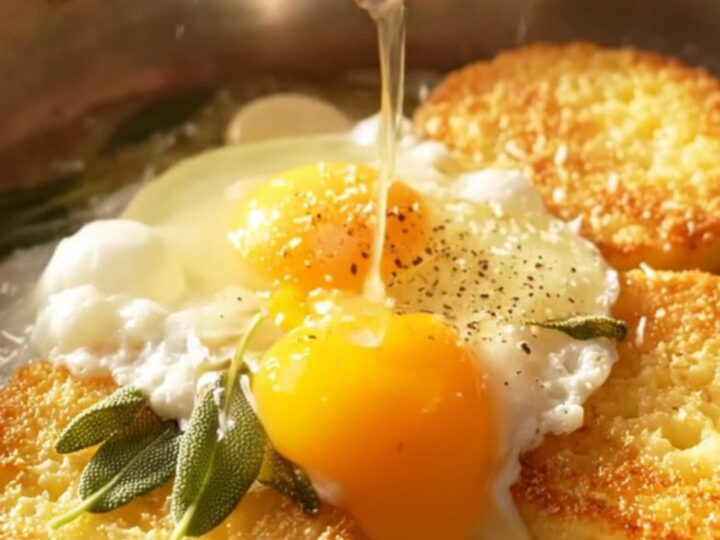
Crispy Brown Butter Sage Polenta with Basted Eggs
- Prep
- Cook
- Total
- Serves
- 2
Elevate your breakfast game with the sophisticated, nutty flavors of browned butter and crispy sage paired with perfectly seared polenta. This dish proves that luxury is often found in the simplest, high-quality ingredients prepared with care and precision in a single pan.
Start your morning with a dish that balances textures and rich, savory notes. The polenta rounds provide a hearty, crisp foundation that absorbs the fragrant brown butter, while the eggs add a creamy finish.
This recipe is designed for those who appreciate the art of minimal preparation yielding maximum flavor, bringing a touch of Tuscan-inspired elegance to the home dining table without requiring complex techniques or hours of active kitchen time.
Ingredients
Brown Butter Sauce
- 45 g unsalted butter
- 8 fresh sage leaves
- 1 crushed garlic clove
Base
- 2 chilled 100-gram polenta rounds
- 2 large eggs
Garnish
- 2 tbsp freshly grated Parmigiano-Reggiano
- 1/4 tsp freshly cracked black pepper
Why this recipe works
The method of basting eggs in brown butter works by using the hot, flavored fat to gently cook the whites while infusing them with the aromatics of sage and garlic.
This technique creates a delicate, buttery texture that is far superior to standard frying, ensuring the edges become slightly crisp while the yolk remains perfectly creamy.
Searing the polenta at a high temperature creates a Maillard reaction on the surface, which provides a necessary crunch that contrasts with the softness of the basted eggs.
The addition of Parmigiano-Reggiano at the final stage adds a salty, umami depth that ties the creamy, buttery, and crispy components of the dish together into a cohesive breakfast.
Notes and substitutions
Use high-quality unsalted butter to ensure the best flavor as it browns. The quality of the butter is paramount here, as it acts as the primary sauce for the dish. Fresh sage is essential for that signature earthy aroma; dried alternatives will not provide the same crisp texture or vibrant flavor profile when fried in the butter.
A stainless steel or well-seasoned cast iron skillet is recommended for achieving the best sear on the polenta. If using a non-stick pan, ensure the heat is monitored carefully to avoid damaging the surface.
The polenta rounds should be chilled, as cold polenta maintains its shape better during the searing process compared to room-temperature or fresh, warm polenta.
- Parmigiano-Reggiano: Pecorino Romano or any aged hard Italian cheese
- Sage: Fresh thyme or rosemary
Equipment
- Stainless steel skillet
- Microplane grater
- Chef knife
- Silicone spatula
- Measuring scale
Up next · Part 2 of 3
3 steps · 10 min of cooking · what to look for at each stage
Step-by-step instructions (Part 2)