Dinner · Part 2 of 3: Instructions
Crispy Baked Potato Egg Roulade with Labneh Step-by-step instructions
- Prep
- Cook
- Total
- Serves
- 6
Before you start
Before starting, gather all your ingredients and equipment. Peel the potatoes and grate them using a box grater—this goes faster if you use the large holes. Place the grated potatoes in a clean kitchen towel and squeeze out as much liquid as you can; this step is essential for a crispy crust.
Hard-boil the eggs if you haven't already (place eggs in a saucepan, cover with water, bring to a boil, then simmer for 9-12 minutes, then cool in ice water). Slice the tomatoes, red onion, and hard-boiled eggs. Have your labneh or cream cheese at room temperature for easier spreading. Preheat your oven to 400°F (200°C) and line a baking sheet with parchment paper.
Ingredients at a glance (13)
- 4 large potatoes, peeled
- 2 eggs, beaten
- 1 1/2 cups shredded cheese (such as cheddar or mozzarella)
- 1/4 cup fresh dill, chopped
- 1 tsp smoked paprika
- 1 tsp salt
- 1/2 tsp black pepper
- 1 cup labneh or cream cheese
- 2 cups fresh curly lettuce, torn
- 1/2 medium red onion, thinly sliced
- 2 medium ripe tomatoes, sliced
- 4 hard-boiled eggs, sliced
- 1 tsp chili flakes
Instructions
Baking the Potato Sheet
- Prepare the Potato BaseGrate the peeled potatoes using a box grater. Place the grated potatoes in a clean kitchen towel and squeeze out as much liquid as possible. Transfer the squeezed potatoes to a large bowl. Add the beaten eggs, shredded cheese, fresh dill, smoked paprika, salt, and black pepper. Mix well until everything is evenly combined.Look for The mixture should hold together when pressed; if it's too wet, squeeze more moisture out.Tip Squeezing the potatoes well is key to a crispy crust—don't skip this step.
- Bake the Potato SheetPreheat the oven to 400°F (200°C). Line a baking sheet with parchment paper. Spread the potato mixture evenly onto the prepared sheet, forming a rectangle about 1/2-inch thick. Bake for 25-30 minutes, until the edges are golden and the top is set. Remove from the oven and let cool slightly for 5 minutes.Look for The potato sheet should be golden brown and firm enough to lift without breaking.Tip If the sheet is browning too quickly, cover loosely with foil.
After this phase, the potato sheet should be golden brown around the edges and firm to the touch. The top should be set and not sticky. When you lift an edge with a spatula, it should hold together without breaking. The aroma of baked potato and cheese will fill your kitchen. Let it cool for about 5 minutes before proceeding to the next step—this makes it easier to handle and prevents the filling from melting too quickly.
Spreading and Layering
- Spread the FillingWhile the potato sheet is still warm, spread the labneh or cream cheese evenly over the surface, leaving a small border around the edges. Sprinkle with a little extra dill if desired.Look for The labneh should be spreadable but not too thick—about 1/4 inch is perfect.Tip If the labneh is too thick, soften it at room temperature before spreading.
- Layer the VegetablesEvenly layer the torn lettuce, sliced red onion, tomato slices, and sliced hard-boiled eggs over the labneh. Sprinkle with chili flakes for a subtle kick.Look for The layers should be evenly distributed to ensure every slice has a bit of everything.Safe temperature 160°F (71°C) internal temperature (egg dishes)Tip Pat the lettuce dry before layering to avoid a watery filling.
The labneh should be spread evenly, leaving a small border to avoid overflow during rolling. The vegetables should be arranged in a single, even layer, with the lettuce providing a base for the other ingredients. The colors should be vibrant—green lettuce, red tomatoes, purple onion, and yellow egg slices. The chili flakes add a speckled red contrast. The aroma is fresh and herby, with a hint of spice.
Rolling and Slicing
- Roll the RouladeUsing the parchment paper to help, carefully roll the potato sheet from one short end into a tight cylinder. Use the paper to press and shape the roll as you go, ensuring it's compact and secure.Look for The roll should be tight enough that the filling stays in place when slicing.Tip Roll slowly and use the paper to lift and tuck the potato sheet.
- Slice and ServeLet the roulade rest for 5 minutes, then slice into thick rounds using a sharp knife. Serve warm or at room temperature.Look for The slices should be clean and hold their shape, showing a colorful cross-section.Tip For clean slices, use a serrated knife and wipe it between cuts.
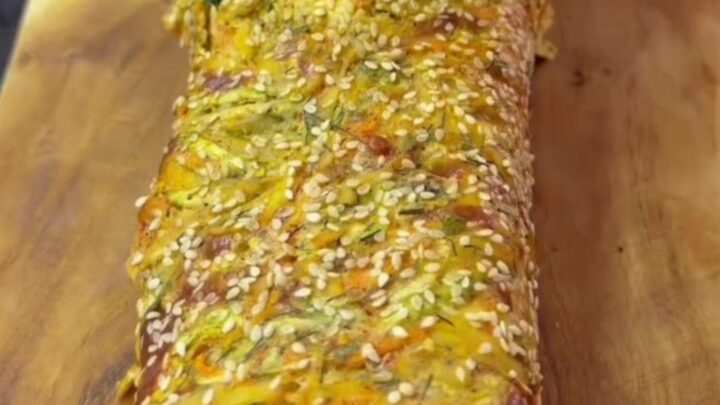
The roulade should be a tight, compact cylinder with no gaps or loose ends. The potato exterior should be crisp and golden, with visible bits of dill and paprika. When sliced, the rounds should hold their shape, showing a beautiful spiral of colors.
The filling should be moist but not runny, and the potato should be tender. The aroma is savory and inviting, with the freshness of the vegetables and the creaminess of the labneh.
Common mistakes
The most common mistake is not squeezing enough moisture out of the grated potatoes. Excess water will make the base soggy and prevent it from crisping up. Another pitfall is overloading the filling, which can make the roulade difficult to roll and cause it to fall apart.
Keep the layers even and not too thick. Rolling too loosely can also cause the roulade to unravel—use the parchment paper to help you roll it tightly. Finally, slicing too soon can cause the filling to ooze out; let the roulade rest for a few minutes to set.
How to tell it’s done
The potato roulade is done when the potato base is golden brown and crispy on the edges, and the filling is set. The internal temperature of the potato base should be at least 160°F (71°C) to ensure the eggs in the base are fully cooked.
When you insert a knife into the center of the roll, it should come out clean, and the potato should be tender but not mushy. The roulade should hold its shape when sliced, with the filling staying in place. If the potato base is still pale or soft in the center, return it to the oven for a few more minutes.
- Egg dishes: 160°F (71°C) in the thickest part
Up next · Part 3 of 3
4 variations · storage & make-ahead · 5 answers · printable card
Tips, FAQ & printable recipe (Part 3)← Back to the ingredients (Part 1)