Dinner · Part 2 of 3: Instructions
Crispy Antep Lahmacun Rolls with Fresh Mint and Lemon Step-by-step instructions
- Prep
- Cook
- Total
- Serves
- 4
Before you start
Before starting, make sure the baking stone or sheet pan is in the oven and preheating. The oven needs at least 30 minutes to reach full temperature. Prepare the dough first, as it needs to rest for 30 minutes.
While the dough rests, prepare the topping: mince the garlic, pulse the red bell peppers in a food processor until finely chopped but not pureed, and chop the parsley. Combine all topping ingredients in a bowl and refrigerate until ready to use. Have a small bowl of flour nearby for rolling, and a pizza peel or rimless baking sheet ready for transferring.
Ingredients at a glance (12)
- 2 1/3 cups all-purpose flour
- 3/4 cup water
- 1 tsp salt
- 10 1/2 oz minced lamb (20% fat)
- 1 bulb garlic, minced
- 2 red bell peppers, pulsed
- 1 bunch Italian parsley, finely chopped
- 2 tbsp Antep pepper paste
- 1 tbsp tomato paste
- 1 tsp isot pepper
- Fresh mint leaves, for serving
- Lemon wedges, for serving
Instructions
Dough and Topping
- Make the DoughIn a large bowl, combine the flour, salt, and water. Mix with a wooden spoon until a shaggy dough forms, then turn it out onto a lightly floured surface. Knead for 8 to 10 minutes, until smooth and elastic. The dough should be soft but not sticky; add a teaspoon of flour if needed. Shape into a ball, cover with a damp towel, and let rest for 30 minutes.Look for The dough is smooth, springs back when pressed, and no longer sticks to your hands.Tip Resting the dough relaxes the gluten, making it easier to roll paper-thin later.
- Prepare the Lamb ToppingIn a medium bowl, combine the minced lamb, minced garlic, pulsed red bell peppers, chopped parsley, Antep pepper paste, tomato paste, and isot pepper. Use your hands to knead the mixture for 2 to 3 minutes, until the paste is evenly distributed and the mixture is cohesive. The topping should be spreadable but not wet; if it seems too thick, add a tablespoon of cold water.Look for The lamb mixture is uniformly red, glossy, and holds together when pressed.Tip Kneading the topping helps the flavors meld and ensures the paste coats every bit of meat.
The dough is smooth, elastic, and rests under a damp towel. The lamb topping is a uniform red paste, fragrant with garlic and pepper paste, with no visible streaks of raw meat. The texture should be spreadable but not wet. If it seems dry, add a teaspoon of cold water; if too wet, a tablespoon of breadcrumbs will help. The topping can be made a day ahead and refrigerated.
Rolling and Baking
- Preheat the Oven and StonePlace a baking stone or a heavy sheet pan on the middle rack of the oven. Preheat the oven to 525°F (274°C) for at least 30 minutes. The stone needs to be thoroughly hot to create the blistered, charred bottom that defines lahmacun.Look for The oven reaches full temperature and the stone is radiating intense heat.Tip A preheated stone mimics a wood-fired oven and gives the crust its signature leopard spots.
- Roll the Dough ThinDivide the rested dough into 4 equal pieces. On a lightly floured surface, roll one piece into a very thin circle, about 10 to 12 inches in diameter. The dough should be almost translucent, thin enough to see your hand through. Keep the other pieces covered with a damp towel while you work.Look for The dough is paper-thin, even, and does not tear when lifted.Tip Roll from the center outward, turning the dough frequently to keep it round and even.
- Spread the Meat MixturePlace the rolled dough on a piece of parchment paper. Use your fingers to spread a quarter of the lamb mixture evenly over the surface, all the way to the rim. The layer should be very thin, about 1/8 inch thick. Press the meat gently so it adheres to the dough.Look for The topping covers the entire surface evenly, with no bare spots or thick clumps.Tip Use your fingertips, not a spoon, for the most control and an even, thin layer.
- Bake the LahmacunCarefully transfer the topped dough onto the hot stone using a pizza peel or a rimless baking sheet. Bake for 3 minutes, until the bottom is charred and blistered and the edges are deeply browned. The topping should be juicy and slightly caramelized, not dry. Use a spatula to remove the lahmacun to a cutting board.Look for The bottom is dark brown with charred spots, and the edges are crisp and bubbly.Safe temperature 160°F (71°C) internal temperature (ground meat)Tip Work quickly to transfer the dough to the stone; a cold dough will stick.
The dough is rolled into thin, even circles that are almost translucent. The topping is spread evenly to the edges. During baking, the bottom should develop dark char spots and the edges should puff and brown.
The kitchen fills with the smell of toasted bread and spiced lamb. The topping should be bubbling and juicy, not dry. Work quickly to transfer the dough to the stone.
Finishing and Rolling
- Add Mint and LemonWhile the lahmacun is still hot, scatter fresh mint leaves over the surface. Squeeze a wedge of lemon over the top, using the juice of about half a lemon per flatbread. The heat will slightly wilt the mint and release its aroma.Look for The mint turns bright green and fragrant, and the lemon juice sizzles on the hot surface.Tip Add the lemon generously; the acidity cuts through the rich lamb and brightens the whole bite.
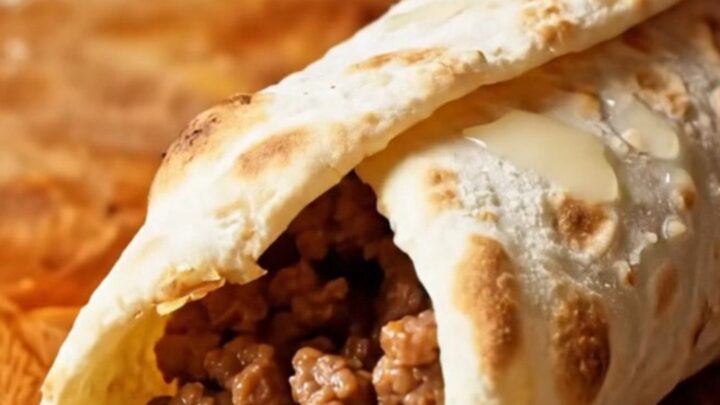
- Roll and ServeStarting from one edge, roll the lahmacun tightly into a cylinder, enclosing the mint and lemon. Slice in half crosswise if desired. Serve immediately, while the exterior is still crisp and the interior is warm and juicy. Repeat with the remaining dough and topping.Look for The roll holds together firmly, and the filling stays moist without leaking.Tip Rolling while hot helps the flatbread stay pliable; if it cools, it becomes brittle.
Fresh mint leaves are scattered over the hot lahmacun, wilting slightly. Lemon juice sizzles on the surface. The flatbread is rolled tightly into a cylinder, holding its shape without cracking. The exterior is crisp and blistered, the interior moist and aromatic. Serve immediately, with extra mint and lemon wedges on the side for each person to add more.
Common mistakes
A common mistake is rolling the dough too thick, which results in a chewy, bread-like texture instead of a crisp cracker. Another is not preheating the stone long enough; a lukewarm stone will not produce the charred blisters.
Also, avoid overloading the topping—a thin, even layer is key. If the dough tears while rolling, patch it with a scrap of dough and press gently. Finally, do not let the lahmacun cool before rolling, as it becomes brittle and difficult to fold.
How to tell it’s done
The lahmacun is done when the bottom is deeply charred in spots and the edges are crisp and browned. The topping should look juicy and slightly caramelized, not dry or cracked.
The internal temperature of the lamb should reach 160°F (71°C) to ensure it is fully cooked. Let the cooked lahmacun rest for a minute or two before adding the mint and lemon, but roll it while it is still warm and pliable.
- Ground meat: 160°F (71°C) in the thickest part
Up next · Part 3 of 3
4 variations · storage & make-ahead · 5 answers · printable card
Tips, FAQ & printable recipe (Part 3)← Back to the ingredients (Part 1)