Dinner · Part 2 of 3: Instructions
Crispy Antakya Sheet Pan Kebab Dürüm: One-Pan Dinner Step-by-step instructions
- Prep
- Cook
- Total
- Serves
- 6
Before you start
Before starting, gather all ingredients and equipment. Preheat the oven to 425°F (220°C) and line a large rimmed baking sheet with parchment paper for easy cleanup. Finely dice the bell peppers, onion, and garlic, and chop the parsley.
Cut the tomatoes and onion into wedges. Have the sumac onions ready (if making at home, toss sliced red onion with sumac and a pinch of salt and let sit for 10 minutes). Warm the lavaş just before assembling.
Ingredients at a glance (16)
- 1 lb ground beef (80% lean)
- 1 lb ground lamb
- 1 red bell pepper, finely diced
- 1 green bell pepper, finely diced
- 1 onion, finely diced
- 4 cloves garlic, minced
- 1/2 cup fresh flat-leaf parsley, finely chopped
- 2 tsp paprika
- 1 tsp ground cumin
- 1 1/2 tsp kosher salt
- 1/2 tsp black pepper
- 2 ripe tomatoes, cut into wedges
- 1 onion, cut into wedges
- 6 large lavaş flatbreads (or flour tortillas)
- 1 cup sumac onions (thinly sliced red onion tossed with sumac)
- 1/2 cup fresh flat-leaf parsley leaves
Instructions
Roast the Kebab
- Mix the Kebab MeatIn a large bowl, combine the ground beef, ground lamb, diced red and green bell peppers, diced onion, minced garlic, chopped parsley, paprika, cumin, salt, and black pepper. Knead with clean hands for 2 to 3 minutes until the mixture forms a sticky, cohesive paste.Look for The mixture should hold together when pressed; it will look glossy and well blended.Tip Kneading thoroughly helps the meat bind and keeps it juicy during roasting.
- Shape and RoastPreheat the oven to 425°F (220°C). Press the meat mixture into long, thin strips along the center of a large rimmed baking sheet. Scatter the tomato wedges and onion wedges around the meat. Roast for 25 to 30 minutes, until the meat is browned and cooked through.Look for The meat strips will be deeply browned at the edges and the tomatoes will be soft and juicy.Safe temperature 160°F (71°C) internal temperature (ground meat)Tip For extra char, switch to broil for the last 2 minutes, watching closely.
- Rest the MeatRemove the baking sheet from the oven and let the meat rest for 5 minutes. The internal temperature should read at least 160°F (71°C) on an instant-read thermometer. This rest allows the juices to redistribute.Look for The meat will be firm and the juices will look glossy, not runny.Safe temperature 160°F (71°C) internal temperature (ground meat)Tip Resting is essential for a moist, tender kebab texture.
The meat strips should be browned and sizzling, with the tomatoes and onions soft and caramelized around them.
The kitchen will smell of spices and roasting meat. Check that the internal temperature reaches 160°F (71°C) before proceeding.
Roll and Toast
- Warm the FlatbreadsWarm the lavaş flatbreads in a dry skillet over medium heat for about 30 seconds per side, or wrap in foil and heat in the oven for 5 minutes. Keep them covered with a clean kitchen towel to stay pliable.Look for The bread should be soft and warm, with no crisp edges yet.Tip Warming makes the bread flexible and prevents tearing when rolling.
- Assemble the DürümLay a warm flatbread on a work surface. Place a portion of the roasted kebab meat along the center, then top with sumac onions, fresh parsley leaves, and a few roasted tomato wedges. Fold the bottom edge over the filling, then roll tightly into a snug cylinder, tucking in the sides as you go.Look for The wrap should be firm and full, with no gaps at the ends.Tip Don't overfill; a tight roll keeps everything together during toasting.
- Toast the WrapsHeat a large griddle or cast-iron skillet over medium-high heat. Place the assembled dürüm seam-side down and toast for 2 to 3 minutes per side, until golden brown and crispy in spots. Press gently with a spatula to ensure even browning.Look for The outside will be crisp and golden with darker charred spots; the filling will be hot.Tip Toasting gives that signature crunchy exterior while keeping the inside moist.
The wraps should be tightly rolled and the flatbreads warm and pliable. As they toast, they will turn golden and crisp, with visible char marks. The filling should be hot and the bread crunchy.
Slice and Serve
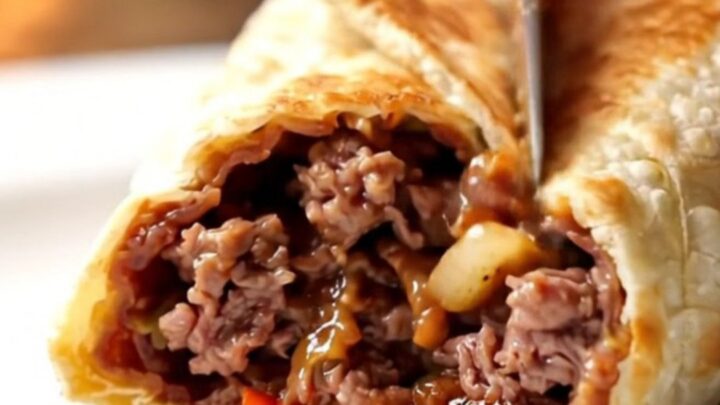
- Slice and ServeTransfer the toasted dürüm to a cutting board and let rest for 1 minute. Slice in half on a sharp diagonal to reveal the juicy cross-section. Serve immediately, with extra sumac onions on the side if desired.Look for The cut surface shows layers of meat, onions, and herbs with a hint of steam.Tip A sharp knife gives a clean cut without squishing the filling.
The sliced dürüm should reveal a juicy, layered cross-section with the meat, onions, and herbs visible. The exterior should be crisp and golden, and the filling steaming hot. Serve immediately for the best texture.
Common mistakes
Avoid overmixing the meat mixture, as this can make the kebab dense and tough. Do not skip the resting step after roasting; this allows the juices to redistribute, keeping the meat moist.
When rolling the dürüm, be careful not to overfill, as this can cause the wrap to burst during toasting. Also, ensure the griddle is hot enough before adding the wraps, so they crisp rather than steam.
How to tell it’s done
The kebab meat is done when an instant-read thermometer inserted into the thickest part registers at least 160°F (71°C). The meat should be deeply browned on the edges and no longer pink in the center.
The tomatoes and onions should be soft and slightly caramelized. The assembled dürüm is done when the outside is golden brown and crispy, with darker charred spots, and the filling is hot throughout.
- Ground meat: 160°F (71°C) in the thickest part
Up next · Part 3 of 3
4 variations · storage & make-ahead · 5 answers · printable card
Tips, FAQ & printable recipe (Part 3)← Back to the ingredients (Part 1)