Appetizers · Part 2 of 3: Instructions
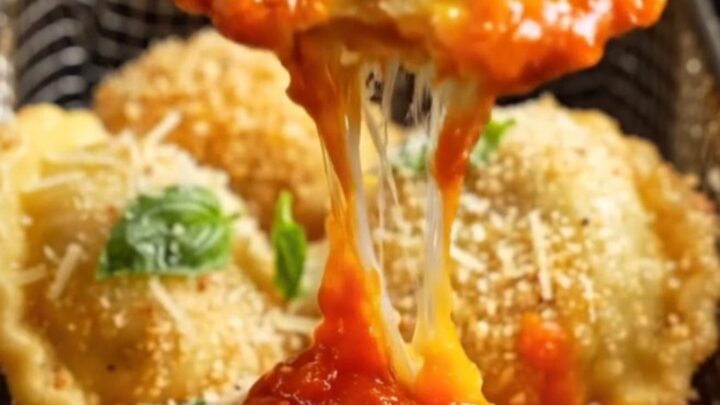
Crispy Air Fryer Toasted Ravioli with Warm Marinara Step-by-step instructions
- Prep
- Cook
- Total
- Serves
- 4
Before you start
Set up before the first pillow hits the wash. Pull the ravioli from the refrigerator, pat every piece dry and lay them out in a single layer. Set out three shallow bowls — one for the buttermilk-egg wash, one for the panko-pecorino mixture and one empty for the breaded ravioli. Line a plate or small rack with paper towels for the finished batch, and set the marinara on the stove over the lowest flame so it warms gently while the ravioli cook.
Ingredients at a glance (9)
- 10 oz fresh four-cheese ravioli (about 20 pillows)
- 3/4 cup buttermilk
- 1 large egg, beaten
- 2 cups Italian-seasoned panko breadcrumbs
- 1/2 cup grated Pecorino Romano
- Olive oil cooking spray, to taste
- Grated Parmesan, for serving
- Fresh basil leaves, for serving
- Warm marinara sauce, for serving
Instructions
Set Up the Breading Station
- Dry the RavioliPat the ravioli dry on both sides with paper towels so the buttermilk wash can grip the pasta instead of sliding off surface moisture. Lay them in a single layer on a plate while the breading station comes together. Dry pillows mean an even, sealed crust — damp ones shed crumbs and steam themselves soft in the basket.Look for The surface looks matte and dry, not glossy, with no moisture beads when a pillow is tilted under the light.Tip If using frozen ravioli, thaw fully in the refrigerator first and press gently with towels to wick out extra moisture.
- Whisk the Buttermilk WashWhisk the buttermilk and beaten egg together in a shallow bowl until completely smooth and uniform in color, with no streaks of white remaining. This wash does two jobs: the acidity helps the crumbs cling, and the egg proteins set in the hot air to lock the panko to the pasta. Keep the bowl beside the ravioli so the assembly line flows in one direction.Look for The wash is pale, smooth and slightly thick, with no visible ribbons of egg white floating in it.Tip A shallow, wide bowl lets a raviolo roll around and coat evenly; a deep bowl forces awkward flipping with fingers.
By the end of this phase, the assembly line is complete and nothing wet has touched the crumbs yet. The ravioli sit dry and matte on a plate, every surface free of moisture. The buttermilk wash is smooth and pale, whisked until no streaks of egg white remain, and it sits beside the pasta ready for dunking. Nothing has been mixed with the panko yet — that comes next.
Bread the Ravioli
- Build the Cheesy Crumb MixtureStir the Italian-seasoned panko and grated Pecorino Romano together in a second shallow bowl, breaking up any clumps with your fingers so every crumb carries a little cheese. The pecorino toasts into the crust as the ravioli cook, adding a salty, nutty depth that plain breadcrumbs cannot match. Spread the mixture into an even layer for easy pressing.Look for The crumbs look evenly flecked with pale yellow cheese, with no dense clumps of panko left anywhere in the bowl.Tip Grate the pecorino on the fine holes of a box grater so it distributes through the crumbs instead of sinking in shreds.
- Bread Every PillowWorking one pillow at a time, submerge a raviolo in the buttermilk-egg wash, lift it out and let the excess drip off for a second, then press it firmly into the panko mixture. Turn to coat all sides, pressing so the crumbs adhere in a thick, even jacket with no bald spots. Transfer to a clean plate and continue with the remaining ravioli.Look for Each pillow is fully encrusted on all six faces, with no wet pasta or pale gaps showing through the crumbs.Tip Use one hand for the wet bowl and one for the dry bowl so your fingers never turn into breaded clubs halfway through.
- Rest the Breaded RavioliLet the breaded ravioli rest on the plate or a wire rack for 5 minutes before cooking. This short pause gives the coating time to hydrate and glue itself to the pasta, which keeps crumbs from blowing around the basket or flaking off during cooking. Use this window to preheat the air fryer so no time is wasted later.Look for The coating looks uniformly damp rather than powdery, and a gentle tap drops almost no loose crumbs from the pasta.Tip Keep the breaded ravioli in a single layer while they wait; stacking presses the crumbs into the soft filling underneath.
Every pillow should now wear a thick, even jacket of cheesy panko with no bald pasta showing through. The crumbs look packed on, not dusted, and the plate of breaded ravioli sits in a single layer without stacking.
After the five-minute rest, the coating looks uniformly damp rather than loose and powdery, and gentle handling drops almost nothing. This is also the moment the air fryer should be preheating to 390°F. If any pillow shows a pale gap, dip it back into the crumbs and press again before the ravioli go anywhere near the basket.
Air-Fry, Finish and Dunk
- Load and Oil the BasketPreheat the air fryer to 390°F for 3 minutes, then arrange the ravioli in a single layer in the basket, leaving a little space between pillows so the hot air can circulate on every side. Mist the tops evenly with olive oil spray — this is what turns the panko deep gold instead of pale and dusty. Work in batches rather than crowding.Look for The basket feels hot when opened, and every pillow sits with visible air space around it, not touching its neighbors.Tip A 4-quart basket fits about half this recipe per batch; hold the first batch warm on a rack in a 200°F oven.
- Air-Fry Until Golden and PuffedAir-fry at 390°F for 7 minutes, flipping the ravioli halfway through so both sides blister and brown. The coating should reach 160°F (71°C) at the center, which cooks the egg wash through completely. The pillows puff, the edges crisp and a little cheese may bubble out at the seams — that is exactly what you want, not a fault.Look for Deep golden crust, visibly puffed pillows, blistered edges and a faint nutty, toasty smell from the toasted pecorino.Safe temperature 160°F (71°C) internal temperature (egg dishes)Tip Give the ravioli a second quick mist of oil after flipping for an extra-golden top, especially if the crumbs looked dry.
- Finish and Serve with MarinaraSlide the ravioli onto a serving platter while they are piping hot and immediately shower them with grated Parmesan and torn fresh basil leaves; the residual heat softens the cheese and releases the basil's aroma. Set the bowl of warm marinara alongside and serve right away, while the crust still crackles and the centers stay molten.Look for The Parmesan looks lightly melted into the crust, the basil is bright green, and the marinara steams when stirred.Tip Crack one raviolo open over the sauce so the molten center shows — the visual sells the platter before the first bite.
The finished ravioli are deep golden brown, puffed like little pillows, with blistered edges and perhaps a bead of molten cheese escaped at a seam — that is a good sign, not a flaw. They sound crisp when nudged with tongs, and an instant-read thermometer reads 160°F (71°C) near the thickest seam.
The Parmesan melts slightly into the hot crust, the basil wilts just enough to perfume the platter, and the marinara steams in its bowl. Serve immediately: the crunch is at its absolute peak in the first few minutes and softens as they sit.
Common mistakes
The most common failure is crowding: stacked or touching pillows steam instead of toast, giving pale, leathery spots. Wet pasta is the second culprit — skipped paper towels mean the wash and crumbs slide right off.
Skipping the five-minute rest lets crumbs blow loose in the circulating air, leaving bald patches. Forgetting the olive oil spray is the difference between golden and dusty beige; without it, panko toasts unevenly. Flipping too early, before the underside has set, can tear the crust.
How to tell it’s done
Judge toasted ravioli by sight, sound and temperature. The crust should be deep golden brown with blistered, almost crackled edges, and the pillows should look visibly puffed compared with their flat, breaded state.
Tap one with tongs: a dry, hollow knock means the panko has toasted through. For certainty, an instant-read thermometer poked near the seam of the thickest pillow should read 160°F (71°C), confirming the egg wash in the coating is fully cooked.
- Egg dishes: 160°F (71°C) in the thickest part
Up next · Part 3 of 3
4 variations · storage & make-ahead · 5 answers · printable card
Tips, FAQ & printable recipe (Part 3)← Back to the ingredients (Part 1)