Dinner · Part 2 of 3: Instructions
Creamy Wild Mushroom & Fontina Risotto Step-by-step instructions
- Prep
- Cook
- Total
- Serves
- 4
Before you start
Before starting, make sure all ingredients are prepped and measured. Slice the mushrooms, mince the garlic and shallots, and cube the Fontina. Grate the Parmesan and pick the thyme leaves. Heat the broth in a saucepan and keep it at a gentle simmer.
Have the wine measured and ready. Set out a large skillet and a ladle. This mise en place ensures smooth, uninterrupted cooking. The entire process takes about 45 minutes, with most of the active time spent stirring the risotto.
Ingredients at a glance (12)
- 12 oz wild mushrooms (such as cremini, shiitake, oyster), sliced
- 4 tbsp unsalted butter, divided
- 1 tbsp fresh thyme leaves, plus extra for garnish
- 2 cloves garlic, minced
- 1/2 cup minced shallots (about 2 shallots)
- 1 1/2 cups Carnaroli rice (or Arborio)
- 1/2 cup dry white wine
- 5 cups hot vegetable or chicken broth
- 1/2 cup grated Parmesan cheese
- 4 oz Fontina cheese, cubed
- Kosher salt, to taste
- Cracked black pepper, for serving
Instructions
Phase 1: Build the Base
- Sear the MushroomsHeat 2 tablespoons of butter in a large skillet over high heat until foaming. Add the sliced wild mushrooms and spread them into a single layer. Cook without stirring for 2-3 minutes until browned on one side, then toss and continue cooking until deeply caramelized and fragrant, about 5 minutes total. Add the thyme and garlic, and cook for 1 minute more. Transfer half of the mushrooms to a plate and set aside for garnish.Look for Mushrooms are deeply browned and aromatic, with reduced liquid in the pan.Safe temperature 145°F (63°C) internal temperature (shellfish)Tip Avoid overcrowding the pan to ensure proper caramelization.
- Sauté Shallots and Toast RiceReduce heat to medium and add the remaining 2 tablespoons of butter to the same skillet. Add the minced shallots and cook, stirring, until soft and translucent, about 2 minutes. Add the Carnaroli rice and stir to coat every grain with butter. Toast the rice, stirring constantly, for 2 minutes until the edges become translucent but the centers remain white.Look for Rice grains are coated and slightly translucent at the edges.Tip Toasting the rice helps it absorb liquid slowly, creating a creamy texture.
- Deglaze with WinePour in the white wine and stir continuously. The wine will bubble vigorously, releasing steam and picking up the browned bits from the bottom of the pan. Cook until the wine is mostly absorbed, about 2 minutes.Look for The wine reduces to a syrupy glaze and the pan is almost dry.Tip Scrape the bottom of the pan to incorporate all the flavor.
At this stage, the mushrooms are deeply browned and fragrant, with a rich, nutty aroma. The rice is toasted and translucent at the edges, and the wine has reduced to a glossy glaze.
The pan should be nearly dry, with no excess liquid. The shallots are soft and sweet, and the garlic is fragrant but not burnt. This foundation of flavors sets the stage for a deeply savory risotto.
Phase 2: The Creamy Simmer
- Add Broth Ladle by LadleAdd the hot broth one ladleful at a time, stirring constantly. Wait until each addition is almost fully absorbed before adding the next. Continue this process, stirring frequently, for about 18 minutes, or until the rice is creamy and al dente. You may not need all the broth.Look for The risotto is creamy but still has a slight bite in the center of the grains.Tip Keep the broth hot on the stove to maintain a steady simmer.
- Mantecatura: Beat in Butter and CheesesRemove the pan from heat. Add the remaining cold butter, grated Parmesan, and cubed Fontina. Stir vigorously with a wooden spoon until the cheeses melt and the risotto becomes silky and glossy. This technique, called mantecatura, creates the signature creamy texture.Look for The risotto turns glossy and thickens as the cheese melts.Tip Stir with energy to emulsify the fats into the rice.
The risotto is now a creamy, bubbling mixture. The rice has absorbed most of the broth and is tender but still al dente. The sauce is loose and fluid, coating the back of a spoon. The aroma is rich with mushroom and wine, and the texture is becoming silky as the starch releases. The cheese is about to be incorporated, promising a luxurious finish.
Phase 3: The Final Touch
- Season and RestTaste the risotto and season with kosher salt as needed. Let it rest off the heat for 2 minutes. The risotto will continue to absorb liquid and thicken slightly.Look for The texture is creamy and the flavors are balanced.Tip Avoid over-salting if your broth is already seasoned.
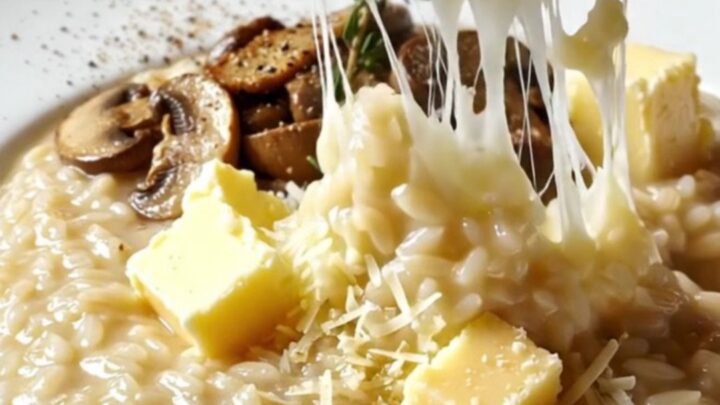
- Plate and GarnishSpoon the risotto onto warm plates or a serving bowl. Top with the reserved caramelized mushrooms and a generous sprinkle of cracked black pepper. Finish with a few fresh thyme leaves for color and aroma.Look for The risotto flows gently when plated, with visible cheese strings.Tip Serve immediately for the best texture.
The risotto is glossy and velvety, with a slow, flowing consistency. The Fontina and Parmesan have melted into a cohesive sauce, and the cold butter adds a sheen. The reserved mushrooms on top provide a beautiful contrast in texture and color. The dish is ready to serve, with steam rising and an irresistible aroma of thyme and cheese.
Common mistakes
A common mistake is adding all the broth at once, which can result in soupy risotto with undercooked rice. Stirring infrequently can cause sticking or uneven cooking. Another pitfall is using cold broth, which slows the cooking process.
Overcooking the mushrooms by crowding the pan can lead to steaming rather than caramelizing. Finally, adding the cheese over high heat can cause it to clump or separate. Always remove the pan from heat before stirring in the butter and cheese to achieve a smooth, creamy finish.
How to tell it’s done
The risotto is done when the rice is al dente—tender but still slightly firm to the bite—and the mixture is creamy and loose, not stiff. The grains should be suspended in a velvety sauce that flows slowly when the pan is tilted.
The cheese should be fully melted and incorporated, giving a glossy sheen. Taste a spoonful: the rice should be cooked through but not mushy. If it's too firm, continue adding broth and stirring for a few more minutes. The final texture should be luxurious and spoonable.
- Shellfish: 145°F (63°C) in the thickest part
Up next · Part 3 of 3
4 variations · storage & make-ahead · 5 answers · printable card
Tips, FAQ & printable recipe (Part 3)← Back to the ingredients (Part 1)