Dinner · Part 1 of 3: Ingredients
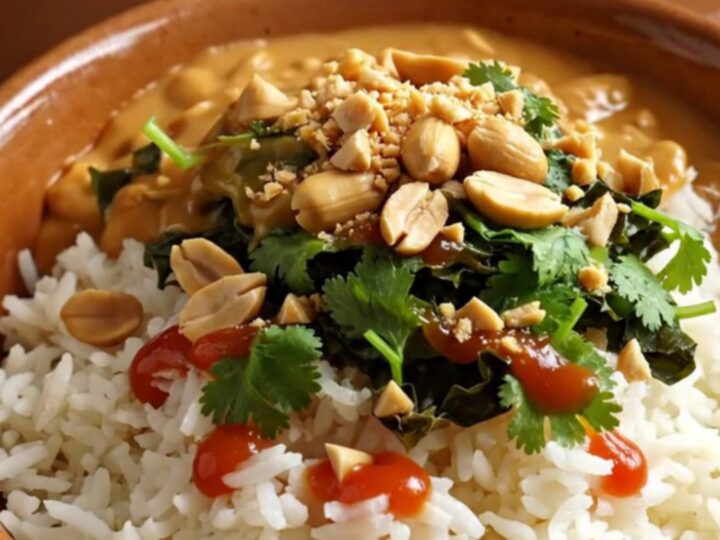
Creamy West African Peanut and Sweet Potato Chicken Stew
- Prep
- Cook
- Total
- Serves
- 6
Discover the art of slow-cooked comfort with this West African-inspired peanut stew. This recipe transforms simple pantry staples and fresh ingredients into a rich, velvety masterpiece that fills the kitchen with an irresistible aroma.
Perfect for busy weeknights or a cozy weekend gathering, this stew delivers deep, savory satisfaction in every bite. With the convenience of a slow cooker, you can achieve professional results with minimal effort, making it a reliable addition to any home cook's repertoire.
This West African peanut and sweet potato stew is a harmonious blend of earthy, nutty, and savory notes. By slow-cooking chicken thighs and sweet potatoes in a aromatic base of ginger, garlic, and crushed tomatoes, the ingredients develop a profound depth of flavor.
The final addition of creamy natural peanut butter and a touch of sriracha creates a luxurious, velvety texture that balances perfectly with the crisp freshness of collard greens. It is a hearty, nourishing dish that feels both exotic and comforting, designed to be served over fluffy jasmine rice.
Ingredients
Main Stew
- 2 lb boneless chicken thighs
- 2 lb sweet potatoes, cubed
- 14 oz crushed tomatoes
- 1 red onion, diced
- 1 tbsp grated ginger
- 4 garlic cloves, minced
- 3 1/2 cups chicken stock
Finishing
- 3/4 cup creamy natural peanut butter
- 1 tbsp sriracha
- 3 cups chopped collard greens
Serving
- jasmine rice, for serving
- crushed roasted peanuts, for serving
- fresh cilantro, for serving
- chili oil, for serving
Why this recipe works
The slow-cooking method is essential for this recipe because it allows the tough connective tissues in the chicken thighs to break down slowly, resulting in meat that is incredibly tender and succulent.
Simultaneously, the sweet potatoes absorb the aromatic base of ginger, garlic, and tomato, becoming soft and creamy without losing their shape. This method ensures that the flavors are deeply infused throughout the entire dish, creating a cohesive and complex profile that cannot be achieved through faster cooking techniques.
The technique of adding the peanut butter at the very end is crucial to maintaining the desired texture and flavor profile. By whisking it into the hot stew after the main cooking phase, you prevent the peanut butter from separating or scorching during the long simmer.
This ensures the stew retains its signature velvety, rich consistency. Similarly, folding in the collard greens at the final stage preserves their vibrant color and slight bite, providing a necessary textural contrast to the soft chicken and potatoes.
Notes and substitutions
When selecting ingredients, choose creamy natural peanut butter for the best texture, as it incorporates more smoothly into the sauce than crunchy varieties. Ensure the chicken thighs are boneless for easier consumption, though bone-in varieties can be used if you prefer a richer broth; just remember to remove the bones before serving. If you cannot find collard greens, kale or even Swiss chard are excellent alternatives that provide a similar nutritional profile and color to the dish.
In terms of equipment, any standard slow cooker will work perfectly for this recipe. Because the heat distribution in slow cookers can vary, always check your chicken for doneness toward the end of the cooking time. The use of an earthenware bowl for serving is optional but highly recommended to keep the stew warm while eating. Always ensure your ginger is freshly grated rather than using powdered versions, as the fresh variety provides a bright, sharp contrast to the richness of the peanuts.
- Collard greens: Kale or spinach can be used as a simple substitute for collard greens if preferred.
- Sriracha: Any chili garlic sauce or a pinch of cayenne pepper will provide the necessary heat.
Equipment
- Slow cooker
- Chef knife
- Cutting board
- Whisk
- Ladle
Up next · Part 2 of 3
3 steps · 5 h of cooking · what to look for at each stage
Step-by-step instructions (Part 2)