Dinner · Part 1 of 3: Ingredients
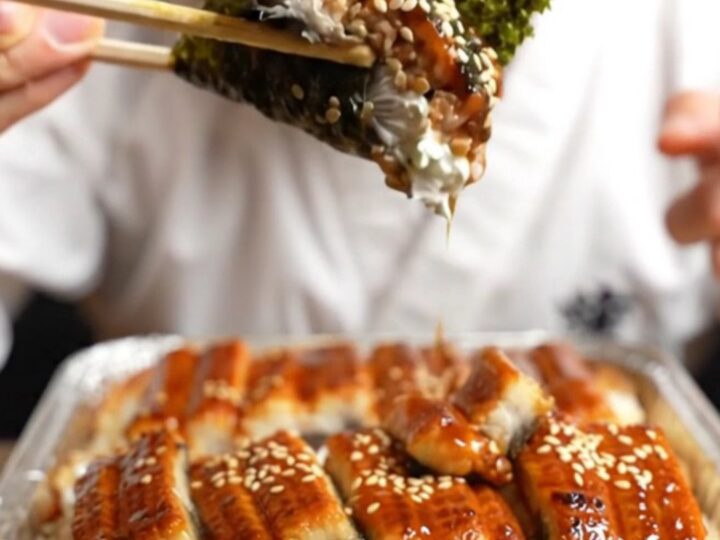
Caramelized Unagi Sushi Bake with Avocado Cream Cheese
- Prep
- Cook
- Total
- Serves
- 6
This caramelized unagi sushi bake brings the cozy warmth of a Tokyo eel house to your table. Layers of seasoned sushi rice, whipped cream cheese, ripe avocado, and diced roasted unagi are baked until the sweet kabayaki glaze turns sticky and caramelized.
The result is a creamy, smoky, sweet casserole that you wrap in crisp nori for the perfect bite. It's an impressive weeknight dinner or party dish that comes together quickly and feels indulgent.
Sushi bake is the casserole-style cousin of hand rolls, and this version takes it over the top with caramelized unagi. Roasted eel, already glazed and full of umami, gets an extra layer of sweet kabayaki sauce that bubbles and browns in the oven.
The creamy base of whipped cream cheese and avocado balances the rich fish, while the seasoned rice holds everything together. Each spoonful is meant to be scooped onto a strip of crisp seaweed, making it a fun, interactive meal.
Ingredients
- 3 1/2 cups cooked sushi rice
- 100 g whipped cream cheese
- 1 large avocado, sliced
- 250 g diced roasted unagi eel
- 3 tbsp spicy mayo
- 1/4 cup kabayaki glaze
for serving
- Crisp roasted seaweed (nori), cut into strips, for serving
- Toasted white sesame seeds, for serving
Why this recipe works
Baking the assembled layers at high heat allows the kabayaki glaze to caramelize quickly, creating a sticky, sweet crust on the eel while the cream cheese melts into the rice. This contrast of textures—crisp edges, creamy middle, tender rice—is what makes the dish so satisfying. The short bake time keeps the avocado from becoming mushy and the rice from drying out.
The combination of whipped cream cheese and avocado provides a cool, velvety counterpoint to the smoky, sweet eel. Whipped cream cheese spreads more easily and creates a lighter layer than regular block cream cheese, so it melds with the rice instead of overwhelming it. The nori wrapper adds a briny crunch that ties all the flavors together, mimicking the experience of eating a sushi roll.
Notes and substitutions
For the best results, use high-quality roasted unagi (freshwater eel) that is already cooked and glazed. It's available in the freezer section of Asian markets or online.
If you can't find it, you can substitute grilled eel or even smoked eel, though the flavor will differ. The kabayaki glaze is typically a sweet soy-based sauce; if you have extra, drizzle it over the finished bake for more intensity.
The sushi rice should be seasoned with rice vinegar, sugar, and salt, just as you would for sushi. If you don't have pre-seasoned rice, make it by folding in a mixture of 2 tablespoons rice vinegar, 1 tablespoon sugar, and 1 teaspoon salt per 3 cups of cooked rice.
The spicy mayo adds a subtle kick; adjust the amount to your heat preference. Use a ripe but firm avocado for the best texture.
- whipped cream cheese: Regular block cream cheese, softened, works if whipped is unavailable; whip it briefly with a fork to lighten.
- spicy mayo: Combine 3 tbsp mayonnaise with 1-2 tsp sriracha or hot sauce to make your own.
- kabayaki glaze: Mix 2 tbsp soy sauce, 2 tbsp mirin, 1 tbsp sugar, and 1 tsp honey; simmer until slightly thickened.
- cooked sushi rice: Use short-grain white rice seasoned with rice vinegar, sugar, and salt if you don't have prepared sushi rice.
Equipment
- 9x9-inch baking dish
- Mixing bowls
- Spatula
- Chef's knife
- Cutting board
Up next · Part 2 of 3
4 steps · 12 min of cooking · what to look for at each stage
Step-by-step instructions (Part 2)