Dinner · Part 2 of 3: Instructions
Creamy Tuscan Garlic Parmesan White Beans Step-by-step instructions
- Prep
- Cook
- Total
- Serves
- 4
Before you start
Before you begin, ensure you have all your ingredients measured and prepared. Rinse the canned cannellini beans thoroughly under cold running water in a colander until the water runs clear, as this removes excess sodium and starch. Mince the garlic cloves finely to ensure the flavor disperses evenly throughout the dish.
Julienne the sun-dried tomatoes into thin strips so they incorporate well into the sauce. Finally, grate your Parmigiano-Reggiano fresh from the block to ensure the best melting properties and flavor, and wash the baby spinach, patting it dry to prevent excess water from diluting your sauce during the final stage.
Ingredients at a glance (9)
- 4 cans cannellini beans, rinsed
- 1/2 cup sun-dried tomatoes, julienned
- 6 cloves garlic, minced
- 1 tbsp fresh rosemary, minced
- 1 cup heavy cream
- 1 cup Parmigiano-Reggiano, grated
- 3 cups fresh baby spinach
- basil-infused olive oil, for serving
- Parmesan cheese, shaved, for serving
Instructions
Preparation and Layering
- Layer the IngredientsPlace the rinsed cannellini beans, julienned sun-dried tomatoes, minced garlic, and fresh rosemary into the ceramic insert of the 6-quart slow cooker. Pour in the heavy cream and add the grated Parmigiano-Reggiano cheese. Stir the mixture gently to ensure the seasonings are evenly distributed throughout the beans and cream base.Look for The ingredients should be layered evenly, with the cream and cheese distributed to create a consistent base for the slow cooking process.Tip Ensure the beans are thoroughly rinsed and drained to maintain the desired texture and prevent excess starch from affecting the creaminess of the sauce.
At the start, you will have a clean, dry slow cooker insert filled with layered, raw ingredients. The beans should be sitting at the bottom, topped with the aromatics and the cheese. There should be a visible layer of cream covering the ingredients, which will eventually meld as the heat rises. Ensure the garlic and rosemary are distributed throughout the mixture, as this will ensure the flavors are balanced even before the cooking begins. Everything should look organized and ready for the long, slow simmer.
Slow Cooking Simmer
- Slow CookCover the slow cooker with the glass lid. Set the device to the LOW heat setting and allow the beans to simmer for three hours. This long, gentle cooking time allows the garlic and rosemary flavors to infuse the cream sauce, while the beans soften and absorb the rich, savory notes of the Parmigiano-Reggiano.Look for The sauce should be bubbling and thick, with the beans tender and the cream mixture reduced to a velvety, cohesive consistency.Tip Avoid lifting the lid frequently during the cooking process to maintain a steady internal temperature and ensure the sauce cooks evenly.
During the three-hour simmer, the kitchen will begin to fill with the savory scent of garlic and fresh rosemary. The sauce will transition from a liquid state into a thickened, creamy consistency as the Parmigiano-Reggiano melts and the bean starches integrate.
You will notice the sun-dried tomatoes softening and swelling as they rehydrate in the cream. When you lift the lid, the mixture should appear uniform, rich, and bubbling gently. It is essential that the sauce does not look broken or separated at this stage.
Final Wilt and Serving
- Wilt Spinach and ServeRemove the lid and add the fresh baby spinach to the hot bean mixture. Stir continuously until the spinach leaves are fully wilted and incorporated into the creamy sauce. Once combined, ladle the beans into shallow bowls. Drizzle each portion with basil-infused olive oil and top with additional shaved Parmesan cheese before serving immediately.Look for The spinach should be bright green and wilted, integrated into the sauce, which should be glossy and coating the back of a spoon.Tip Stir the spinach in gradually to ensure it wilts evenly without cooling down the dish too quickly before serving.
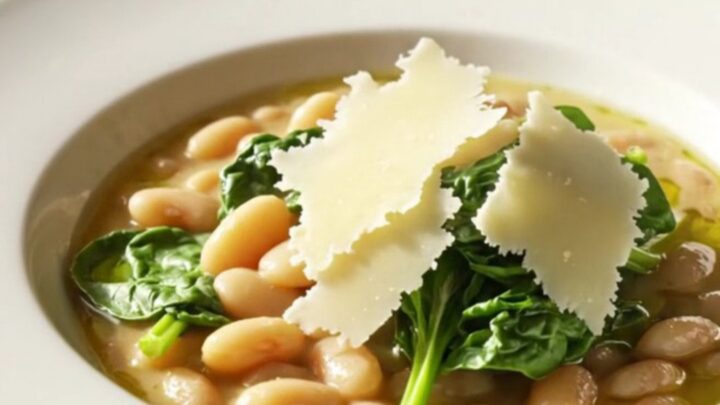
In the final stage, the addition of fresh baby spinach transforms the dish with a vibrant green color. As you stir, the spinach will wilt quickly in the residual heat, losing its volume and becoming tender. The final sauce should be glossy, thick, and perfectly seasoned. When ladled into bowls, the dish should look inviting, with the bright green spinach contrasting against the creamy, golden-hued bean mixture. A final drizzle of basil-infused oil and a dusting of shaved Parmesan should complete the presentation.
Common mistakes
A common mistake is using pre-grated cheese, which often contains anti-caking agents that prevent it from melting into a smooth, velvety sauce. Another error is failing to rinse the canned beans properly; the canning liquid contains excess starch and salt that can make the final dish feel murky or overly salty.
Avoid skipping the step of mincing the garlic and rosemary finely, as larger chunks may not soften enough during the slow-cook cycle. Finally, do not add the spinach too early, as it will lose its vibrant color and become mushy if cooked for the full three hours.
How to tell it’s done
The dish is considered done when the beans are tender but still hold their shape, and the sauce has thickened into a velvety, creamy consistency that coats the back of a spoon. The garlic should be soft and aromatic, and the sun-dried tomatoes should be tender.
Because this recipe uses no raw proteins, there is no internal temperature requirement; simply ensure the entire mixture is bubbling and hot throughout. If the sauce seems too thin after three hours, you can leave the lid off for an extra fifteen minutes on high to allow for further reduction.
Up next · Part 3 of 3
2 variations · storage & make-ahead · 3 answers · printable card
Tips, FAQ & printable recipe (Part 3)← Back to the ingredients (Part 1)