Dinner · Part 1 of 3: Ingredients
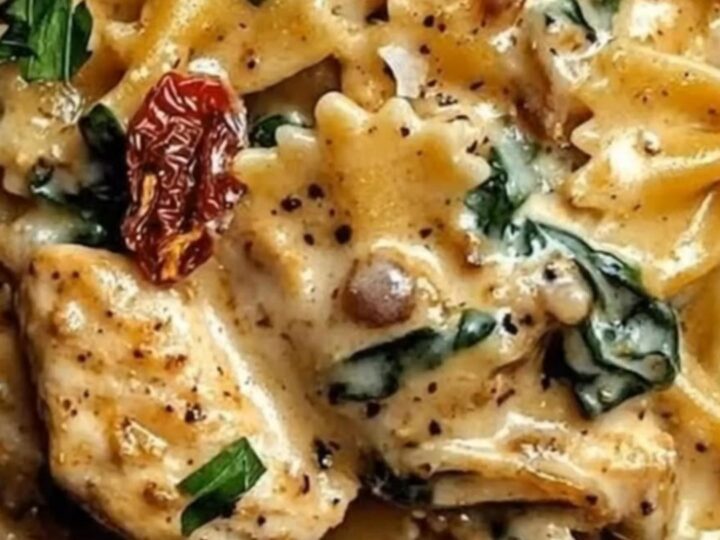
Creamy Tuscan Chicken Bowtie Pasta
- Prep
- Cook
- Total
- Serves
- 4
Bring the warmth of a classic Italian-American trattoria right to the dinner table with this magnificent skillet pasta. Golden, perfectly seared chicken cutlets meet tender bowtie pasta in a velvety, garlic-infused cream sauce studded with sweet sun-dried tomatoes and fresh wilted spinach. It is a restaurant-quality meal that comes together in one skillet with minimal effort.
This recipe delivers a restaurant-style experience without the hassle or the high price tag. By searing the seasoned chicken cutlets first, a deep, caramelized fond builds on the bottom of the pan, which then dissolves into the heavy cream to create an incredibly flavorful sauce base.
Bowtie pasta, or farfalle, is the ideal vehicle for this rich sauce, as its small folds and pockets capture the cream, garlic, and grated parmesan beautifully. It is a comforting, satisfying dinner that satisfies the deepest comfort food cravings.
Ingredients
- 8 oz bowtie pasta
- 1 lb chicken cutlets
- 1 tbsp seasoning
- 3 cloves garlic, minced
- 1/2 cup sun-dried tomatoes, drained and chopped
- 1 cup heavy cream
- 2 cups fresh baby spinach
- 1/2 cup grated parmesan cheese
Why this recipe works
Searing the chicken first is the secret to unlocking deep savory flavor in this dish. As the seasoned chicken cutlets cook in the hot skillet, the proteins undergo the Maillard reaction, creating a beautiful golden-brown crust and leaving caramelized bits, known as fond, stuck to the bottom of the pan.
When the heavy cream and garlic are added, these bits dissolve back into the liquid, infusing the entire cream sauce with a rich, roasted chicken flavor that cannot be replicated with broth alone.
The choice of bowtie pasta is highly functional rather than purely aesthetic. The pinched center of the farfalle creates a dense, chewy texture that contrasts wonderfully with the tender chicken, while the wide wings of the pasta scoop up the velvety cream sauce.
Additionally, adding the grated parmesan cheese at the very end off the heat allows it to melt smoothly into the warm sauce without clumping or breaking, ensuring a perfectly emulsified, silky texture.
Notes and substitutions
For the best results, select high-quality heavy whipping cream rather than half-and-half or milk. Heavy cream has a higher fat content, which prevents the sauce from curdling when it interacts with the acidic sun-dried tomatoes and prevents it from thinning out when tossed with the hot pasta.
Freshly grated parmesan cheese from a block is also essential; pre-shredded cheeses are coated with anti-caking agents that prevent them from melting into a smooth, cohesive sauce.
If chicken cutlets are unavailable, whole chicken breasts can be sliced horizontally into thin cutlets to ensure quick and even cooking. To keep the preparation seamless, ensure the spinach is thoroughly washed and dried before adding it to the pan, as excess water can dilute the rich cream sauce. A heavy-bottomed stainless steel or cast-iron skillet is highly recommended for achieving a superior sear on the chicken.
- bowtie pasta: penne, rigatoni, or rotini pasta
- heavy cream: half-and-half mixed with one tablespoon of cornstarch
Equipment
- Large pot
- Large heavy skillet
- Tongs
- Wooden spoon
- Meat thermometer
- Colander
Up next · Part 2 of 3
6 steps · 20 min of cooking · what to look for at each stage
Step-by-step instructions (Part 2)