Dinner · Part 2 of 3: Instructions
Creamy Tomato Basil Slow Cooker Pork Chops Step-by-step instructions
- Prep
- Cook
- Total
- Serves
- 4
Before you start
Before starting, ensure the slow cooker crock is clean and dry. Dice the onions into uniform pieces to ensure they cook evenly.
If the pork chops are particularly thick, they may require slightly longer cooking time, so aim for a consistent thickness of about one inch for the best results. Have all ingredients measured and ready to go to make the assembly process efficient and quick.
Ingredients at a glance (5)
- 4 count boneless pork chops
- 1 cup diced onion
- 1 tsp dried basil
- 15 oz crushed tomatoes
- 8 oz cream cheese
Instructions
Layering the ingredients
- Assemble ingredientsPlace the boneless pork chops into the bottom of the slow cooker, ensuring they are arranged in an even layer. Scatter the diced onion over the pork. Sprinkle the dried basil evenly across the surface of the meat and onions.Look for ensure the pork chops are evenly distributed at the bottom of the slow cooker to allow for uniform cookingTip trimming excess fat from the chops before placing them in the slow cooker results in a cleaner sauce
The pork chops should be arranged in a single layer at the bottom of the slow cooker. The onions and dried basil should be distributed evenly over the meat, creating a foundation that will infuse the pork with flavor as the juices begin to release during the initial heating stage.
Slow-braising process
- Add sauce and creamPour the crushed tomatoes over the seasoned pork chops. Place the block of cream cheese directly on top of the tomato layer. Cover the slow cooker with the lid and set to low, cooking for 4 hours until the pork is tender.Look for the cream cheese will soften significantly during the cooking process, making it easy to incorporate into the sauce laterTip do not stir the ingredients before starting the slow cooker as the layers will meld perfectly during the long, slow heat application
During this phase, the tomatoes and cream cheese settle into the crock. The tomatoes will release liquid, and the cream cheese will begin to soften significantly.
The slow cooker will be filled with a gentle, aromatic steam, signaling that the braising process is effectively tenderizing the pork.
Sauce emulsification
- Finish and serveRemove the lid and stir the softened cream cheese into the tomato juices to create a smooth, creamy sauce. Ensure the pork chops reach an internal temperature of at least 145°F (63°C). Let the meat rest for 5 minutes before serving.Look for the sauce should be thick and uniform in color once the cream cheese is fully emulsified with the tomato baseSafe temperature 145°F (63°C) internal temperature (steaks, chops and roasts)Tip use a whisk to break up any remaining lumps of cream cheese for the smoothest possible sauce texture
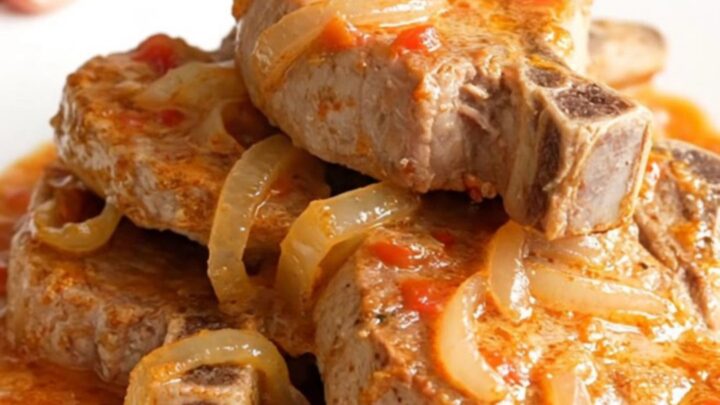
The final phase involves stirring the softened cream cheese into the tomato mixture to create a thick, silky sauce. The pork should be easily pierced with a fork, indicating it is tender and ready to be served, with the sauce clinging perfectly to the surface of the meat.
Common mistakes
A common mistake is adding the cream cheese too early or stirring it in before the cooking process has finished, which can lead to a broken or grainy sauce.
Always let the cream cheese sit on top of the other ingredients and only stir it in at the very end. Another error is overcooking the pork, which can make it dry; monitor the internal temperature closely toward the end of the 4-hour window.
How to tell it’s done
The pork chops are properly cooked when they are fork-tender and reach an internal temperature of 145°F (63°C). Use a meat thermometer inserted into the thickest part of the chop to verify the temperature.
The sauce should be thick and creamy, with the cream cheese fully incorporated. Allow the meat to rest for at least 5 minutes before serving to ensure the juices redistribute throughout the meat, resulting in a more tender bite.
- Steaks, chops and roasts: 145°F (63°C) in the thickest part, then a 3-minute rest
Up next · Part 3 of 3
2 variations · storage & make-ahead · 3 answers · printable card
Tips, FAQ & printable recipe (Part 3)← Back to the ingredients (Part 1)