Dinner · Part 1 of 3: Ingredients
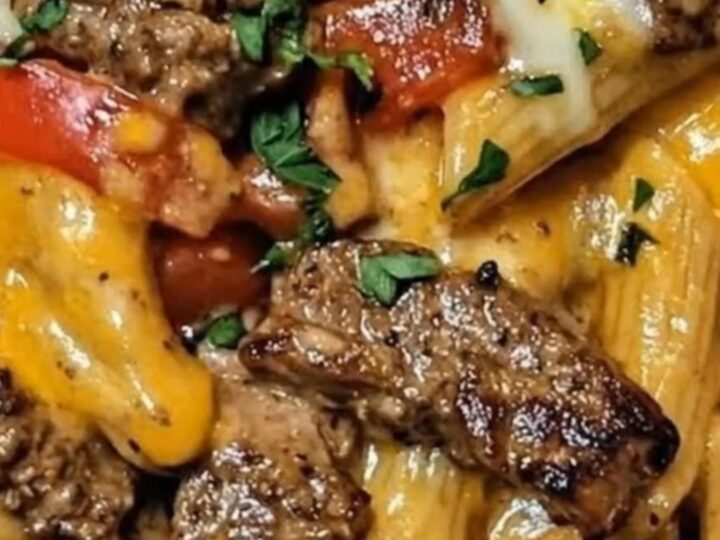
Creamy Steak Bell Pepper Ranch Penne in One Skillet
- Prep
- Cook
- Total
- Serves
- 4
When hunger strikes and comfort is the only answer, nothing satisfies quite like a rich, cheesy pasta dish. This recipe takes classic comfort elements—tender steak, sweet bell peppers, and a savory ranch cream sauce—and combines them into a single, cohesive meal.
The result is a luxurious, restaurant-quality dinner that comes together quickly and delivers immense satisfaction with every single bite.
This skillet dinner is designed for busy weeknights when time is short but cravings are high. By searing seasoned steak bites at a high temperature, you lock in the juices and build a flavorful fond on the bottom of the pan. That golden-brown fond becomes the foundation for a rich, velvety ranch cream sauce.
Tossed with tender penne pasta and melted cheddar cheese, this dish delivers an incredible cheese pull and a perfect balance of savory, herbaceous, and creamy notes. It is a complete, satisfying meal that requires minimal cleanup.
Ingredients
- 8 oz dried penne pasta, cooked and drained
- 1 tbsp olive oil
- 1 lb sirloin steak, cut into bite-sized pieces
- 1 tsp steak seasoning
- 1 large bell pepper, sliced
- 1 cup heavy cream
- 1 tbsp dry ranch seasoning mix
- 1 1/2 cups shredded cheddar cheese, divided
- 1 tbsp chopped fresh parsley, for garnish
Why this recipe works
Searing the steak bites first creates a beautiful caramelized crust on the meat while leaving a rich layer of browned bits, or fond, in the skillet. When the heavy cream is added later, it deglazes the pan, lifting those flavorful bits directly into the sauce.
This technique ensures that every drop of steak flavor is integrated into the final dish, creating a deeper and more complex flavor profile than simply boiling or cooking the elements separately.
Using a combination of heavy cream, ranch seasoning, and cheddar cheese creates an emulsion that clings perfectly to the ridged surface of the penne pasta. The starch from the cooked pasta helps bind the sauce, preventing it from breaking or becoming greasy. This ensures that every forkful of pasta is evenly coated in a smooth, velvety sauce that stays creamy from the skillet to the serving plate.
Notes and substitutions
For the best results, select a high-quality cut of beef such as sirloin, New York strip, or ribeye. Cut the steak into uniform bite-sized pieces so they cook evenly and rapidly in the hot skillet.
If cheddar cheese is not preferred, Monterey Jack, Colby, or mozzarella make excellent substitutes that still provide a fantastic cheese pull. For a touch of heat, consider adding a pinch of red pepper flakes to the sauce.
A heavy cast-iron skillet or a stainless steel pan is highly recommended for this recipe, as they retain and distribute heat efficiently, allowing for a superior sear on the steak bites. Ensure the steak is patted dry with paper towels before seasoning; excess moisture will cause the meat to steam rather than sear, preventing the formation of that delicious caramelized crust.
- cheddar cheese: Monterey Jack, Colby, or mozzarella cheese for a different flavor profile and excellent meltability
- sirloin steak: ribeye or New York strip steak cut into bite-sized pieces
Equipment
- large skillet
- large pot
- colander
- meat thermometer
- wooden spoon
- chef knife
Up next · Part 2 of 3
6 steps · 20 min of cooking · what to look for at each stage
Step-by-step instructions (Part 2)