Dinner · Part 2 of 3: Instructions
Spicy Nduja Mascarpone Paccheri: Silky 5-Ingredient Pasta Step-by-step instructions
- Prep
- Cook
- Total
- Serves
- 4
Before you start
Before you start, bring a large pot of salted water to a boil for the pasta. Finely dice the shallot and mince the garlic. Measure out the nduja, tomatoes, and mascarpone so they're ready to go.
Have the pecorino grated and the basil leaves picked. Because the sauce comes together quickly, having everything prepped keeps the flow smooth. If you're using a jar of nduja, stir it well before measuring.
Ingredients at a glance (9)
- 2 tbsp olive oil
- 1 shallot, finely diced
- 3 cloves garlic, minced
- 75 g spicy Calabrian nduja sausage
- 400 ml crushed cherry tomatoes
- 120 g cold mascarpone cheese
- 400 g bronze-die paccheri pasta
- grated Pecorino Romano, for serving
- fresh basil leaves, for serving
Instructions
Building the flavor base
- Start the sauce baseHeat the olive oil in a large skillet over medium heat. Add the shallot and cook, stirring often, until softened, about 3 minutes. Add the garlic and cook for 1 minute more, until fragrant. Add the nduja sausage, breaking it up with a spoon, and cook until it melts into the oil and turns glossy, about 2 minutes.Look for The shallot is translucent, the garlic is fragrant, and the nduja has melted into a glossy red oil.Safe temperature 160°F (71°C) internal temperature (ground meat)Tip Keep the heat medium so the garlic doesn't burn.
- Add the tomatoesPour in the crushed cherry tomatoes and stir to combine with the nduja mixture. Bring to a gentle simmer, then reduce the heat to low. Let the sauce bubble softly while you cook the pasta, about 8–10 minutes, stirring occasionally.Look for The sauce thickens slightly and the color deepens to a rich red.Tip Simmering slowly concentrates the tomato flavor and melds the spices.
The shallot is soft and translucent, the garlic is fragrant, and the nduja has melted into a glossy, brick-red oil. The tomatoes are just starting to simmer, and the sauce smells smoky and spicy. The color is deep and appetizing.
Cooking pasta and finishing sauce
- Cook the paccheriBring a large pot of generously salted water to a boil. Add the paccheri and cook according to package directions until al dente, typically 11–13 minutes. Reserve about 1 cup of pasta water before draining.Look for The paccheri are tender but still firm to the bite.Tip Stir occasionally to prevent sticking.
- Finish the sauce with mascarponeJust before the pasta is ready, warm the sauce over medium heat. When it reaches about 185°F (85°C), add the cold mascarpone in spoonfuls, stirring constantly until the sauce is glossy and smooth. Do not let it boil.Look for The sauce turns silky and pale orange, with no visible lumps.Tip Cold mascarpone helps prevent curdling; keep the heat moderate.
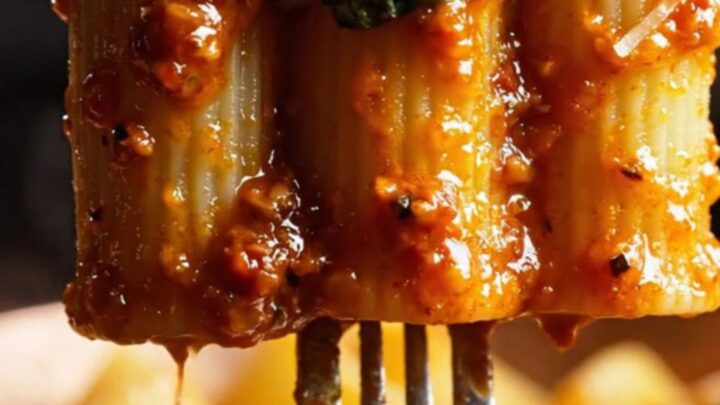
- Toss pasta with sauceDrain the paccheri and add it to the skillet with the mascarpone sauce. Toss gently with a wooden spoon so the sauce coats the pasta and gets inside every tube. If the sauce is too thick, add a splash of the reserved pasta water to loosen it.Look for Each paccheri is coated with a glossy, creamy red sauce.Tip Toss for about 1 minute so the sauce adheres well.
The paccheri are al dente, and the sauce has turned a beautiful pale orange after the mascarpone is added. It's glossy, smooth, and coats the back of a spoon. The pasta is tossed, with sauce clinging inside and out.
Plating and garnishing
- Serve with pecorino and basilDivide the paccheri among warm bowls. Top each serving with a generous shower of grated Pecorino Romano and a few fresh basil leaves. Serve immediately.Look for The cheese melts slightly on the hot pasta, and the basil adds a fresh aroma.Tip Serve with extra pecorino on the side.
The paccheri are piled in bowls, topped with a shower of pecorino and fresh basil leaves. The cheese melts slightly on the hot pasta, and the basil adds a bright, herbal note. The dish looks vibrant and inviting.
Common mistakes
One common mistake is boiling the sauce after adding the mascarpone, which can cause it to separate. Keep the heat moderate and stir constantly.
Another is overcooking the paccheri — they should be firm, not mushy, so they hold their shape and catch the sauce.
Also, don't skip the pasta water; it's the secret to a silky sauce. Finally, be careful with salt: nduja and pecorino are both salty, so taste before adding more.
How to tell it’s done
The dish is done when the paccheri are al dente — tender but with a slight bite — and the sauce coats each tube evenly. The sauce should be glossy and thick enough to cling, not runny.
If it seems too loose, let it simmer for another minute or two; if too thick, add a splash of pasta water. The mascarpone should be fully melted, with no white streaks. Taste and adjust salt if needed, though the pecorino adds saltiness.
- Ground meat: 160°F (71°C) in the thickest part
Up next · Part 3 of 3
4 variations · storage & make-ahead · 5 answers · printable card
Tips, FAQ & printable recipe (Part 3)← Back to the ingredients (Part 1)