Dinner · Part 2 of 3: Instructions
Creamy Southern Slow-Cooker Cheddar Grits with Cajun Sausage Step-by-step instructions
- Prep
- Cook
- Total
- Serves
- 6
Before you start
Before you begin, gather all your ingredients and ensure the slow cooker insert is clean and dry. Measure the chicken stock, heavy cream, and grits accurately to maintain the correct ratio for the desired creamy texture.
Slice the Andouille sausage into uniform rounds to ensure they brown evenly in the skillet. Have your serving bowls ready and warmed, as creamy grits can cool quickly once removed from the heat. Make sure your tasso ham gravy is prepared or warmed through so it is ready to be drizzled immediately upon serving.
Ingredients at a glance (10)
- 2 cups coarse stone-ground white grits
- 6 cups chicken stock
- 1 cup heavy cream
- 4 tbsp butter
- 1 tsp garlic powder
- 1 tsp salt
- 3 cups shredded sharp cheddar cheese
- 1 lb Cajun Andouille sausage, sliced
- 1 cup tasso ham gravy, prepared
- 1/4 cup scallions, for serving
Instructions
Slow-Cooker Preparation
- Prepare the BaseCombine the stone-ground grits, chicken stock, heavy cream, butter, garlic powder, and salt into the ceramic insert of the slow cooker. Whisk the ingredients thoroughly to ensure the grits are evenly distributed and the butter is partially incorporated before starting the cooking process.Look for The mixture should be well-combined with no clumps of grits visible at the bottom of the insert.Tip Whisking thoroughly prevents the grits from settling into a hard mass at the bottom during the slow cooking phase.
At the start, ensure all dry and liquid ingredients are incorporated into the slow cooker insert. The texture will be thin and liquid-like before the cooking process begins. Whisking ensures that the grits are suspended in the stock and cream mixture, which is the most important step to prevent uneven cooking. Verify that the slow cooker is set to the low heat setting before covering the lid, as high heat will cause the mixture to boil over and potentially burn the bottom.
Simmering and Cheese Melting
- Slow Cook and Incorporate CheeseCover the slow cooker and cook on the low setting for six hours. Once the time is up, remove the lid and fold in the shredded sharp cheddar cheese until the mixture is completely melted, smooth, and velvety in texture.Look for The grits will appear thickened and the cheese will be fully incorporated, creating a glossy, molten appearance.Tip If the grits appear too thick after adding the cheese, stir in an extra splash of warm stock or cream to reach your desired consistency.
After six hours, the grits will have absorbed most of the liquid and transformed into a thick, porridge-like consistency. The grains should be tender but still retain a slight bite. When you begin folding in the sharp cheddar, the mixture will transition from a pale yellow to a rich, vibrant gold.
The cheese should melt seamlessly into the grits, creating a glossy, velvety appearance. If the mixture looks too thick, stir in a small amount of warm stock until the desired consistency is achieved.
Searing and Final Assembly
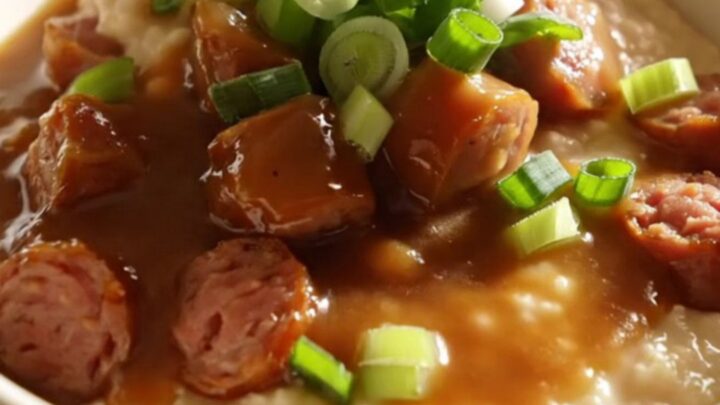
- Sauté Sausage and ServeWhile the grits finish, brown the sliced Andouille sausage in a skillet over medium-high heat until sizzling and charred. Ladle the hot grits into bowls, top with the browned sausage, drizzle with the warm tasso ham gravy, and garnish with fresh chopped scallions. Ensure the sausage is cooked to an internal temperature of 160°F (71°C).Look for The sausage should be crispy on the edges and the gravy should be hot enough to steam.Safe temperature 160°F (71°C) internal temperature (ground meat)Tip Warm your serving bowls in the oven before ladling the grits to keep the dish at an ideal eating temperature for longer.
The sausage should be deeply browned and charred on the outside while remaining juicy on the inside. When serving, the contrast between the hot, creamy grits and the sizzling sausage creates the perfect sensory experience. The gravy should be thick enough to sit on top of the grits without soaking in immediately. Ensure the scallions are freshly chopped to provide a crisp, bright finish that cuts through the richness of the cheese and the smokiness of the Andouille.
Common mistakes
A common mistake is using instant or quick-cooking grits, which will turn into a gummy paste after six hours of slow cooking. Always use stone-ground varieties for the best texture. Another error is adding the cheese too early; high heat for extended periods can cause the cheese to separate, leaving oily pools on the surface of the grits.
Finally, neglecting to whisk the mixture thoroughly at the start can lead to hard, uncooked clumps of grits at the bottom of the pot, which are difficult to fix once cooking begins.
How to tell it’s done
The grits are done when they have softened completely and achieved a thick, velvety, and pourable consistency that coats the back of a spoon. When the sharp cheddar cheese is folded in, it should melt instantly into the hot grits, resulting in a smooth, unified color.
The Andouille sausage must be browned and sizzling, reaching an internal temperature of at least 160°F (71°C) to ensure safety. The final dish should be hot, aromatic, and hold its shape slightly in the bowl without appearing watery.
- Ground meat: 160°F (71°C) in the thickest part
Up next · Part 3 of 3
2 variations · storage & make-ahead · 3 answers · printable card
Tips, FAQ & printable recipe (Part 3)← Back to the ingredients (Part 1)