Dinner · Part 2 of 3: Instructions
Creamy Smothered Chicken with Bacon and Parsley Step-by-step instructions
- Prep
- Cook
- Total
- Serves
- 4
Before you start
Before beginning, ensure all ingredients are measured and ready, as the cooking process moves quickly once the heat is applied. Pat the chicken breasts dry with paper towels to ensure they sear properly rather than steaming.
Have your serving plates cleaned and ready to go, and chop the parsley so it is ready for the final garnish as soon as the chicken is plated.
Ingredients at a glance (4)
- 4 pieces boneless, skinless chicken breasts
- 6 slices bacon, chopped
- 1 cup heavy cream
- fresh parsley, chopped, for serving
Instructions
Searing the chicken
- Sear the chickenHeat a large skillet over medium-high heat. Add the chicken breasts and sear until they are golden brown on both sides. Continue cooking until the chicken reaches an internal temperature of 165°F (74°C). Remove the chicken from the skillet and set aside on a plate to rest for at least 5 minutes.Look for The chicken should be golden brown and firm to the touch.Safe temperature 165°F (74°C) internal temperature (poultry)Tip Ensure the skillet is hot before adding the chicken to achieve a good sear.
The chicken should have a deep golden-brown crust on both sides. The kitchen will begin to smell like savory, seared poultry. It is essential to ensure the chicken is cooked through to the required temperature of 165°F (74°C) before moving to the next phase, as this ensures both safety and the proper texture for the final dish.
Building the cream sauce
- Prepare the bacon cream sauceIn the same skillet, add the chopped bacon. Fry until the bacon is crispy and the fat has rendered. Pour in the heavy cream and stir to combine with the bacon bits. Simmer the mixture for a few minutes until it thickens into a rich, creamy consistency.Look for The sauce will bubble and thicken enough to coat the back of a spoon.Tip Scrape the browned bits from the bottom of the skillet into the sauce for extra flavor.
The bacon should be crispy and golden, and the cream should have reduced into a silky, thick sauce that smells rich and savory. As it bubbles, the sauce will darken slightly as it incorporates the bacon fat. Check that the consistency is thick enough to coat the back of a spoon before adding the chicken back into the skillet.
Assembling the final dish
- Assemble and serveReturn the cooked chicken breasts to the skillet, coating them thoroughly with the creamy bacon sauce. Once the chicken is heated through, transfer the dish to serving plates. Garnish generously with fresh chopped parsley before serving immediately while steaming hot.Look for The sauce should cling to the chicken breast.Tip Serve immediately to ensure the sauce remains silky and warm.
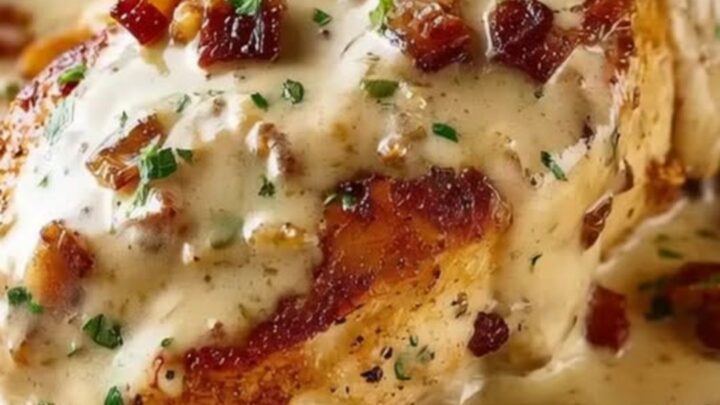
The chicken should be thoroughly coated in the sauce and steaming hot. The fresh parsley should be vibrant green against the creamy background of the sauce.
Once the dish is assembled and garnished, it is ready to be served immediately. Ensure the chicken has rested for at least 5 minutes before the final plating to keep it juicy.
Common mistakes
Avoid moving the chicken too early in the pan, as this prevents a proper sear from forming; let it cook undisturbed for several minutes. Do not boil the heavy cream on high heat, as it may cause the sauce to break or separate.
Keep the heat at a steady simmer to ensure the sauce thickens gradually and maintains a smooth, velvety texture without becoming grainy or scorched.
How to tell it’s done
The chicken is done when it is golden brown on the outside and reaches an internal temperature of 165°F (74°C). The sauce should be thick enough to coat the back of a spoon without running off immediately.
Watch for the bacon to turn deep brown and crispy, which signals that it has rendered enough fat to season the cream sauce appropriately for the best flavor.
- Poultry: 165°F (74°C) in the thickest part
Up next · Part 3 of 3
2 variations · storage & make-ahead · 3 answers · printable card
Tips, FAQ & printable recipe (Part 3)← Back to the ingredients (Part 1)