Dinner · Part 2 of 3: Instructions
Creamy Smothered Chicken and Rice for Comforting Dinners Step-by-step instructions
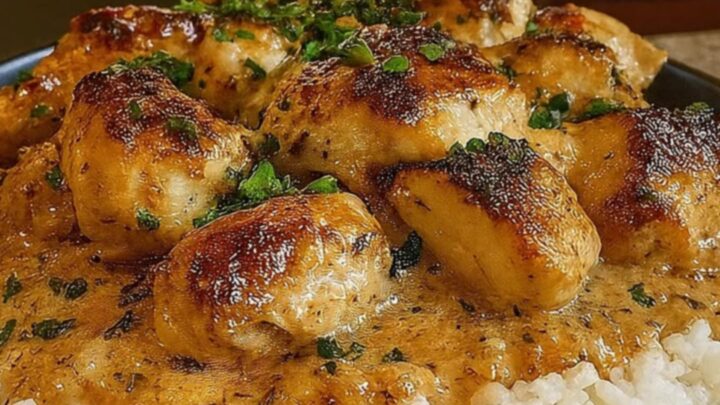
- Prep
- Cook
- Total
- Serves
- 4
Before you start
Before starting, ensure all chicken pieces are cut into uniform sizes, roughly one inch, to promote even cooking. Have your cream measured and your parsley chopped so you are ready to move quickly during the sauce reduction phase.
It is essential to have your serving bowls and warm rice ready, as this dish is best enjoyed immediately while the sauce is at its peak consistency and the chicken remains piping hot and perfectly tender.
Ingredients at a glance (4)
- 1 1/2 lb boneless skinless chicken breasts, cut into bite-sized pieces
- 1 cup heavy cream
- 2 tbsp fresh parsley, chopped
- 2 cups steamed white rice
Instructions
Searing the Chicken
- Sear the ChickenHeat a large skillet over medium-high heat. Add the chicken pieces in a single layer, ensuring not to overcrowd the pan, and sear until golden brown on all sides.Look for The chicken should have a deep golden-brown crust and be mostly cooked through after about 6 to 8 minutes of searing.Tip Do not move the chicken too early; letting it sear undisturbed builds essential flavor through the Maillard reaction.
The chicken should be evenly browned on all sides, creating a beautiful golden crust. You should hear a steady, aggressive sizzle when the chicken first hits the pan, which is the primary indicator that the pan is hot enough to develop the necessary flavor.
Ensure the pieces are not overlapping and work in batches if your skillet is on the smaller side to maintain that high heat.
Developing the Sauce
- Create the Creamy SauceReduce the heat to medium. Pour the heavy cream into the skillet, scraping up the browned bits from the bottom. Whisk gently as the liquid begins to simmer and thicken into a velvety sauce that coats the back of a spoon.Look for The sauce will thicken significantly as the cream reduces, becoming glossy and rich enough to coat the chicken pieces evenly.Tip Keep the heat controlled to prevent the cream from boiling over or separating during the reduction process.
The cream will start to bubble and thicken, turning from a thin liquid into a rich, creamy coating. As you whisk, the sauce should pick up all the browned bits from the pan, creating a deep, complex flavor. Check that the consistency is thick enough to coat the chicken without pooling too much in the bottom of the pan, indicating it is ready for the final step.
Final Assembly
- Finish and ServeStir in the fresh chopped parsley. Once the chicken reaches an internal temperature of 165°F (74°C), remove from heat and let it rest for 5 minutes. Serve the smothered chicken immediately over a warm bed of steamed white rice.Look for The dish is ready when the sauce is thick and fragrant, and the chicken is fully cooked and tender to the touch.Safe temperature 165°F (74°C) internal temperature (poultry)Tip Resting the chicken allows the juices to redistribute, ensuring every bite remains moist and flavorful.
The sauce should be glossy and the chicken fully tender. The fresh parsley should be evenly distributed, adding bright flecks of green throughout the dish. Before serving, verify that the chicken has reached the safe internal temperature of 165°F (74°C) and allow it to rest for a few minutes so the sauce can settle and thicken slightly more, ensuring a perfect plating experience.
Common mistakes
A common mistake is overcrowding the skillet, which lowers the temperature and prevents the chicken from searing properly. Another error is rushing the sauce reduction; take the time to let the cream thicken slowly to achieve the correct velvety texture.
Avoid using too much heat during the cream phase, as this can cause the sauce to separate or become grainy, which ruins the smooth, luxurious mouthfeel that defines this classic comfort dish.
How to tell it’s done
The chicken is done when it is opaque throughout and reaches an internal temperature of 165°F (74°C). The sauce should be thick enough to coat the back of a spoon and cling to the chicken bites rather than running off.
The mixture should smell savory and rich, with the herbs adding a fresh aromatic finish. Always verify the temperature with a meat thermometer to ensure safety without compromising the tenderness of the meat.
- Poultry: 165°F (74°C) in the thickest part
Up next · Part 3 of 3
2 variations · storage & make-ahead · 3 answers · printable card
Tips, FAQ & printable recipe (Part 3)← Back to the ingredients (Part 1)