Dinner · Part 2 of 3: Instructions
Slow Cooker Smoked Gouda Scalloped Potatoes Step-by-step instructions
- Prep
- Cook
- Total
- Serves
- 8
Before you start
Before starting, read the recipe through and gather all ingredients. Grease the slow cooker insert with butter or nonstick spray. Shred the smoked Gouda if not already shredded. Wash and scrub the potatoes thoroughly if leaving the skin on.
Slice the potatoes thinly and evenly, using a mandoline or a sharp knife. Measure the soup, cream, thyme, salt, and pepper. Have a medium bowl and spatula ready for mixing the sauce. The slow cooker should be set on a stable surface near an outlet.
Ingredients at a glance (7)
- 3 lb Yukon Gold potatoes, thinly sliced
- 8 oz smoked Gouda, shredded
- 2 tsp dried thyme
- 1 can (10.5 oz) condensed cream of mushroom soup
- 1 cup heavy cream
- 1 tsp kosher salt
- 1/2 tsp black pepper
Instructions
Layer and Pour
- Layer the PotatoesLightly grease the inside of a 6-quart slow cooker with butter or nonstick spray. Arrange one-third of the sliced potatoes in an even layer on the bottom, overlapping slightly. Sprinkle with a pinch of salt and pepper, then scatter a third of the shredded smoked Gouda over the top. Repeat with another third of the potatoes, salt, pepper, and Gouda, then finish with the remaining potatoes.Look for The potato layers should be evenly distributed, with cheese between each layer.Tip Use a mandoline for uniformly thin slices so they cook evenly.
- Add the Creamy MixtureIn a medium bowl, whisk together the condensed cream of mushroom soup, heavy cream, dried thyme, and the remaining salt and pepper until smooth. Pour the mixture evenly over the potatoes, using a spatula to gently press down so the liquid seeps between the layers. Sprinkle the remaining shredded Gouda over the top.Look for The liquid should cover most of the potatoes, with cheese visible on top.Tip If the soup is very thick, whisk it well with the cream to ensure a smooth sauce.
- Cover and CookCover the slow cooker with the lid. Cook on low for 4 to 5 hours, or on high for 2 to 3 hours, until the potatoes are tender when pierced with a fork and the cheese is melted and bubbly. Avoid lifting the lid during the first 2 hours of cooking to maintain even heat.Look for The edges will look bubbly and the top will be golden brown.Tip Cooking on low gives the potatoes more time to become creamy and tender.
At the end of this phase, the slow cooker is filled with alternating layers of potatoes and cheese, topped with a creamy thyme-infused sauce. The sauce should be evenly distributed, and the top layer of cheese is visible.
The mixture looks inviting, with the pale golden cheese contrasting with the white potatoes. Before moving on, ensure the sauce has been poured evenly and the potatoes are mostly submerged.
Slow Cook to Tender
- Check for TendernessAfter the minimum cooking time, gently insert a fork or the tip of a knife into the center of the potatoes. They should slide in easily with no resistance. If they are still firm, continue cooking in 30-minute increments until fully tender. The sauce should be thick and creamy, not watery.Look for The fork should meet no resistance and the sauce should cling to the potatoes.Tip If the potatoes are not done after the suggested time, the slow cooker may run cool; give them more time.
- Rest Before ServingOnce the potatoes are tender, turn off the slow cooker and let the dish rest, uncovered, for 10 to 15 minutes. This allows the sauce to thicken slightly and the flavors to meld. Gently stir the potatoes once to redistribute the sauce, being careful not to break the slices.Look for The sauce will look slightly thicker and the potatoes will hold their shape.Tip Resting also prevents the dish from being too hot to serve immediately.
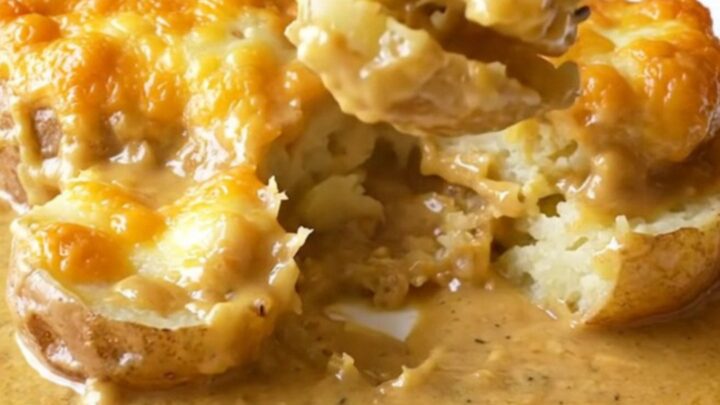
After cooking, the potatoes are fork-tender and the sauce has thickened to a velvety consistency. The top is golden brown and bubbly, with melted cheese forming a slightly crusty layer. The aroma is rich and smoky. Check that a fork pierces the potatoes easily and that the sauce is not watery. If the potatoes are still firm, continue cooking in 30-minute increments.
Rest and Serve
- Serve WarmSpoon the scalloped potatoes onto a serving platter or individual plates. Garnish with a sprinkle of fresh thyme or additional cracked black pepper if desired. Serve warm as a comforting side dish alongside roasted meats, poultry, or a simple green salad.Look for The potatoes should be creamy, with a golden cheese crust on top.Tip For a crispy top, transfer to a broiler-safe dish and broil for 1-2 minutes after slow cooking.
After resting, the dish has set slightly, making it easier to serve. The sauce is creamy and clings to the potatoes, and the cheese is fully melted. The potatoes hold their shape but are soft enough to cut with a fork. The dish looks appetizing with a golden top and creamy interior. Serve warm, garnished with fresh thyme if desired.
Common mistakes
One common mistake is slicing the potatoes too thick, which leads to uneven cooking. Aim for uniform 1/8-inch slices. Another issue is lifting the lid too often during cooking, which releases heat and extends the cooking time. Avoid peeking for the first 2 hours.
Using too little liquid can result in dry potatoes; ensure the sauce covers most of the potatoes. Overcooking can make the potatoes mushy, so check for doneness at the minimum time. Finally, don't skip the resting period—it helps the sauce thicken.
How to tell it’s done
The potatoes are done when they are tender throughout and easily pierced with a fork or the tip of a knife. The sauce should be thick and creamy, not watery. The top should be golden brown and bubbly, with melted cheese.
If you insert a fork into the center, it should slide in with little resistance. If the potatoes are still firm, continue cooking in 30-minute increments. Once done, let the dish rest for 10 to 15 minutes before serving to allow the sauce to set slightly.
Up next · Part 3 of 3
4 variations · storage & make-ahead · 5 answers · printable card
Tips, FAQ & printable recipe (Part 3)← Back to the ingredients (Part 1)