Dinner · Part 2 of 3: Instructions
Creamy Slow Cooker Fish Waterzooi Step-by-step instructions
- Prep
- Cook
- Total
- Serves
- 4
Before you start
Prepare the ingredients by thoroughly cleaning the leeks to remove any trapped grit. Slice the leeks and carrots into even, thin rounds to ensure they soften at the same rate as the fish. Cut the cod and salmon into uniform, two-inch chunks.
Ensure all ingredients are at room temperature or chilled; if using frozen fish, thaw it completely in the refrigerator before starting the recipe to ensure safe and even cooking throughout the process.
Ingredients at a glance (7)
- 1 lb cod fillets, cut into chunks
- 1 lb salmon fillets, cut into chunks
- 2 cups leeks, sliced
- 2 cups carrots, sliced
- 1 fish bouillon cube
- 1/2 cup dry white wine
- 1 cup heavy cream
Instructions
Layering the base
- Layering the ingredientsPlace the chunks of raw cod and salmon at the bottom of the slow cooker insert. Scatter the sliced leeks and carrots evenly over the fish pieces. Ensure the vegetables are distributed to allow for even cooking.Look for Fish pieces should be in a single layer at the bottom.Tip Cut the fish into uniform chunks to ensure they cook at the same rate.
At this stage, the slow cooker should be neatly layered with the fish on the bottom and the vegetables on top. The ingredients should be arranged to ensure the fish is fully submerged in the eventual liquid.
Check that the leeks are clean and sliced uniformly to avoid any gritty textures in the final stew. Everything should look fresh and ready for the liquid components.
Adding the liquids
- Seasoning and liquidCrumble the fish bouillon cube directly over the vegetable and fish layer. Pour the dry white wine and heavy cream over the top of the ingredients. Do not stir, as the liquids will settle during the cooking process.Look for Liquid should be visible around the edges of the bowl.Tip Crumbling the cube ensures it dissolves evenly into the sauce.
The liquids should be poured gently over the top, allowing them to seep down through the layers of fish and vegetables. The bouillon should be evenly distributed. At this point, the slow cooker will contain all the necessary elements. Ensure the lid is securely placed on the cooker to prevent heat loss, which is essential for the gentle poaching process that follows.
Final cooking
- Slow cooking to donenessCover the slow cooker and cook on low for 3 hours or until the fish reaches 145°F (63°C). The fish should flake easily with a fork when tested. Once cooked, let the stew rest for 5 minutes before serving.Look for The fish is opaque and flakes easily when pressed with a fork.Safe temperature 145°F (63°C) internal temperature (fish)Tip Avoid overcooking the fish, as it will become tough and dry.
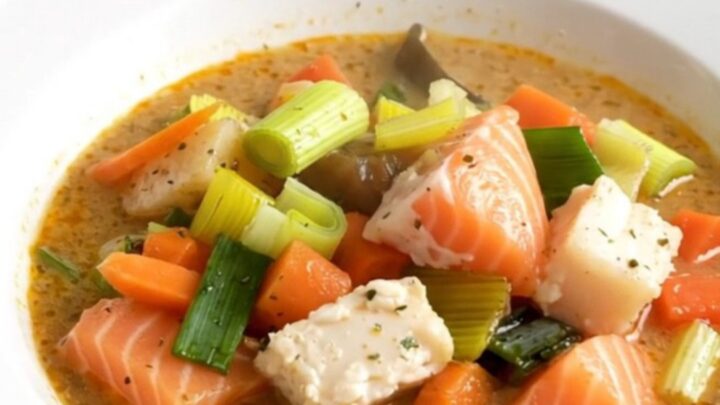
The stew is finished when the kitchen smells aromatic and the fish is perfectly tender. The broth should be creamy and slightly thickened. Before serving, verify that the fish has reached 145°F (63°C) and that the vegetables are tender. The final dish should look vibrant, with the colors of the carrots and leeks contrasting against the tender, cooked fish pieces.
Common mistakes
A common mistake is overcrowding the slow cooker, which can cause the fish to steam unevenly and become mushy. Another error is overcooking the fish, which ruins its delicate texture; always monitor the time closely.
Avoid stirring the pot mid-cooking, as this will break the fish into small, unappealing pieces. Finally, ensure the bouillon cube is thoroughly crumbled, as a whole cube may not dissolve completely, leading to uneven seasoning throughout the creamy broth.
How to tell it’s done
The dish is finished when the fish is completely opaque and flakes easily when gently pressed with a fork. It should reach a minimum internal temperature of 145°F (63°C). The sauce will have thickened slightly and appear glossy and rich.
If the fish still appears translucent or resists flaking, continue cooking for another 15 minutes before checking again. Let the stew rest for 5 minutes to allow the sauce to stabilize.
- Fish: 145°F (63°C) in the thickest part
Up next · Part 3 of 3
2 variations · storage & make-ahead · 3 answers · printable card
Tips, FAQ & printable recipe (Part 3)← Back to the ingredients (Part 1)