Dinner · Part 2 of 3: Instructions
Slow Cooker Vodka Sauce Butter Beans Step-by-step instructions
- Prep
- Cook
- Total
- Serves
- 6
Before you start
Before you start, make sure you have a slow cooker large enough to hold the beans and sauce — a 4-quart or larger model works well. Drain and rinse the butter beans in a colander, then set them aside.
Grate the parmesan if using a wedge, and measure out the Italian seasoning. Have the vodka sauce jar ready to open. No other prep is needed; the dish comes together in minutes.
Ingredients at a glance (4)
- 3 cans butter beans, drained and rinsed
- 1/2 cup grated parmesan cheese
- 2 tsp Italian seasoning
- 1 jar vodka sauce (about 24 oz)
Instructions
Assemble the Base
- Add the beansPlace the drained and rinsed butter beans in the slow cooker insert. Use a spoon to spread them into an even layer.Look for The beans should cover the bottom of the slow cooker in a single layer.Tip Rinsing canned beans removes excess sodium and helps the sauce stay balanced.
- Add the cheese and seasoningSprinkle the grated parmesan over the beans, then shake the Italian seasoning evenly over the top.Look for The cheese and herbs form a light, fragrant coating over the beans.Tip Grate parmesan from a wedge for the best melting and flavor.
After adding the beans, parmesan, and Italian seasoning, the slow cooker insert will show a layered look: pale beans covered with a light dusting of cheese and herbs. The aroma is fresh and herby, with a faint nutty cheese scent. Before moving on, make sure the seasonings are evenly distributed over the beans so every bite is flavorful.
Simmer and Thicken
- Pour in the vodka saucePour the vodka sauce over the beans, cheese, and seasoning. Stir gently with a wooden spoon until everything is well combined.Look for The sauce turns a uniform pink and coats the beans completely.Tip Use a good-quality vodka sauce with a creamy texture for the best result.
- Cover and cookPlace the lid on the slow cooker and cook on low for 4 to 5 hours, or on high for 2 to 3 hours, until the beans are tender and the sauce has thickened slightly.Look for The sauce will look bubbly at the edges and the beans will be very soft when pressed.Tip Stir once halfway through if possible, but avoid lifting the lid too often to keep the heat steady.
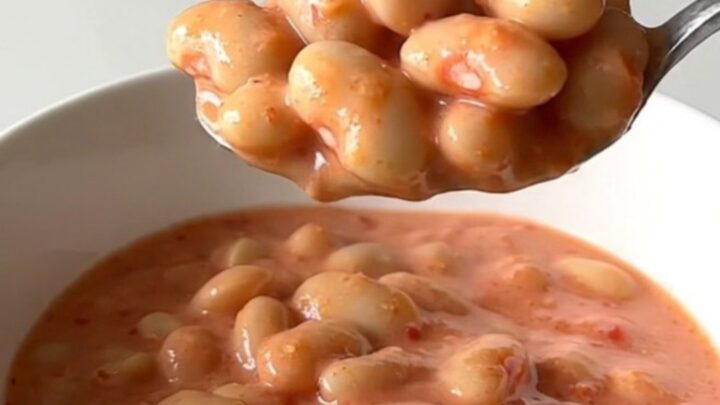
Once the vodka sauce is stirred in, the mixture turns a uniform pink. As it cooks, the sauce will start to bubble gently around the edges. The kitchen fills with a rich, tomato-cream aroma.
After a few hours, the sauce should be noticeably thicker, and the beans will look plump and glossy. Check that the sauce is not too thin; if it is, continue cooking with the lid off.
Finish and Serve
- ServeSpoon the butter beans and sauce into a shallow bowl. Serve hot, with extra parmesan on the side if desired.Look for The sauce should be thick and creamy, clinging to the beans.Tip Let the beans rest for 5 minutes before serving to allow the sauce to settle.
At the end of cooking, the sauce should be thick enough to coat a spoon, and the beans should be very tender but still hold their shape. The color is a deep pink, and the surface looks creamy, not watery. Give the beans a gentle stir — they should move easily through the sauce. Serve hot, with the sauce clinging to each bean.
Common mistakes
One common mistake is using a thin tomato sauce instead of a creamy vodka sauce, which results in a watery dish. Stick with a sauce that has cream or a creamy texture. Another pitfall is overcooking, which can turn the beans mushy — check for doneness at the lower end of the time range.
Don't skip rinsing the canned beans, as the starchy liquid can make the sauce overly salty or thick. Finally, resist lifting the lid repeatedly during cooking, as this releases heat and extends the cooking time.
How to tell it’s done
The butter beans are done when they are very tender and the sauce has thickened to a creamy, spoon-coating consistency. The sauce should look glossy and slightly reduced, with no watery liquid pooling around the beans. When you press a bean with the back of a spoon, it should mash easily.
Since there is no raw protein in this recipe, there is no minimum internal temperature to check — just visual and texture cues. If the sauce seems too thin after cooking, let it cook uncovered for an additional 20 to 30 minutes to reduce.
Up next · Part 3 of 3
4 variations · storage & make-ahead · 5 answers · printable card
Tips, FAQ & printable recipe (Part 3)← Back to the ingredients (Part 1)