Dinner · Part 2 of 3: Instructions
Creamy Shrimp Fettuccine Alfredo in Thirty Minutes Step-by-step instructions
- Prep
- Cook
- Total
- Serves
- 4
Before you start
Before starting, measure out all ingredients and have them ready near the stove. Peel and vein the shrimp, pat them completely dry with paper towels, and toss them with the seasoning.
Grate the parmesan cheese finely. Having these components prepared beforehand prevents any delay and ensures the shrimp cook quickly without overcomplicating the process once the heat is on.
Ingredients at a glance (7)
- 8 oz fettuccine pasta
- 1 lb raw shrimp, peeled and deveined
- 1 tsp Cajun seasoning
- 15 oz creamy Alfredo sauce (store-bought or made ahead)
- 1 cup parmesan cheese, freshly grated
- 1/2 tsp freshly cracked black pepper
- 2 tbsp fresh parsley, chopped
Instructions
Prep and Pasta Boiling
- Boil the FettuccineBring a large pot of salted water to a boil. Add the fettuccine pasta and cook according to package instructions until al dente. Drain the noodles in a colander and set them aside.Look for The pasta should be tender with a slight bite.Tip Do not rinse the pasta after draining, as the starch helps the sauce cling.
- Season the ShrimpPat the raw shrimp completely dry with paper towels to ensure a good sear in the pan. Place the shrimp in a bowl, sprinkle with the Cajun seasoning, and toss until every piece is evenly coated. Keep refrigerated until ready to cook.Look for The shrimp should be fully covered in spices.Tip Ensure the shrimp are dry so they sear instead of steaming.
At the end of this phase, the fettuccine should be cooked to a firm al dente texture, showing a tiny white core when bitten. The drained pasta will steam gently in the colander, and the raw shrimp will be evenly coated in seasoning, resting safely in the refrigerator to keep them cold and firm before searing.
Searing Shrimp and Simmering Sauce
- Sear the ShrimpHeat a large skillet over medium-high heat. Add the seasoned shrimp in a single layer and cook for 2 to 3 minutes per side until they turn pink and opaque, reaching a safe internal temperature of 145°F (63°C). Transfer the cooked shrimp to a plate and set aside.Look for The shrimp should be pink, opaque, and slightly caramelized.Safe temperature 145°F (63°C) internal temperature (shellfish)Tip Do not overcrowd the pan; cook in batches if necessary.
- Simmer the Alfredo SaucePour the creamy Alfredo sauce into the same skillet over medium heat. Bring the sauce to a gentle simmer, allowing it to bubble and absorb the flavorful drippings left in the pan from the shrimp.Look for The cream sauce should be bubbling gently around the edges.Tip Keep the heat moderate to prevent the sauce from separating.
By the end of this stage, the shrimp will be beautifully pink, opaque, and slightly caramelized on the edges, having reached a safe internal temperature of 145°F (63°C). The Alfredo sauce will be bubbling gently in the skillet, releasing a rich, aromatic steam that signals the sauce is ready for the pasta.
Emulsifying and Finishing
- Combine and TossAdd the cooked fettuccine and seared shrimp back to the skillet with the bubbling sauce. Toss gently to coat the noodles completely, then sprinkle the freshly grated parmesan cheese over the pasta, stirring until melted.Look for The sauce should become thick, glossy, and cling to the pasta.Tip If the sauce is too thick, splash in a little warm water.
- Garnish and ServeRemove the skillet from the heat. Sprinkle the freshly cracked black pepper and chopped fresh parsley over the creamy pasta, and serve immediately while steaming hot.Look for The herbs should be bright green and fragrant.Tip Serve in warmed bowls to keep the cream sauce velvety.
At the final checkpoint, the cheese will be completely melted into the sauce, creating a glossy, thick, and cohesive coating.
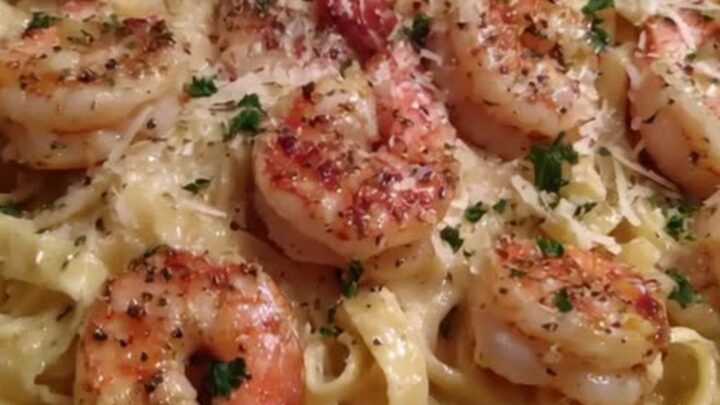
The fettuccine and shrimp will be thoroughly coated, with the freshly cracked black pepper and green parsley distributed evenly throughout the skillet, presenting a picture-perfect, steaming dish ready to serve.
Common mistakes
One common mistake is using pre-shredded cheese, which often clumps and creates a grainy texture in the sauce. Another error is overcooking the shrimp, making them tough and rubbery; keep a close eye on the skillet and remove them as soon as they turn opaque.
Lastly, avoid boiling the Alfredo sauce rapidly, as high heat can cause the dairy in the sauce to separate and become oily.
How to tell it’s done
The shrimp are done when they curl slightly into a loose 'C' shape, turn a vibrant pink on the outside, and become opaque white on the inside.
To guarantee food safety, confirm that the thickest part of the shrimp reaches an internal temperature of 145°F (63°C) using a digital food thermometer. The pasta is done when it is tender but still retains a slight bite.
- Shellfish: 145°F (63°C) in the thickest part
Up next · Part 3 of 3
2 variations · storage & make-ahead · 3 answers · printable card
Tips, FAQ & printable recipe (Part 3)← Back to the ingredients (Part 1)