Dinner · Part 2 of 3: Instructions
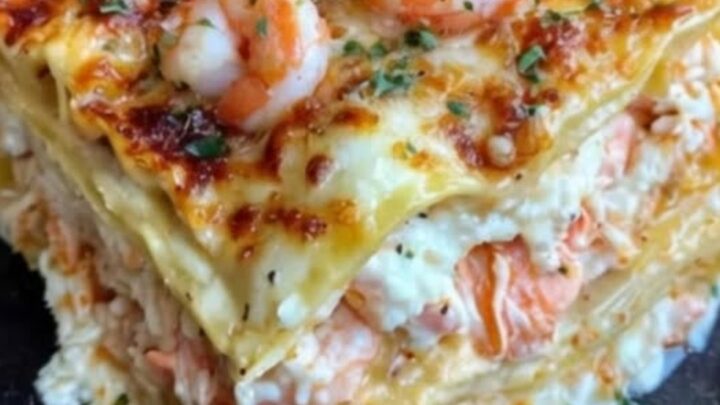
Creamy Seafood Lasagna with Shrimp and Crab Step-by-step instructions
- Prep
- Cook
- Total
- Serves
- 8
Before you start
Before beginning, ensure all ingredients are at room temperature to promote even cooking. Preheat the oven to 375°F (190°C) and prepare your workspace by clearing enough room for the large baking dish and assembly bowls.
Have your noodles boiled, drained, and ready to go, and ensure the crab meat has been carefully picked over to remove any hidden shell fragments. Preparing these components in advance makes the assembly process smooth and efficient, preventing the pasta from sticking together or becoming overly dry before the sauce is added.
Ingredients at a glance (5)
- 12 lasagna noodles, boiled until al dente
- 1 lb shrimp, peeled and deveined
- 8 oz crab meat, picked over for shells
- 3 cups béchamel sauce, homemade or store-bought
- 2 cups mozzarella cheese, shredded
Instructions
Preparation of Components
- Prepare the Seafood and PastaBoil the lasagna noodles in salted water until al dente, then drain and set aside. In a separate bowl, gently toss the shrimp and crab meat with a little seasoning to ensure even flavor distribution throughout the layers of the lasagna.Look for noodles are tender but firm to the biteTip Do not overcook the noodles as they will continue to soften while baking in the creamy sauce.
At the end of this phase, the noodles should be al dente and the seafood cleaned and seasoned. Check that you have all your ingredients organized and within reach. The seafood should be handled gently to maintain its texture, and the pasta should be kept moist until you are ready to start the assembly process for the layers.
Layering the Lasagna
- Assemble the LayersSpread a thin layer of the creamy béchamel sauce on the bottom of the 9x13 inch baking dish. Place a layer of noodles, followed by a portion of the shrimp, crab, and more sauce. Repeat the layering process until all ingredients are used, finishing with a generous layer of sauce and shredded mozzarella cheese on top.Look for sauce is evenly distributed between each layer of pastaTip Press down gently on each layer to compact the lasagna and ensure it holds its shape when sliced.
Once the assembly is complete, the dish should look uniform, with the sauce evenly distributed. Ensure the top is completely covered with a thick layer of shredded mozzarella to create a protective barrier.
Check that the edges are clean to prevent burning and that the lasagna is properly compacted before moving the dish into the preheated oven for the final stage.
Baking and Resting
- Bake and ServeCover the baking dish with foil and bake in a preheated oven at 375°F (190°C) for 30 minutes. Remove the foil and bake for an additional 15 minutes, or until the cheese is browned and bubbly. Ensure the shrimp reaches an internal temperature of 145°F (63°C). Let the lasagna rest for at least 15 minutes before slicing and serving.Look for cheese is golden brown and bubbling on the surfaceSafe temperature 145°F (63°C) internal temperature (shellfish)Tip Allowing the lasagna to rest is crucial for clean, beautiful slices that do not fall apart.
The final result should feature a beautifully browned, bubbly cheese crust that smells rich and savory. The center of the lasagna should be firm. After the resting period, the layers will have settled, allowing for easy slicing. Use a sharp spatula to ensure you cut through the bottom layer cleanly, resulting in a perfect, decadent portion on every plate.
Common mistakes
A common mistake is overcrowding the layers, which can lead to a lasagna that does not set properly when sliced. Another error is using too much sauce, which can make the dish soupy; aim for just enough to coat the ingredients.
Finally, failing to let the lasagna rest for at least 15 minutes after removing it from the oven will cause the layers to slide apart, making it difficult to serve attractive, clean portions to your guests.
How to tell it’s done
The lasagna is finished when the internal temperature of the seafood reaches 145°F (63°C). Visually, look for the edges to be bubbling with sauce and the top layer of cheese to be deeply golden brown.
Using a digital thermometer inserted into the center of the dish is the most accurate way to verify that the internal contents are fully cooked and piping hot throughout, ensuring safety and the best possible texture for the delicate shellfish.
- Shellfish: 145°F (63°C) in the thickest part
Up next · Part 3 of 3
2 variations · storage & make-ahead · 3 answers · printable card
Tips, FAQ & printable recipe (Part 3)← Back to the ingredients (Part 1)