Dinner · Part 2 of 3: Instructions
Creamy Saffron Seafood Linguine in a Crockpot Step-by-step instructions
- Prep
- Cook
- Total
- Serves
- 4
Before you start
Before beginning, ensure that your shrimp are fully cleaned, peeled, and deveined. Mince the garlic finely to ensure it distributes evenly throughout the sauce. Measure out all your liquids and have your saffron threads ready for the initial step.
If your linguine is in a long package, you may need to break the strands in half to ensure they fit completely submerged within the slow cooker.
Keep all seafood items refrigerated until the very moment you are ready to add them to the pot to ensure food safety.
Ingredients at a glance (13)
- 1 cup dry white wine
- 1 cup seafood stock
- 1 stick unsalted butter, melted
- 6 cloves garlic, minced
- 1 pinch saffron threads
- 1 cup cherry tomatoes
- 1 lb jumbo shrimp, peeled and deveined
- 1 lb bay scallops
- 1/2 cup heavy cream
- 16 oz linguine pasta
- 2 tbsp grated bottarga, for serving
- 1 tsp lemon zest, for serving
- 2 tbsp fresh parsley, for serving
Instructions
Aromatic Base Infusion
- Prepare the aromatic baseCombine the dry white wine, seafood stock, melted butter, minced garlic, saffron threads, and cherry tomatoes in the ceramic bowl of your slow cooker. Stir these ingredients gently to ensure the saffron is evenly distributed throughout the liquid base before you begin the slow-cooking process.Look for The mixture should be aromatic and the saffron should begin to bleed its vibrant golden color into the liquid.Tip Ensure the butter is fully melted before adding it to the slow cooker for a smoother sauce emulsion.
The sauce base should look vibrant and golden from the saffron. The garlic should be fragrant, and the cherry tomatoes should be starting to soften as they soak in the white wine and butter mixture.
Slow Simmering Phase
- Simmer the sauceCover the slow cooker with its lid and set it to cook on the low heat setting for 2 hours. This extended simmering time allows the garlic, wine, and tomato flavors to meld into a rich, complex foundation for the seafood, resulting in a deeply flavorful broth.Look for The tomatoes should soften significantly and the broth should darken in color as the flavors concentrate.Tip Avoid lifting the lid during this phase to keep the internal heat consistent and ensure the sauce develops fully.
After two hours, the house should smell like a coastal kitchen. The tomatoes will have collapsed into the broth, and the liquid will have reduced slightly, creating a rich, savory foundation for the pasta and seafood.
Final Poaching and Pasta Finish
- Poach seafood and finish pastaAdd the jumbo shrimp, bay scallops, heavy cream, and linguine to the hot broth. Stir to submerge the pasta. Continue cooking for 15 minutes. The shrimp and scallops must reach an internal temperature of 145°F (63°C) to be safely cooked through. Once finished, garnish with grated bottarga, lemon zest, and fresh parsley before serving immediately.Look for The shrimp should turn opaque and pink, the scallops opaque and firm, and the pasta should be tender yet al dente.Safe temperature 145°F (63°C) internal temperature (shellfish)Tip Check the pasta texture frequently during the last few minutes to ensure it reaches your preferred level of firmness.
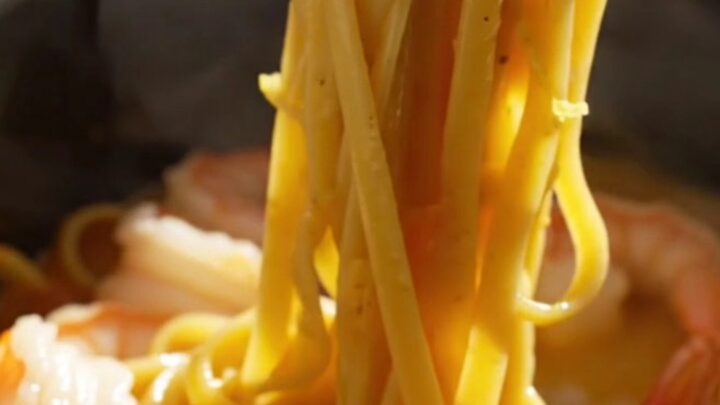
The pasta should be tender but hold its shape well. The seafood should be perfectly poached, and the sauce should have transformed into a creamy, luxurious coating that clings to the linguine strands.
Common mistakes
Avoid overcooking the seafood by adding it too early; the shrimp and scallops only require a short period of poaching in the final stage. If the sauce appears too thin, you can continue to cook it uncovered for a few extra minutes to allow moisture to evaporate.
Be careful not to use too much salt initially, as the seafood stock and bottarga can be naturally salty; taste the sauce at the very end and adjust seasoning only if necessary.
How to tell it’s done
The dish is ready when the shrimp have turned a bright pink and opaque color, and the bay scallops have become opaque and firm. Use a food thermometer to ensure the seafood has reached an internal temperature of at least 145°F (63°C).
The pasta should be cooked to an al dente texture, offering a slight bite in the center, and the sauce should have thickened into a creamy consistency that coats the back of a spoon.
- Fish: 145°F (63°C) in the thickest part
- Shellfish: 145°F (63°C) in the thickest part
Up next · Part 3 of 3
2 variations · storage & make-ahead · 3 answers · printable card
Tips, FAQ & printable recipe (Part 3)← Back to the ingredients (Part 1)