Dinner · Part 2 of 3: Instructions
Creamy Roasted Red Pepper Tortellini for a Quick Weeknight Dinner Step-by-step instructions
- Prep
- Cook
- Total
- Serves
- 4
Before you start
Before beginning, ensure that the slow cooker is placed on a stable, heat-resistant surface near an electrical outlet. Have all ingredients measured and ready. If using jarred roasted red peppers, drain them thoroughly and dice them into uniform pieces to ensure they distribute evenly throughout the pasta.
If the cream cheese is quite cold, letting it sit at room temperature for ten minutes can help it begin to soften, making it easier to cube and ensuring a smoother melting process once the slow cooker is activated.
Ingredients at a glance (4)
- 1 lb cheese tortellini
- 1 cup roasted red peppers, diced
- 1 packet dried seasoning blend
- 8 oz cream cheese, cubed
Instructions
Layering the ingredients
- Layer the ingredientsPlace the cheese tortellini into the bottom of the slow cooker basin. Scatter the diced roasted red peppers evenly over the pasta. Sprinkle the contents of the seasoning packet over the peppers and top everything with the cubed cream cheese.Look for Ingredients should be layered neatly to ensure even cooking.Tip Ensure the cream cheese cubes are spread across the top for even melting.
The ingredients should be neatly stacked in the slow cooker basin. The tortellini forms the base, with the peppers, seasoning, and cream cheese cubes distributed evenly on top.
This orderly arrangement ensures that the flavors meld correctly as the temperature rises, setting the foundation for a perfectly balanced and creamy finished dish.
Cooking the pasta
- Slow cook the pastaCover the slow cooker with the lid. Cook on low heat for approximately 3 hours or until the pasta is tender and the cream cheese has melted into a smooth, thick sauce that coats the tortellini perfectly.Look for The sauce will appear thick and creamy with the peppers distributed throughout.Tip Avoid lifting the lid too often to maintain a consistent temperature.
The slow cooker should be covered with the lid to trap heat and steam. During this phase, the cream cheese will gradually soften and melt, creating a base for the sauce. The tortellini will absorb the moisture, becoming plump and tender. The kitchen should begin to smell fragrant as the herbs and peppers release their aroma.
Finalizing the sauce
- Stir and serveOnce the cooking time is complete, remove the lid and stir the mixture thoroughly until the melted cream cheese and seasonings form a cohesive, glossy sauce. Let the dish rest for 5 minutes before serving warm on plates.Look for The sauce should be glossy, steaming, and fully integrated with the pasta.Tip A quick stir ensures that every piece of tortellini is well-coated in the sauce.
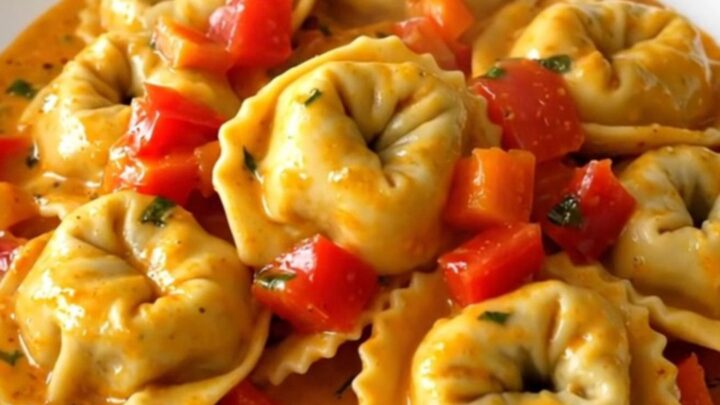
Upon removing the lid, the cream cheese will have melted into a thick, glossy sauce. Stirring is essential here to integrate the softened cheese with the peppers and seasonings. The final result should be a cohesive, creamy pasta dish that is steaming hot and ready to be plated for immediate enjoyment.
Common mistakes
A common mistake is using too much liquid, which can result in a thin, watery sauce rather than a rich, creamy coating. Stick to the suggested amounts and ensure the peppers are properly drained.
Another error is overcooking the pasta; monitor the tortellini closely toward the end of the cooking time, as different brands of pasta may require slightly different durations to reach the perfect al dente texture. Finally, failing to stir the dish thoroughly after cooking can lead to uneven flavor distribution and clumps of cream cheese.
How to tell it’s done
The dish is done when the tortellini is al dente, meaning it is tender but still retains a slight chew. The sauce should be smooth, thick, and fully emulsified, coating the back of a spoon without appearing watery or broken.
The roasted red peppers should be soft and fully incorporated into the creamy sauce, providing bursts of color and sweetness throughout the dish. Since this recipe does not contain raw protein, there is no internal temperature requirement for safety, but serving it while hot ensures the best texture.
Up next · Part 3 of 3
2 variations · storage & make-ahead · 3 answers · printable card
Tips, FAQ & printable recipe (Part 3)← Back to the ingredients (Part 1)