Dinner · Part 2 of 3: Instructions
Creamy Roasted Butternut Squash Bisque with Sage Brown Butter Crostini Step-by-step instructions
- Prep
- Cook
- Total
- Serves
- 4
Before you start
Before you start, gather all your ingredients and equipment. Preheat the oven to 400°F (200°C). Halve the butternut squash lengthwise and scoop out the seeds. Chop the onion and mince the garlic. Measure out the maple syrup, vegetable broth, heavy cream, and nutmeg.
Have your immersion blender or countertop blender ready. For the topping, slice the baguette and pick the sage leaves. You'll also need a small skillet for the brown butter and a baking sheet for roasting the squash.
Ingredients at a glance (11)
- 1 large butternut squash, halved and seeded
- 2 tbsp olive oil
- 1 tbsp maple syrup
- 1 yellow onion, chopped
- 3 cloves garlic, minced
- 500 ml vegetable broth
- 100 ml heavy cream
- 1/4 tsp ground nutmeg
- 40 g butter
- Fresh sage leaves, for frying, to taste
- Crusty baguette slices, toasted, to taste
Instructions
Phase 1: Roasting & Sautéing
- Roast the SquashHeat the oven to 400°F (200°C). Cut the butternut squash in half lengthwise and scoop out the seeds. Brush the cut sides with olive oil and drizzle with maple syrup. Place cut-side down on a rimmed baking sheet. Roast for 45 minutes, until the flesh is fork-tender and the edges are caramelized. Let cool slightly.Look for The squash should be deeply caramelized and soft enough to pierce easily with a fork.Tip Roasting cut-side down helps the squash caramelize without drying out. Use a sturdy sheet pan.
- Sauté AromaticsWhile the squash roasts, heat a large pot over medium heat. Add a splash of olive oil, then the chopped onion. Cook, stirring occasionally, until the onion is translucent, about 5 minutes. Add the minced garlic and cook for 1 minute more, until fragrant.Look for The onion should be soft and translucent, not browned.Tip Keep the heat medium so the garlic doesn't burn—burnt garlic turns bitter.
The squash should be deeply caramelized and fork-tender, with edges that are sticky and browned. The onion and garlic should be fragrant and translucent but not browned. The kitchen will smell sweet and savory. This phase takes about 50 minutes, mostly hands-off.
Phase 2: Simmering & Blending
- Simmer the SoupScoop the roasted squash flesh into the pot with the onions and garlic. Pour in the vegetable broth and add the ground nutmeg. Bring to a simmer over medium-high heat, then reduce the heat to low and let it simmer gently for 10 minutes to meld the flavors.Look for The soup will be fragrant with nutmeg and the broth will be tinted golden.Tip Simmering gently, not boiling, keeps the flavors clean and prevents the soup from becoming cloudy.
- Blend Until VelvetyUsing an immersion blender, blend the soup directly in the pot until completely smooth and velvety. If you prefer a thinner consistency, add a little extra broth or water. Stir in the heavy cream and warm through over low heat for 2 minutes. Season with salt to taste.Look for The soup should be perfectly smooth with no lumps. It will look glossy from the cream.Tip An immersion blender is easiest, but a regular blender works too—just blend in batches and vent the lid.
The soup should be perfectly smooth and velvety, with no lumps. It will be a rich golden-orange color, and the aroma will be warming and comforting. The cream should be fully incorporated, giving the soup a glossy sheen. The texture should be thick enough to coat a spoon.
Phase 3: Finishing & Serving
- Make Sage Brown ButterIn a small skillet, melt the butter over medium heat. Add the fresh sage leaves and cook, swirling the pan, until the butter foams and turns nutty brown and the sage leaves are crisp. Remove from the heat immediately to prevent burning.Look for The butter will smell nutty and the sage leaves will be crackly and darker in color.Tip Watch closely—brown butter can go from perfect to burnt in seconds. The foam will subside when it's ready.
- Toast the CrostiniToast the baguette slices until golden and crisp, either in a toaster, under the broiler, or in a skillet with a little olive oil. Rub each slice with a cut garlic clove for extra flavor, if desired.Look for The crostini should be crunchy and lightly browned on both sides.Tip Rubbing the warm toast with garlic adds a subtle kick—do it right after toasting.
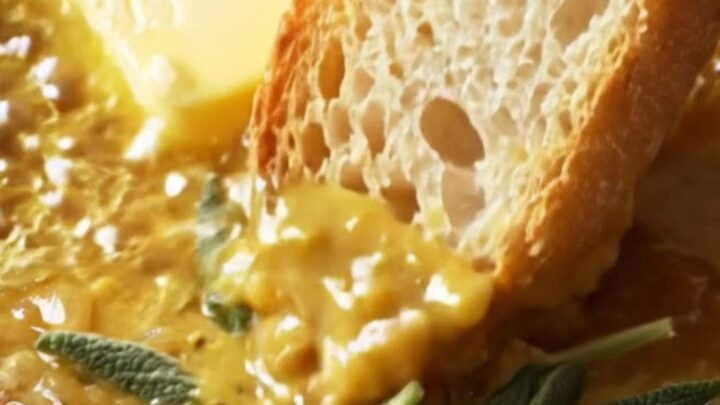
- Serve the BisqueLadle the hot bisque into bowls. Drizzle a spoonful of sage brown butter over each serving, letting it swirl into the soup. Top with the crispy sage leaves from the skillet. Serve immediately with the toasted baguette crostini for dipping.Look for The brown butter will create golden swirls on the surface, and the sage leaves will add a crackly texture.Tip For a prettier presentation, drizzle the cream in a spiral before adding the brown butter.
The brown butter should be nutty and amber, with crisp sage leaves that crackle when pressed. The crostini should be golden and crunchy.
When you pour the brown butter over the bisque, it should swirl beautifully. Each spoonful should be silky, sweet, and rich, with a nutty finish.
Common mistakes
One common mistake is under-roasting the squash—if it's not fork-tender, the soup will be fibrous and less sweet. Another is burning the garlic; keep the heat moderate and stir often.
When blending hot soup, be careful of splatters—let it cool slightly if using a countertop blender. Don't skip the browning step for the butter; it's what gives the topping its nutty flavor. Finally, season generously—squash soup can taste flat without enough salt.
How to tell it’s done
The bisque is done when it's silky smooth and has a rich, velvety texture. The squash should be fork-tender and deeply caramelized after roasting. The soup should be thick enough to coat the back of a spoon but still pourable.
Taste and adjust seasoning with salt—you may want a pinch more nutmeg or a drizzle of maple syrup for sweetness. The sage brown butter should be nutty and fragrant, and the sage leaves crisp. Serve hot, with the crostini on the side for dipping.
Up next · Part 3 of 3
4 variations · storage & make-ahead · 5 answers · printable card
Tips, FAQ & printable recipe (Part 3)← Back to the ingredients (Part 1)