Dinner · Part 1 of 3: Ingredients
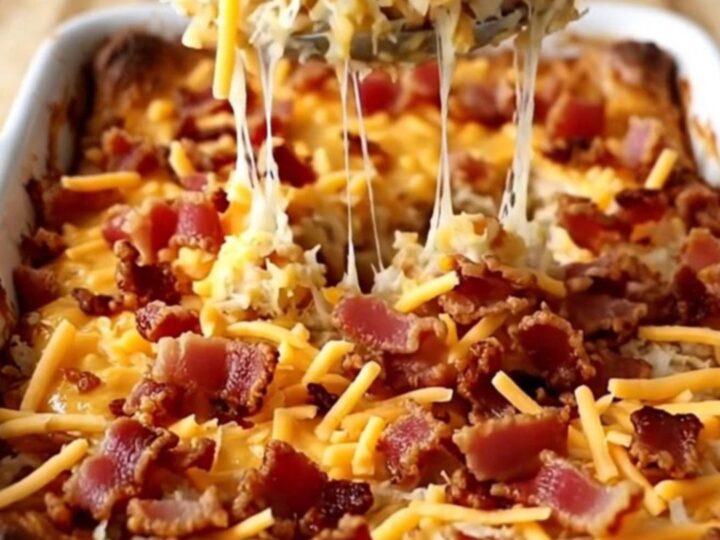
Creamy Pimento Cheese Hash Brown Casserole with Bacon
- Prep
- Cook
- Total
- Serves
- 8
This Pimento Cheese Hash Brown Casserole is the ultimate comfort food, perfectly blending smoky bacon, sharp cheddar, and a creamy, tangy pimento cheese sauce. It is a simple yet impressive side dish that comes together with minimal effort, making it ideal for busy weeknights or relaxed weekend gatherings.
The combination of textures from the crispy potato base and the molten, cheesy topping creates a satisfying experience in every single bite, ensuring it becomes a favorite at your table.
Hash browns take on a whole new life in this decadent casserole. By pairing them with a classic, bold pimento cheese sauce, the dish transforms into a rich, savory delight. The addition of sharp cheddar provides a deeper flavor, while the crispy bacon adds a necessary salty crunch that ties the entire dish together.
Whether you are hosting a brunch, preparing for a holiday side dish rotation, or simply looking to elevate a standard potato dinner, this recipe delivers consistent, mouth-watering results that are sure to please any crowd looking for hearty, satisfying food.
Ingredients
- 2 lbs shredded hash brown potatoes
- 2 cups pimento cheese sauce
- 1 cup shredded sharp cheddar cheese
- 1/2 cup chopped cooked bacon
Why this recipe works
The method of layering the hash browns directly with the pimento cheese sauce allows the potatoes to absorb the creamy, tangy flavors as they cook. This process ensures that every layer is infused with the richness of the cheese while the potatoes soften perfectly in the oven heat. Using a ceramic baking dish helps to distribute the heat evenly, preventing the bottom from burning before the top is perfectly melted and golden.
By adding the bacon and sharp cheddar in the final stages of assembly, the ingredients remain distinct and flavorful. The high fat content in the pimento cheese sauce acts as a binder, creating a cohesive, velvety consistency that holds the hash browns together once baked.
This approach avoids the need for heavy flour-based thickeners, keeping the texture light yet luxurious, and highlighting the natural taste of the quality cheese and potatoes.
Notes and substitutions
When selecting ingredients, choose a high-quality, sharp cheddar cheese for the best depth of flavor. If you prefer a smoother sauce, ensure the pimento cheese is at room temperature before pouring, as this helps it spread more evenly over the hash browns. You can also customize the bacon by using thick-cut varieties if you prefer a meatier texture in your casserole, provided it is fully cooked and crumbled before adding to the dish.
A 9x13 inch ceramic dish is recommended for its excellent heat retention, which contributes to the bubbling, golden crust. If you do not have a ceramic dish, a standard glass or metal baking pan will work, though you may need to monitor the edges during the final minutes of baking to prevent over-browning.
Always ensure the bacon is crisp before adding it to the top, as the oven time is primarily focused on melting the cheese and heating the potatoes.
- shredded hash brown potatoes: frozen cubed hash brown potatoes may be used if thawed completely before assembly.
- sharp cheddar: mild cheddar or Monterey Jack cheese can be substituted for a milder flavor profile.
Equipment
- 9x13 inch baking dish
- mixing bowl
- chef knife
- cutting board
- serving spoon
Up next · Part 2 of 3
3 steps · 45 min of cooking · what to look for at each stage
Step-by-step instructions (Part 2)