Dinner · Part 2 of 3: Instructions
Creamy Parmesan Garlic Chicken and Spaghetti Step-by-step instructions
- Prep
- Cook
- Total
- Serves
- 4
Before you start
Before beginning, ensure all ingredients are measured and ready. Mince the garlic finely to ensure even flavor distribution throughout the sauce. Grate the parmesan cheese using the fine side of a grater to help it adhere better to the chicken.
Bring the pot of water to a rolling boil before adding the pasta. Preparing the workspace by clearing the counter and having the necessary tools, such as tongs and a colander, within reach will make the cooking process smooth and efficient.
Ingredients at a glance (6)
- 4 pieces chicken breast
- 1 cup parmesan cheese, grated
- 1 lb spaghetti
- 4 cloves garlic, minced
- 1 cup creamy garlic sauce, store-bought or made ahead
- 1 tbsp fresh herbs, chopped
Instructions
Searing the chicken
- Prepare the chickenCoat the chicken breast pieces thoroughly in the grated parmesan cheese. Heat a large skillet over medium-high heat and sear the chicken until golden brown and cooked through, reaching an internal temperature of 165°F (74°C). Remove from the skillet and let rest.Look for The chicken should be golden brown and crispy on the outside.Safe temperature 165°F (74°C) internal temperature (poultry)Tip Press the cheese firmly into the chicken to ensure a good crust forms during the searing process.
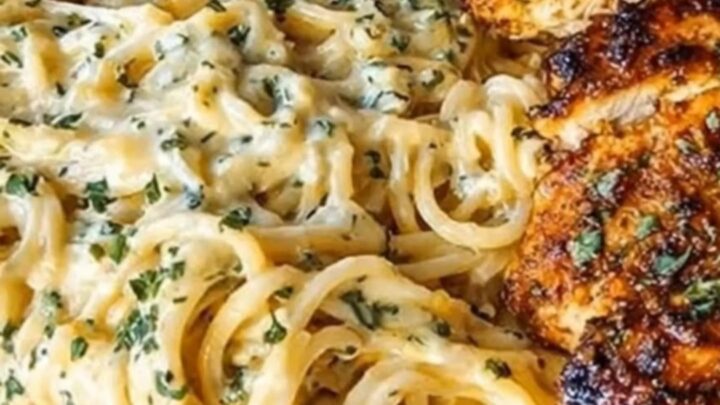
The chicken should look golden brown and feel firm to the touch. The parmesan crust should be adhered securely to the surface, creating a crunchy exterior.
Check the thickest part of the breast with a thermometer to ensure it has reached the safe internal temperature before proceeding. The kitchen should smell savory and slightly nutty from the toasted cheese.
Cooking the pasta
- Cook the pastaBring a large pot of salted water to a boil. Add the spaghetti and cook according to the package directions until al dente. Drain the pasta using a colander, reserving a small amount of pasta water if needed to adjust the sauce consistency later.Look for The pasta should be tender but still firm to the bite.Tip Do not overcook the pasta as it will continue to cook slightly when tossed in the sauce.
The spaghetti should be cooked until al dente, meaning it is soft but still has a firm center. It should be drained well, but keeping a small amount of the starchy water is recommended for finishing the sauce. The noodles should look uniform and pale, ready to absorb the flavors of the creamy garlic sauce in the next phase.
Finishing the sauce
- Make the sauce and combineIn the same skillet, add the minced garlic and sauté until fragrant. Pour in the creamy garlic sauce and bring to a gentle simmer. Stir in the fresh herbs and return the cooked pasta to the skillet, tossing to coat thoroughly in the creamy sauce. Serve the pasta topped with the sliced parmesan-crusted chicken.Look for The sauce should be thick enough to coat the back of a spoon.Tip If the sauce becomes too thick, add a tablespoon of the reserved pasta water to loosen it up.
The sauce should be smooth, creamy, and fragrant with garlic. When the pasta is tossed in, it should be completely coated in a glossy layer. The final dish should be steaming and aromatic, with the chicken slices arranged on top. Check that the sauce consistency is to your liking before serving immediately to ensure the best texture.
Common mistakes
Avoid overcrowding the skillet when searing the chicken, as this can cause the meat to steam rather than brown, leading to a soggy crust. Keep the heat controlled to prevent the garlic from burning, which would impart a bitter taste to the entire sauce.
Do not overcook the pasta in the boiling water, as it will continue to absorb the creamy sauce in the skillet. Finally, ensure the heat is lowered once the sauce is added to prevent it from curdling.
How to tell it’s done
The chicken is perfectly done when the parmesan crust is deep golden brown and the interior reaches an internal temperature of 165°F (74°C). The pasta should be cooked al dente, meaning it is tender but offers a slight resistance when bitten.
The sauce is ready when it is thick, glossy, and clings well to the noodles without pooling at the bottom of the skillet. Always verify the chicken temperature with a meat thermometer to ensure safety and ideal texture.
- Poultry: 165°F (74°C) in the thickest part
Up next · Part 3 of 3
2 variations · storage & make-ahead · 3 answers · printable card
Tips, FAQ & printable recipe (Part 3)← Back to the ingredients (Part 1)