Dinner · Part 2 of 3: Instructions
Creamy Hot Chicken Chowder Made in a Slow Cooker Step-by-step instructions
- Prep
- Cook
- Total
- Serves
- 8
Before you start
Before you start, cut the chicken into 2-inch chunks—this helps them cook evenly and makes shredding easier. Dice the gold potatoes into 1/2-inch cubes and the onion into small pieces. Mince the garlic and measure out the spices and broth. Soften the cream cheese by leaving it at room temperature for about 15 minutes, then cut it into cubes so it melts quickly later.
Have the shredded cheddar ready. You'll also want to prepare the brioche croutons if making them from scratch, or have store-bought ones on hand. Finally, set out your serving bowls and the pickle slices so everything is ready when the chowder finishes.
Ingredients at a glance (14)
- 2 lb boneless, skinless chicken breasts, cut into chunks
- 1 1/2 lb gold potatoes, diced (about 3 cups)
- 2 cups frozen sweet corn
- 1 medium yellow onion, diced
- 3 cloves garlic, minced
- 1 tsp dried thyme
- 1 tsp smoked paprika
- 1 1/2 tsp kosher salt
- 1/2 tsp black pepper
- 4 cups chicken broth
- 8 oz cream cheese, softened and cubed
- 2 cups shredded sharp cheddar cheese
- Brioche croutons, for serving
- Sliced dill pickles, for serving
Instructions
Layer and Cook
- Layer the IngredientsPlace the chicken chunks in the bottom of a 6-quart slow cooker. Scatter the diced potatoes, frozen corn, and diced onion over the chicken. Sprinkle with the minced garlic, dried thyme, smoked paprika, kosher salt, and black pepper. Pour the chicken broth over everything, making sure the liquid covers most of the ingredients. Stir gently to distribute the seasonings.Look for The slow cooker insert is full but not overflowing; the broth reaches about three-quarters up the ingredients.Tip Cut the potatoes into even 1/2-inch dice so they cook at the same rate as the chicken.
- Cook on LowCover the slow cooker and cook on low for 6 to 7 hours, or on high for 3 to 4 hours, until the chicken is cooked through and the potatoes are tender. The chicken should register 165°F (74°C) when checked with an instant-read thermometer.Look for The broth is bubbling gently at the edges, and the kitchen smells of thyme and chicken.Safe temperature 165°F (74°C) internal temperature (poultry)Tip Resist lifting the lid during cooking; each peek adds about 20 minutes to the cooking time.
After the initial layering, the slow cooker is filled with raw chicken, potatoes, corn, and onion, with broth just covering the ingredients. The seasonings are evenly distributed.
After cooking on low for 6 to 7 hours, the chicken is opaque and tender, the potatoes are soft, and the broth is fragrant with thyme and garlic. The chicken should easily shred with forks, and the potatoes should offer no resistance when pierced.
Shred and Melt
- Shred the ChickenCarefully remove the chicken pieces to a cutting board. Using two forks, shred the chicken into bite-size pieces. Return the shredded chicken to the slow cooker and stir it into the broth and vegetables.Look for The chicken is opaque, tender, and pulls apart easily with no pink remaining.Tip If the chicken is still slightly firm, return it to the slow cooker and cook for another 30 minutes before shredding.
- Melt the CheesesAdd the cream cheese cubes and shredded cheddar to the slow cooker. Stir continuously for 2 to 3 minutes, until the cream cheese is completely melted and the cheddar is fully incorporated, creating a smooth, creamy broth. There should be no visible lumps or shreds of cheese.Look for The broth turns a pale golden color and thickens slightly, coating the back of a spoon.Tip For a smoother melt, cut the cream cheese into small cubes and let it sit at room temperature for 15 minutes before adding.
Once the chicken is shredded and returned to the pot, the broth is still thin. When the cream cheese and cheddar are added and stirred, the mixture transforms into a glossy, pale golden sauce. The cheese is fully melted, with no lumps or stringy bits. The chowder now has a creamy, velvety texture that coats the back of a spoon. It smells rich and cheesy, and the color is uniform.
Serve and Top
- Ladle and ServeLadle the chowder into serving bowls. Top each bowl with a handful of brioche croutons and a few slices of dill pickle. Serve hot.Look for The chowder is steaming, creamy, and topped with crunchy croutons and tangy pickles.Tip For extra crunch, add the croutons just before serving so they stay crisp.
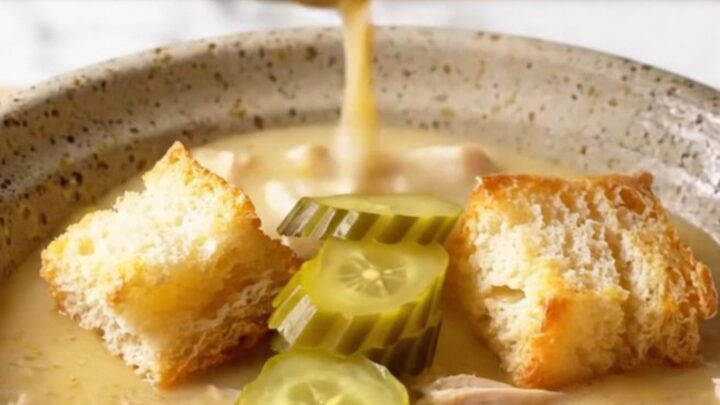
Ladling the chowder into bowls reveals a thick, creamy consistency with visible chunks of potato, corn, and shredded chicken. The brioche croutons float on top, golden and crunchy, while the pickle slices add a bright green contrast. The chowder steams invitingly, and the first spoonful is hot, creamy, and full of texture. The pickles provide a tangy bite that cuts through the richness.
Common mistakes
One common mistake is lifting the lid too often during cooking, which lets out heat and extends the cooking time. Another is adding the cream cheese too early, which can cause it to curdle or become grainy. Always add it at the end and stir continuously until fully melted.
Also, avoid overcooking the chicken—if you leave it too long, it can become stringy and dry. Use a thermometer to check for doneness rather than relying solely on time. Finally, don't skip the pickles; they provide a necessary acidic contrast that balances the richness.
How to tell it’s done
The chowder is done when the chicken is fully cooked and registers 165°F (74°C) on an instant-read thermometer, and the potatoes are fork-tender. The broth will have thickened slightly after the cheeses are added, and it should coat the back of a spoon.
Taste and adjust the seasoning with salt and pepper before serving. If the chowder seems too thick, stir in a splash of broth or water to reach your desired consistency. The croutons should be crunchy and the pickles cold and crisp for the best contrast.
- Poultry: 165°F (74°C) in the thickest part
Up next · Part 3 of 3
4 variations · storage & make-ahead · 5 answers · printable card
Tips, FAQ & printable recipe (Part 3)← Back to the ingredients (Part 1)