Dinner · Part 2 of 3: Instructions
Creamy One-Pan Tuscan Orzo Step-by-step instructions
- Prep
- Cook
- Total
- Serves
- 4
Before you start
Before starting, ensure all ingredients are measured and ready, as the process moves quickly once the heat is turned on. Grate the Parmesan cheese, mince the garlic cloves, and chop the sun-dried tomatoes into small, bite-sized pieces. Having the stock measured and the spinach rinsed ensures a smooth cooking flow.
Clear your workspace to allow enough room for the pan and your stirring utensils. Preparing these elements ahead of time allows you to focus on the essential toasting and simmering stages, which are key to achieving the desired texture and flavor in this one-pan meal.
Ingredients at a glance (11)
- 30 g butter
- 350 g dry orzo
- 4 cloves garlic, minced
- 70 g sun-dried tomatoes, chopped
- 1 tsp Italian herbs
- 750 ml vegetable stock
- 100 g baby spinach
- 120 ml heavy cream
- 80 g Parmesan, grated
- 2 tbsp pine nuts, toasted
- cracked pepper, to taste
Instructions
Toasting the Base
- Toast the AromaticsPlace a large stainless steel pan over medium heat and melt the butter. Add the dry orzo, minced garlic, chopped sun-dried tomatoes, and Italian herbs. Sauté for about 2 to 3 minutes, stirring constantly until the orzo is lightly toasted and fragrant. This step develops a deep, nutty base that forms the foundation of the dish's flavor profile.Look for The orzo smells nutty and looks lightly golden.Tip Keep the heat moderate to prevent the garlic from burning while the pasta toasts.
The orzo should appear lightly toasted and golden brown, and the kitchen should be filled with the aromatic scent of garlic and sun-dried tomatoes.
Ensure the butter is fully melted and coating every grain before adding the stock. This phase is complete when the orzo is fragrant and the tomatoes have softened slightly, creating a deep, caramelized foundation.
Simmering the Orzo
- Simmer the OrzoPour the vegetable stock into the pan with the toasted orzo mixture. Bring the liquid to a gentle simmer. Maintain a steady simmer at 92°C (198°F) for 9 minutes. The orzo should absorb the liquid, becoming tender while releasing starch to create a naturally creamy consistency similar to traditional Italian risotto.Look for The orzo is tender and most of the liquid is absorbed.Tip Stir occasionally to ensure the orzo doesn't stick to the bottom of the pan.
The mixture should maintain a steady, gentle simmer. As the orzo cooks, you will notice the liquid becoming slightly opaque and thickened from the released starch. At the end of the nine minutes, the orzo should be tender and have absorbed most of the stock. Test a grain to ensure it is cooked through but not mushy before proceeding to the final step.
Folding and Finishing
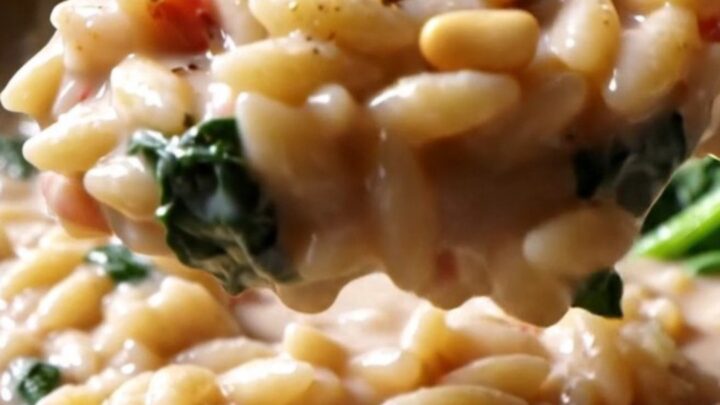
- Fold and FinishReduce the heat to low. Fold in the baby spinach, heavy cream, and grated Parmesan cheese. Stir gently until the spinach is wilted and the cheese has melted into a velvety, glossy sauce. Remove the pan from the heat immediately. Serve warm, topped with a generous sprinkle of toasted pine nuts and freshly cracked black pepper for added texture.Look for The sauce is thick, creamy, and the spinach is wilted.Tip Add the cream at the very end to keep the sauce light and vibrant.
The final dish should look creamy and vibrant, with the spinach wilted into the sauce and the Parmesan fully melted. The texture should be velvety and luxurious. Check that the sauce is well-distributed and that the pine nuts are toasted to a light golden brown for the perfect crunch. The dish is ready to serve immediately while steaming hot.
Common mistakes
Avoid overcrowding the pan, as this can lead to uneven cooking and prevent the orzo from toasting properly. Keep a close eye on the garlic during the initial sauté; if it begins to darken too quickly, reduce the heat immediately to avoid a bitter flavor.
Do not overcook the orzo during the simmering phase, as it will continue to soften slightly when the cream and cheese are folded in at the end. Ensure the heat is low when adding the dairy to prevent the sauce from breaking.
How to tell it’s done
The orzo is done when it is al dente, meaning it is tender but still has a slight, pleasant bite in the center. The sauce should be thick, glossy, and cling to the grains without being overly watery or dry.
When stirred, the mixture should move in a fluid, creamy motion. If the liquid is fully absorbed but the orzo is still too firm, add a splash of warm water or additional stock and cook for another minute.
Up next · Part 3 of 3
2 variations · storage & make-ahead · 3 answers · printable card
Tips, FAQ & printable recipe (Part 3)← Back to the ingredients (Part 1)