Dinner · Part 2 of 3: Instructions
Creamy Nordic Dill and Caper Salmon Skillet Step-by-step instructions
- Prep
- Cook
- Total
- Serves
- 4
Before you start
Start by prepping all your ingredients before turning on the stove. Finely mince the shallots and chop the fresh dill fronds. Measure the heavy cream, capers, Dijon mustard, and white wine precisely, placing them in small bowls near the cooking area.
Pat your salmon fillets dry with paper towels to ensure they are moisture-free. Having everything mise en place is crucial, as the actual cooking process moves very quickly once the salmon hits the hot skillet.
Ingredients at a glance (9)
- 4 6-oz Norwegian salmon fillets
- 1/2 tsp sea salt
- 1/4 tsp white pepper
- 1/2 cup fresh dill fronds, chopped
- 1 cup heavy cream
- 2 tbsp capers
- 1 tbsp Dijon mustard
- 1 medium shallots, minced
- 1/4 cup white wine
Instructions
Prep and Seasoning
- Season the salmonPat the salmon fillets dry with paper towels. Season both sides generously with sea salt and white pepper. Ensure the fillets are at room temperature for no more than 30 minutes before cooking.Look for Salmon is evenly seasoned and dry to touch.Tip Dry skin ensures a crispier sear in the pan.
The salmon should be dry, seasoned, and ready to meet the heat. Ensure your workspace is clean and all sauce components are within reach. The salmon should be at a cool room temperature, and you should have your fish spatula ready for the flip. Everything must be prepared before you begin, as the searing stage requires your full attention to achieve that perfect golden-brown crust.
The Perfect Sear
- Sear the salmonHeat a large skillet over medium-high heat. Once hot, place the salmon fillets skin-side down. Sear undisturbed for 5 minutes until the skin is golden and crispy. Carefully flip the fillets using a spatula.Look for Skin is deep golden brown and releases easily from the pan.Tip Do not move the salmon until the skin has formed a proper crust.
The salmon is ready when the skin is deeply golden, crispy, and releases cleanly from the skillet. You should hear a consistent, loud sizzle when the fish makes contact with the pan.
Avoid the temptation to press down on the fillets; let the heat do the work. The skin should look like delicate, crispy parchment, providing the necessary structural contrast to the creamy sauce that follows in the next phase.
Creamy Sauce Integration
- Create the cream sauceAdd minced shallots to the skillet and sauté briefly. Deglaze with white wine, then stir in heavy cream, Dijon, and capers. Simmer for 3 minutes until the sauce thickens and the salmon reaches an internal temperature of 145°F (63°C). Stir in the fresh dill just before serving and let rest for 3 minutes.Look for Sauce coats the back of a spoon and salmon is opaque.Safe temperature 145°F (63°C) internal temperature (fish)Tip Adding dill at the very end preserves its vibrant green color and fresh flavor.
The sauce should be smooth, velvety, and aromatic. As it simmers with the wine, cream, and Dijon, it will thicken into a luxurious coating that clings to the salmon. The capers should be evenly distributed, and the fresh dill should be stirred in at the very end to maintain its bright, vibrant color. The skillet should smell like a blend of toasted shallots, sharp mustard, and fresh, grassy herbs.
Common mistakes
A common mistake is overcrowding the skillet, which lowers the pan temperature and prevents the skin from crisping properly. Work in batches if your pan is too small to fit four fillets comfortably without them touching.
Another error is moving the salmon too early; if the skin is not ready to release, give it another thirty seconds. Finally, do not over-reduce the sauce; it should be thick enough to coat a spoon, but if it becomes too thick, simply splash in a little extra wine.
How to tell it’s done
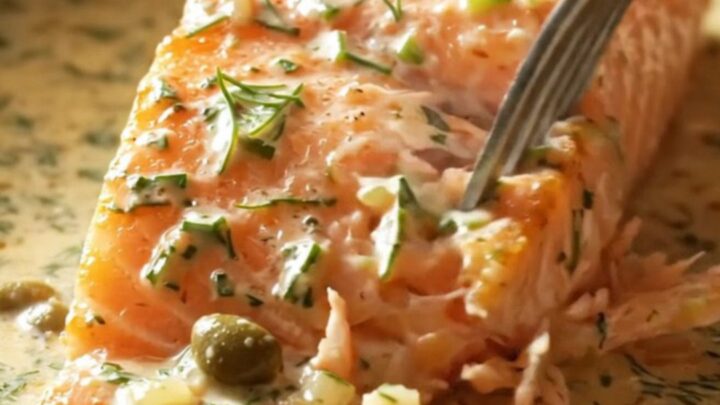
The salmon is perfectly cooked when the flesh is opaque and flakes easily when tested with a fork. Using an instant-read thermometer, insert it into the thickest part of the fillet; you are looking for an internal temperature of 145°F (63°C).
Because the salmon continues to cook slightly while it rests in the warm sauce, you can remove it from the heat just as it approaches this temperature to ensure it remains moist, tender, and succulent.
- Fish: 145°F (63°C) in the thickest part
Up next · Part 3 of 3
2 variations · storage & make-ahead · 3 answers · printable card
Tips, FAQ & printable recipe (Part 3)← Back to the ingredients (Part 1)