Dinner · Part 2 of 3: Instructions
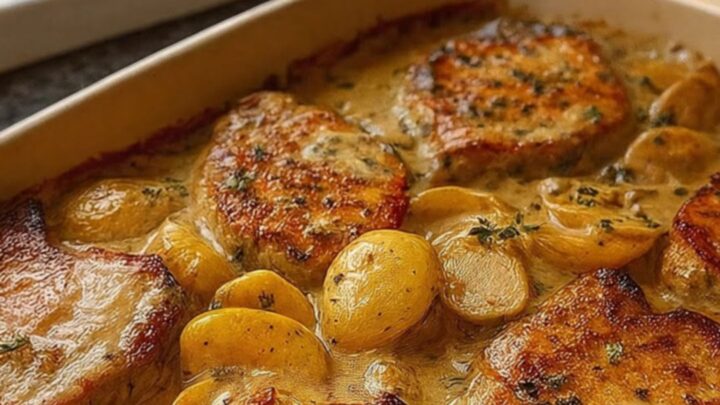
Creamy Mushroom Pork Chops with Tender Potatoes Step-by-step instructions
- Prep
- Cook
- Total
- Serves
- 4
Before you start
Before beginning, ensure all ingredients are measured and ready to go, as the cooking process moves quickly once the heat is applied. Remove the pork chops from the refrigerator approximately 15 minutes before cooking to allow them to come closer to room temperature, which helps ensure even cooking.
Slice the mushrooms and halve the baby potatoes beforehand so they are ready to be added to the pan immediately after the pork is seared, keeping the workflow smooth and efficient.
Ingredients at a glance (4)
- 4 pieces pork chops, bone-in
- 1 lb baby potatoes, halved
- 8 oz mushrooms, sliced
- 1/2 cup heavy cream
Instructions
Searing the Meat
- Sear the PorkHeat a large skillet over medium-high heat. Place the pork chops into the pan and sear until they develop a deep golden-brown crust on both sides.Look for look for a deep golden brown colorTip Ensure the pan is hot before adding the meat.
At the end of this phase, the pork chops should feature a deep, golden-brown crust on both sides. The skillet will have small, browned bits stuck to the bottom, which are vital for building the final sauce. Ensure the meat is not cooked through at this point, as it will continue to cook alongside the vegetables. The kitchen should smell savory and fragrant, indicating the meat is ready for the next stage.
Vegetable Sauté
- Cook Potatoes and MushroomsAdd the halved baby potatoes and sliced mushrooms to the skillet around the pork chops. Sauté until the vegetables begin to soften and the mushrooms release their moisture.Look for vegetables are softened and mushrooms brownedTip Do not overcrowd the pan for better browning.
The baby potatoes should be beginning to soften, and the mushrooms should be reduced in volume and golden in color. The moisture released by the mushrooms will help lift the browned bits from the bottom of the pan.
Check that the potatoes are browning slightly on the edges, which adds a pleasant texture. The aroma should be earthy and rich, signaling that the vegetables have absorbed the flavors of the pork.
Creamy Finish
- Finish with Cream SaucePour the heavy cream into the skillet. Simmer the mixture until the sauce thickens and the pork chops reach an internal temperature of 145°F (63°C). Remove from heat and let the meat rest for at least 5 minutes before serving.Look for sauce is thickened and coats the spoonSafe temperature 145°F (63°C) internal temperature (steaks, chops and roasts)Tip Keep the heat low once the cream is added to prevent breaking.
The sauce should be thick, silky, and coating the back of a spoon. The pork chops should be tender and cooked to a safe internal temperature of 145°F (63°C). The potatoes should be fork-tender, and the entire dish should be cohesive and aromatic. Before serving, verify that the sauce is warm and the meat has rested sufficiently to ensure the best possible texture and flavor for the final meal.
Common mistakes
A common mistake is overcrowding the skillet, which lowers the pan temperature and causes the pork and vegetables to steam rather than sear. Work in batches if necessary to maintain high heat.
Another error is adding the cream too early; always wait until the mushrooms and potatoes are nearly tender so the cream doesn't reduce too much or break. Finally, failing to let the meat rest after cooking results in lost juices and a less tender final product.
How to tell it’s done
The pork chops are properly cooked when they reach an internal temperature of 145°F (63°C). Use a meat thermometer inserted into the thickest part of the chop to verify this reading.
Once this temperature is achieved, remove the pan from the heat and allow the meat to rest for at least 5 minutes. This resting period is crucial as it allows the juices to redistribute throughout the muscle fibers, ensuring the final bite is tender and moist.
- Steaks, chops and roasts: 145°F (63°C) in the thickest part, then a 3-minute rest
Up next · Part 3 of 3
2 variations · storage & make-ahead · 3 answers · printable card
Tips, FAQ & printable recipe (Part 3)← Back to the ingredients (Part 1)