Dinner · Part 2 of 3: Instructions
Lobster Ravioli in Pink Prosecco Cream Sauce Step-by-step instructions
- Prep
- Cook
- Total
- Serves
- 4
Before you start
Before you start, gather all your ingredients. If using frozen ravioli, thaw them in the refrigerator overnight. Set the pink sauce, prosecco, heavy cream, baby spinach, grated parmesan, fresh tarragon, and lemon zest within reach.
Have a large skillet with a lid ready, along with a wooden spoon and measuring cups. The sauce will come together quickly, so having everything prepped and ready will make the process smooth. No need to pre-cook the ravioli; they'll cook right in the sauce.
Ingredients at a glance (8)
- 1 lb fresh lobster ravioli
- 2 cups pink sauce (tomato-cream sauce)
- 1/2 cup prosecco
- 1/2 cup heavy cream
- 2 cups baby spinach
- 1/2 cup grated parmesan
- 2 tbsp fresh tarragon leaves
- 1 tsp lemon zest
Instructions
Build the Sauce
- Warm the saucePour the pink sauce into a large skillet and set over medium heat. Add the prosecco and heavy cream, stirring to combine. Bring to a gentle simmer, then reduce the heat to low.Look for The sauce bubbles softly and smells of tomatoes and wine.Tip Use a wide skillet so the ravioli have room to cook without crowding.
- Add the ravioliGently slide the lobster ravioli into the sauce in a single layer. Spoon some sauce over the tops to coat them evenly.Look for The ravioli are nestled in the sauce, not piled on top of each other.Tip If the sauce seems thick, add a splash of pasta water or broth.
The sauce should be a uniform pink color with tiny bubbles breaking the surface. It will smell of tomatoes, wine, and cream. The alcohol from the prosecco will have cooked off, leaving a subtle fruity note. The sauce should be fluid enough to coat a spoon but not watery. If it's too thick, add a splash of broth or pasta water. This is the base that will carry the ravioli, so taste and adjust seasoning if needed.
Cook the Ravioli
- Simmer the ravioliCover the skillet and simmer gently for 5-7 minutes, until the ravioli are heated through and tender. The sauce will reduce slightly and cling to the pasta.Look for The ravioli are plump and the sauce has thickened enough to coat a spoon.Safe temperature 145°F (63°C) internal temperature (shellfish)Tip Do not boil vigorously or the ravioli may break apart.
- Add spinach and parmesanStir in the baby spinach and grated parmesan. Continue to cook for 1-2 minutes, stirring gently, until the spinach is wilted and the cheese is fully melted into the sauce.Look for The spinach turns bright green and the sauce is smooth with no visible shreds of cheese.Tip Fold the spinach in with a gentle hand so the ravioli stay intact.
The ravioli should be plump and tender, with the sauce clinging to their surfaces. The spinach will be wilted and the parmesan fully melted, creating a smooth, glossy sauce. No loose shreds of cheese should remain.
The aroma will be rich and savory with a hint of tomato and cream. The sauce should have reduced slightly, coating the ravioli evenly. This is the moment to check the internal temperature of the filling—it should be at least 145°F (63°C).
Finish and Serve
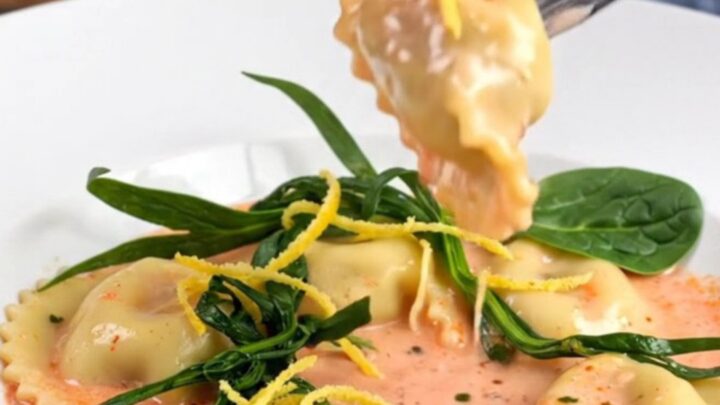
- Finish and serveRemove the skillet from the heat. Sprinkle with fresh tarragon leaves and lemon zest. Serve immediately in warm bowls.Look for The tarragon and lemon zest brighten the dish with color and aroma.Tip Use a microplane for the lemon zest to get fine, fragrant shavings.
The dish is ready when the tarragon and lemon zest are sprinkled over the top, adding flecks of green and yellow. The sauce should be silky and the ravioli glistening. The tarragon will release its anise-like aroma, and the lemon zest will add a fresh, citrusy note. Serve immediately in warm bowls to keep everything at the perfect temperature. The sauce should be spoonable but not thin, coating each ravioli beautifully.
Common mistakes
One common mistake is boiling the sauce too vigorously, which can cause the ravioli to break apart and the cream to curdle. Keep the heat at a gentle simmer. Another is overcrowding the skillet—give the ravioli room to cook in a single layer so they heat evenly.
Avoid adding the spinach and parmesan too early; they should go in only for the last minute or two so the spinach retains its color and the cheese melts smoothly. Finally, don't skip the lemon zest and tarragon—they provide the necessary brightness that makes the dish sing.
How to tell it’s done
The ravioli are done when they are heated through and tender to the bite. To check, carefully lift one with a fork and press it gently—it should feel soft and yield easily. The internal temperature of the lobster filling should reach 145°F (63°C).
The sauce should be slightly thickened and coat the back of a spoon. The spinach will be wilted but still bright green, and the parmesan will be fully melted, leaving no visible shreds. The tarragon and lemon zest should be added just before serving to preserve their freshness.
- Shellfish: 145°F (63°C) in the thickest part
Up next · Part 3 of 3
4 variations · storage & make-ahead · 5 answers · printable card
Tips, FAQ & printable recipe (Part 3)← Back to the ingredients (Part 1)