Dinner · Part 2 of 3: Instructions
Creamy Lobster Bisque with Toasted Garlic Croutons Step-by-step instructions
- Prep
- Cook
- Total
- Serves
- 4
Before you start
Before you begin, gather all your ingredients and equipment. Chop the shallot, carrot, celery, and garlic finely. Measure the butter, tomato paste, cognac, seafood stock, and heavy cream. Remove the lobster meat from the tails and set it aside, keeping the shells.
Have a fine mesh sieve, a Dutch oven or heavy pot, and a whisk ready. If you plan to make your own seafood stock, prepare it in advance. Clear your workspace and ensure you have a long lighter for the flambé step.
Ingredients at a glance (13)
- 2 lb lobster (shells and meat from 2 tails, about 250 g meat)
- 3 tbsp unsalted butter
- 1 shallot, finely chopped
- 1 carrot, finely chopped
- 1 stalk celery, finely chopped
- 2 cloves garlic, minced
- 2 tbsp tomato paste
- 1/4 cup cognac
- 3 cups seafood stock
- 1 cup heavy cream
- 2 tbsp all-purpose flour
- Garlic croutons, for serving
- Fresh tarragon leaves, for garnish, to taste
Instructions
Roast and Flambé
- Roast the Shells and VegetablesIn a Dutch oven or heavy pot, melt the butter over medium heat. Add the lobster shells, shallot, carrot, celery, and garlic. Cook, stirring occasionally, until the shells turn bright red and the vegetables soften, about 8–10 minutes.Look for The shells become fragrant and the vegetables are tender but not browned.Tip Crack the shells with a knife or mallet before cooking to release more flavor.
- Flambé with CognacPour the cognac into the pot. If using a gas stove, carefully tilt the pot to ignite the alcohol, or use a long lighter. Let the flames subside, then stir to scrape up any browned bits.Look for A dramatic golden flame flares up and then dies down, leaving a deep aroma.Tip Keep a lid nearby to smother the flames if needed.
- Add Tomato Paste and FlourStir in the tomato paste and flour. Cook for 2 minutes, stirring constantly, until the paste darkens slightly and the flour is absorbed.Look for The mixture turns a deeper rust color and smells toasty.Tip Cooking the flour removes the raw taste and helps thicken the bisque.
- Simmer the StockPour in the seafood stock and bring to a boil. Reduce the heat to low and simmer gently for 35 minutes, partially covered, to extract maximum flavor from the shells.Look for The liquid reduces slightly and becomes richly aromatic.Tip Skim any foam that rises to the surface for a cleaner flavor.
At the end of this phase, the shells are bright red and the vegetables are soft and fragrant. The cognac has flamed and subsided, leaving a deep, nutty aroma. The tomato paste and flour have been cooked into a rust-colored paste. The stock is simmering gently, filling the kitchen with the scent of lobster and herbs. The liquid should be a rich amber color, and you can see the flavors melding.
Strain and Finish
- Strain the BrothSet a fine mesh sieve over a large bowl or clean pot. Pour the mixture through the sieve, pressing on the solids with the back of a spoon to extract all the liquid. Discard the solids.Look for The strained broth is deep orange and silky.Tip Do not rush this step—pressing well gives a richer bisque.
- Whisk in Cream and ButterReturn the strained broth to the pot. Whisk in the heavy cream and the remaining butter (if using extra) until fully incorporated. Simmer gently for 5 minutes to thicken slightly.Look for The bisque turns a glossy coral-pink and coats the back of a spoon.Tip Do not boil after adding cream—keep it at a gentle simmer to avoid curdling.
- Season and Blend (Optional)Taste the bisque and season with salt and pepper if needed. For an ultra-smooth texture, use an immersion blender to puree the bisque until velvety. If you prefer a more rustic texture, leave it as is.Look for The bisque is smooth and luxurious, with a rich lobster flavor.Tip Blending emulsifies the fats for a silkier mouthfeel.
After straining, the broth is smooth and deeply flavored. Whisking in the cream transforms it into a glossy, coral-pink bisque that coats the back of a spoon. The texture is velvety and luxurious. The bisque should be hot but not boiling. You can see the richness of the cream and butter emulsified into the soup, and the aroma is intensely lobster-forward with a hint of cognac.
Poach and Serve
- Poach the Lobster MeatCut the lobster tail meat into bite-sized chunks. In a small skillet, melt a pat of butter over medium heat and gently warm the lobster meat for 2–3 minutes, until just heated through and opaque.Look for The lobster turns bright white and tender.Safe temperature 145°F (63°C) internal temperature (shellfish)Tip Do not overcook—lobster becomes rubbery if heated too long.
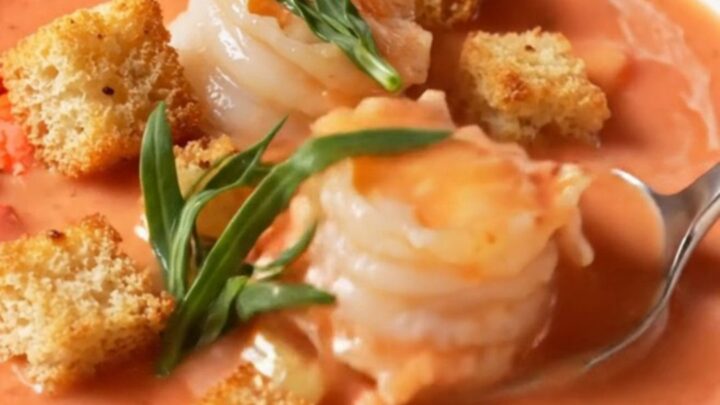
- Ladle and GarnishLadle the hot bisque into bowls. Top with the butter-poached lobster chunks, a handful of garlic croutons, and fresh tarragon leaves.Look for The croutons float on the surface, adding crunch and color.Tip Add the croutons just before serving to keep them crisp.
The lobster meat is gently warmed in butter until just opaque and tender. The bisque is ladled into bowls, topped with the lobster chunks, crunchy garlic croutons, and fresh tarragon.
The contrast of colors—coral soup, white lobster, golden croutons, and green herbs—is beautiful. The croutons add a satisfying crunch, and the tarragon brings a fresh, anise-like note that brightens the rich soup.
Common mistakes
One common mistake is not roasting the shells long enough; they need to develop a deep color and aroma. Another is boiling the cream, which can cause it to curdle—always keep the bisque at a gentle simmer.
Overcooking the lobster meat makes it tough and rubbery, so warm it just until heated through. Finally, straining too quickly can leave bits of shell in the soup; press firmly and take your time. Seasoning is key—taste before serving and adjust as needed.
How to tell it’s done
The bisque is done when it has thickened slightly and coats the back of a spoon, leaving a clear trail when you run a finger through it. The lobster meat should be heated through and reach an internal temperature of 145°F (63°C) for food safety.
The croutons should be golden and crunchy. Taste and adjust seasoning with salt and pepper. The bisque should be silky and smooth, with a rich, balanced lobster flavor that is not overly salty or sweet.
- Shellfish: 145°F (63°C) in the thickest part
Up next · Part 3 of 3
4 variations · storage & make-ahead · 5 answers · printable card
Tips, FAQ & printable recipe (Part 3)← Back to the ingredients (Part 1)