Dinner · Part 2 of 3: Instructions
Creamy Lemon Garlic Herb Scallop Pasta Step-by-step instructions
- Prep
- Cook
- Total
- Serves
- 4
Before you start
Before cooking, pat the scallops dry with paper towels and let them sit at room temperature for up to 30 minutes.
Mince the garlic, zest and juice the lemon, chop the parsley, and grate the parmesan. Measure all ingredients and have them near the stove. Bring a large pot of salted water to a boil for the pasta.
Ingredients at a glance (13)
- 1 lb dry sea scallops, patted dry
- 1 tsp kosher salt, divided
- 1/2 tsp black pepper, freshly ground
- 2 tbsp olive oil
- 2 tbsp unsalted butter
- 4 cloves garlic, minced
- 1/2 cup dry white wine
- 2 tbsp fresh lemon juice
- 1 cup heavy cream
- 1 tbsp lemon zest
- 1/2 cup grated parmesan cheese
- 12 oz tagliatelle or fettuccine
- 1/4 cup fresh parsley, chopped
Instructions
Sear and Build Flavor
- Sear the ScallopsPat the scallops dry with paper towels. Season both sides with 1/2 teaspoon salt and the black pepper. Heat the olive oil in a large skillet over high heat until shimmering. Carefully place the scallops in the skillet in a single layer, leaving space between them. Cook undisturbed for 2 minutes until a deep golden crust forms. Flip and cook for 1 minute more. Transfer the scallops to a plate and set aside.Look for The scallops should have a deep golden crust and feel springy to the touch.Safe temperature 145°F (63°C) internal temperature (shellfish)Tip Do not move the scallops while they sear; this ensures a beautiful crust.
- Start the Sauce BaseReduce the heat to medium. Add the butter to the same skillet. Once melted, add the minced garlic and cook for 30 seconds until fragrant, stirring constantly. Pour in the white wine and lemon juice, scraping up any browned bits from the bottom of the pan. Let the liquid simmer for 2 minutes until slightly reduced.Look for The wine mixture will bubble and reduce, smelling fragrant and slightly tangy.Tip Scrape the browned bits well—they add deep flavor to the sauce.
The scallops should have a deep golden crust and be just cooked through—tender and slightly springy. The skillet will have browned bits that will flavor the sauce.
The garlic should be fragrant but not browned, and the wine-lemon mixture should be slightly reduced and aromatic.
Create the Velvety Sauce
- Make the Cream SaucePour in the heavy cream and add the lemon zest. Stir to combine. Bring the sauce to a gentle simmer, then reduce the heat to low. Gradually sprinkle in the grated parmesan, stirring constantly until the cheese melts and the sauce turns silky and velvety. Season with the remaining 1/2 teaspoon salt. Simmer for 2 minutes, stirring occasionally.Look for The sauce should coat the back of a spoon and look glossy, with no graininess.Tip Keep the heat low when adding parmesan to prevent it from clumping.
- Cook the PastaWhile the sauce simmers, bring a large pot of salted water to a boil. Add the pasta and cook according to package directions until al dente. Reserve 1/2 cup of pasta water, then drain the pasta. Do not rinse.Look for The pasta should be tender but still firm to the bite.Tip Reserve more pasta water than you think you need—it helps loosen the sauce.
The cream sauce should be smooth, glossy, and coat the back of a spoon. The parmesan should be fully melted with no graininess. The lemon zest and juice should be balanced—bright and tangy without overwhelming the cream. The pasta should be al dente and ready to toss.
Toss and Serve
- Toss Pasta with SauceAdd the drained pasta to the skillet with the cream sauce. Toss with tongs to coat every ribbon evenly. If the sauce seems too thick, add reserved pasta water a splash at a time until it reaches a silky consistency that clings to the pasta.Look for The pasta should be fully coated and the sauce should cling without pooling.Tip Tossing the pasta in the sauce for a minute helps it absorb flavor.
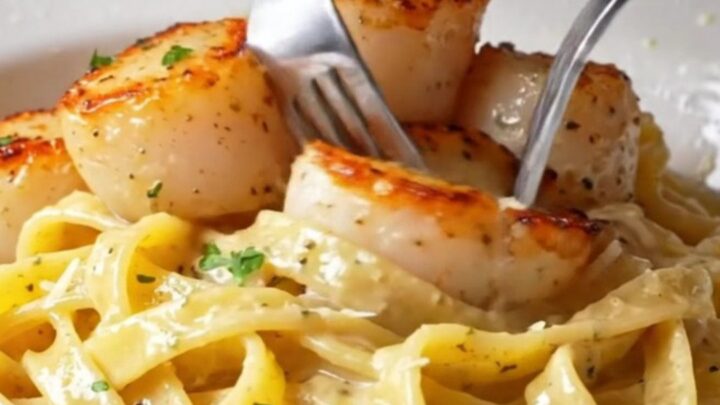
- Finish and ServeArrange the seared scallops on top of the pasta. Sprinkle with fresh parsley. Serve immediately, cutting into a scallop to show the tender, buttery interior. Enjoy while warm.Look for The scallops should be warm, with a golden crust and a tender center.Tip For the best texture, serve the scallops right away—they can toughen if left in the hot sauce.
The pasta should be evenly coated with the sauce, which clings to every ribbon. The scallops should be warm, with a golden crust and tender interior. The parsley adds a fresh, herbaceous note. The dish should look luxurious and smell invitingly of lemon, garlic, and cream.
Common mistakes
Overcooking scallops is the most common mistake; they become rubbery. Keep the heat high and cook them quickly. Another mistake is adding the parmesan over high heat, which can cause it to clump.
Stir constantly and keep the heat low. Finally, be careful not to overseason the sauce—the parmesan and scallops are already salty.
How to tell it’s done
The scallops are done when they reach an internal temperature of 145°F (63°C) and have a golden crust. The sauce is done when it coats the back of a spoon and is thick enough to cling to pasta without being heavy.
The pasta should be al dente—tender but with a slight bite. Taste the sauce and adjust salt if needed.
- Shellfish: 145°F (63°C) in the thickest part
Up next · Part 3 of 3
4 variations · storage & make-ahead · 5 answers · printable card
Tips, FAQ & printable recipe (Part 3)← Back to the ingredients (Part 1)