Dinner · Part 2 of 3: Instructions
Creamy Jalapeño Popper Mac and Cheese Step-by-step instructions
- Prep
- Cook
- Total
- Serves
- 6
Before you start
Before starting, dice the bacon and slice the jalapeños thinly. Cook the elbow macaroni according to package directions until al dente, then drain and set aside. Shred the cheddar cheese if using a block.
Soften the cream cheese by leaving it at room temperature for about 15 minutes, or microwave it briefly in 10-second intervals. Have all ingredients measured and ready near the stove, as the sauce comes together quickly.
Ingredients at a glance (6)
- 6 oz bacon, diced
- 2 fresh green jalapeños, thinly sliced
- 2 cups whole milk
- 4 oz cream cheese, softened and cubed
- 2 cups shredded sharp cheddar cheese
- 1 lb elbow macaroni, cooked
Instructions
Crisp the Bacon and Sauté Jalapeños
- Cook the bacon and jalapeñosPlace the diced bacon in a cold Dutch oven and set over medium heat. Cook, stirring occasionally, until the bacon is crisp and the fat has rendered, about 6 to 8 minutes. Add the sliced jalapeños and cook, stirring, until they are fragrant and slightly softened, about 1 minute. Using a slotted spoon, transfer the bacon and jalapeños to a paper towel-lined plate, leaving the drippings in the pot.Look for Bacon is browned and crispy, jalapeños are bright green and aromatic.Tip Do not drain the bacon drippings—they add flavor to the sauce.
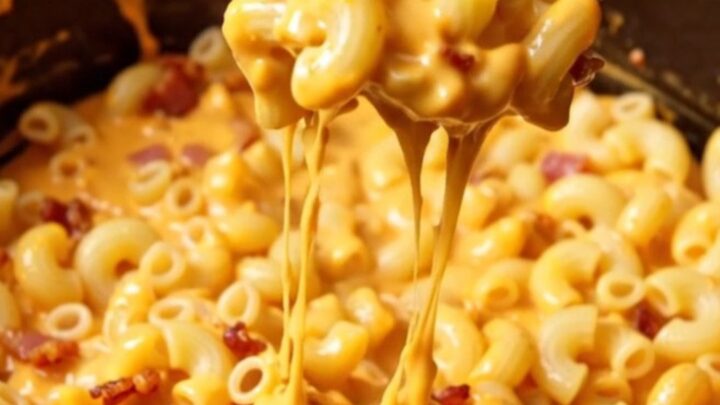
- Make the cheese sauceReduce the heat to low. Pour the milk into the pot with the bacon drippings. Add the cream cheese and shredded cheddar. Stir constantly with a wooden spoon until the cheeses are fully melted and the sauce is smooth and creamy, about 3 to 4 minutes. Do not let the sauce boil.Look for Sauce is thick, glossy, and coats the back of a spoon.Tip Keep the heat low to prevent the sauce from separating.
- Combine with macaroniAdd the cooked elbow macaroni to the pot. Gently fold the pasta into the cheese sauce until every piece is coated. Continue cooking over low heat, stirring occasionally, until the macaroni is heated through and the sauce has thickened slightly, about 2 to 3 minutes.Look for Pasta is fully coated and the mixture is creamy and piping hot.Tip Fold gently to avoid breaking the macaroni.
The bacon should be browned and crisp, with rendered fat in the pot. The jalapeños will be fragrant and slightly softened, their raw bite mellowed. The kitchen will smell smoky and spicy. This phase sets the flavor foundation for the entire dish.
Create the Velvety Cheese Sauce
- Top with bacon and jalapeñosSprinkle the reserved bacon and jalapeños over the top of the mac and cheese. Press them lightly into the surface so they stick. If desired, place the pot under a broiler for 1 to 2 minutes to create browned, crispy spots on top, watching closely to avoid burning.Look for Top is speckled with crispy bacon and charred jalapeño slices.Tip Broiling is optional but adds a nice crunch; skip if you prefer a softer top.
The sauce should be glossy, smooth, and free of lumps. It will coat the back of a spoon and have a pale golden color.
The cream cheese and cheddar should be fully melted, and the sauce should not be boiling. If it looks grainy, the heat was too high.
Finish with Toppings and Serve
- Serve hotScoop the mac and cheese into bowls while hot. Garnish with extra sliced jalapeños or bacon bits if desired. Serve immediately for the creamiest texture.Look for Cheese is molten and the aroma is rich and spicy.Tip The sauce will thicken as it cools; add a splash of warm milk if reheating leftovers.
The macaroni will be fully coated in the sauce, and the top will be studded with crispy bacon and jalapeño slices. If broiled, the surface will have browned, crispy spots. The dish should be hot and creamy, with a rich, spicy aroma.
Common mistakes
One common mistake is boiling the sauce, which can cause the cheese to separate and become gritty. Always keep the heat low and stir constantly. Another is using pre-shredded cheese that contains anti-caking agents, leading to a less smooth sauce.
Overcooking the pasta before adding it can result in mushy mac and cheese—cook it just to al dente. Finally, don't skip the bacon drippings; they add essential flavor.
How to tell it’s done
The mac and cheese is done when the sauce is smooth and has thickened enough to coat the pasta generously. When you drag a spoon through the mixture, it should leave a trail that slowly fills in.
The top should be bubbly and, if broiled, have browned spots. The internal temperature of the dish should be at least 165°F (74°C) if you want to be precise, though there are no raw proteins to worry about.
Up next · Part 3 of 3
4 variations · storage & make-ahead · 5 answers · printable card
Tips, FAQ & printable recipe (Part 3)← Back to the ingredients (Part 1)