Dinner · Part 1 of 3: Ingredients
Creamy Gruyère Portobello Beef Bites: Set-and-Forget Slow Cooker
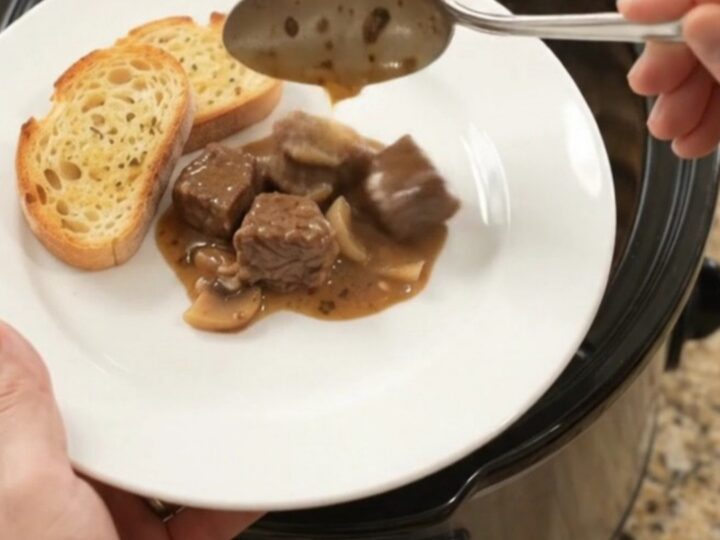
- Prep
- Cook
- Total
- Serves
- 6
This slow cooker recipe turns just a handful of ingredients into a deeply savory, creamy dinner with almost no effort. Cubes of beef chuck, meaty portobello mushrooms, and sweet shallots cook low and slow until meltingly tender, all in a rich sauce made from cream cheese and Gruyère.
Just layer everything in the crockpot, set the timer, and walk away. The result is a comforting, elegant meal that tastes like it simmered all day—because it did.
This recipe is built on the simple idea that a slow cooker can transform humble ingredients into something special. Beef chuck, a tough but flavorful cut, becomes fork-tender after hours of gentle cooking. Portobello mushrooms add an earthy, meaty texture, while shallots turn sweet and silky.
The cream cheese and Gruyère melt into a luscious, tangy sauce that coats every bite. Serve it over toasted garlic brioche to soak up every last drop. It's a set-and-forget dinner that feels indulgent yet is surprisingly easy to pull together.
Ingredients
- 2 lb beef chuck stew meat, cut into 1-inch cubes
- 8 oz portobello mushroom caps, thickly sliced
- 6 shallots, peeled and halved
- 8 oz cream cheese, softened
- 1 1/2 cups shredded Gruyère cheese
- Toasted garlic brioche slices, for serving
Why this recipe works
The slow cooker is the hero of this recipe. Low, steady heat breaks down the collagen in beef chuck, turning it from a tough cut into melt-in-your-mouth morsels. The long cooking time also allows the flavors of the mushrooms, shallots, and cheeses to meld together into a cohesive, savory sauce.
Because the ingredients are layered rather than stirred, the beef stays in contact with the bottom of the pot, where it browns gently and develops deeper flavor.
The combination of cream cheese and Gruyère creates a sauce that is both creamy and complex. Cream cheese adds richness and body, while Gruyère contributes a nutty, slightly sweet note that pairs beautifully with beef and mushrooms.
The sauce thickens as the slow cooker works, clinging to the meat and vegetables without becoming heavy. The result is a comforting, restaurant-quality dish that requires minimal hands-on time.
Notes and substitutions
Beef chuck stew meat is ideal for this recipe because it has enough fat and connective tissue to stay moist during long cooking. If you can't find stew meat, buy a chuck roast and cut it into 1-inch cubes yourself. Portobello mushrooms are preferred for their meaty texture, but cremini mushrooms work just as well. Shallots add a mild onion flavor; if you only have yellow onions, use one small onion cut into wedges.
Gruyère is a Swiss cheese known for its nutty, earthy flavor. It melts smoothly and adds a sophisticated taste. If Gruyère is unavailable, Swiss cheese or white cheddar are good substitutes. The cream cheese should be softened to room temperature before adding so it melts evenly. For the brioche, choose a sturdy loaf that can hold up to the sauce; garlic-toasted slices add a nice savory crunch.
- beef chuck stew meat: Boneless short ribs or beef sirloin, cut into cubes
- portobello mushrooms: Cremini mushrooms, thickly sliced
- Gruyère cheese: Swiss cheese or white cheddar
- shallots: 1 small yellow onion, cut into wedges
Equipment
- 6-quart slow cooker
- Cutting board
- Chef's knife
- Measuring cups and spoons
- Serving spoon
Up next · Part 2 of 3
5 steps · 6 h of cooking · what to look for at each stage
Step-by-step instructions (Part 2)