Dinner · Part 2 of 3: Instructions
Creamy Gruyère Apple Cider Chicken Cutlets Step-by-step instructions
- Prep
- Cook
- Total
- Serves
- 4
Before you start
Before starting, pat the chicken cutlets dry with paper towels and season lightly with salt and pepper if desired. Core and slice the apples into thin wedges—about 1/4-inch thick.
Measure out the brown sugar, cider, cream, and cheese. Have your slow cooker ready and plugged in. There's no need to brown the chicken first, but you can if you prefer extra color and flavor.
Ingredients at a glance (6)
- 1 1/2 lb boneless, skinless chicken breast cutlets
- 2 Honeycrisp apples, cored and sliced
- 1/4 cup dark brown sugar, packed
- 1/2 cup unfiltered apple cider
- 1/2 cup heavy whipping cream
- 1 cup shredded aged Gruyère cheese
Instructions
Layer and Top
- Layer the IngredientsPlace the chicken breast cutlets in an even layer in the bottom of a 6-quart slow cooker. Scatter the sliced apples over the chicken. Sprinkle the brown sugar evenly over the apples and chicken. Pour the apple cider over everything.Look for The cutlets should be covered with apples and the sugar and cider should be distributed evenly.Tip No need to stir—layering keeps the chicken juicy and the apples from breaking down too much.
- Add the Cream and CheesePour the heavy cream over the top of the apple mixture. Sprinkle the shredded Gruyère cheese evenly over the surface. Do not stir.Look for The cheese should cover most of the surface, creating a creamy top layer.Tip Stirring now can make the sauce grainy; let the slow cooker do the work.
At the end of this phase, the slow cooker contains a neat pile of chicken, apples, sugar, and cider. The cream and cheese form a pale, lumpy layer on top. The ingredients should not be stirred, and the cheese should be evenly distributed. This setup ensures even cooking and a smooth sauce.
Slow Cook
- Slow CookCover the slow cooker and cook on LOW for 4 hours, or until the chicken is cooked through and tender. The sauce will bubble gently and the apples will soften.Look for The chicken should reach 165°F (74°C) in the thickest part, and the sauce should be bubbly and slightly thickened.Safe temperature 165°F (74°C) internal temperature (poultry)Tip Resist lifting the lid—every peek releases heat and adds cooking time.
After 4 hours on LOW, the sauce is bubbling gently around the edges. The cheese has melted into the cream, creating a golden, creamy sauce. The chicken looks plump and juicy, and the apples are translucent. The aroma is sweet and nutty. The chicken should register 165°F (74°C) when checked.
Serve
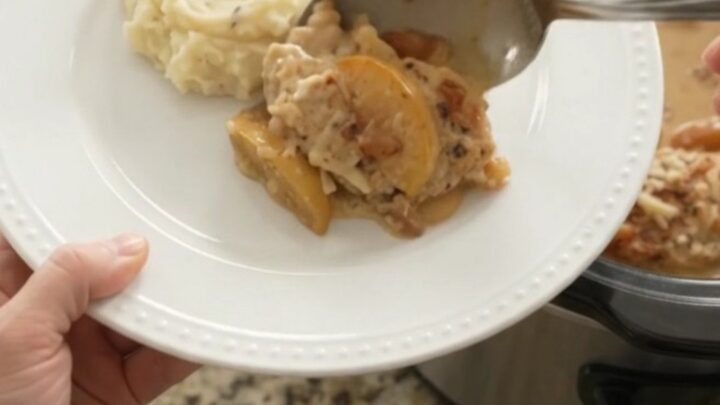
- ServeOnce the chicken is cooked through, spoon the chicken and apples over mashed potatoes or noodles. Spoon the creamy sauce from the slow cooker over the top.Look for The chicken should be fork-tender and the sauce glossy and creamy.Tip For a thicker sauce, let it sit uncovered for 10 minutes before serving.
The chicken is fork-tender and the apples are soft but intact. The sauce is thick enough to coat the back of a spoon.
Spoon the mixture over mashed potatoes or noodles, making sure each serving gets plenty of sauce. The dish looks rustic and inviting, with caramelized edges and a glossy finish.
Common mistakes
One common mistake is lifting the lid too often, which lets out heat and extends cooking time. Avoid stirring the ingredients after adding the cream and cheese, as this can break the sauce and make it grainy.
Also, be careful not to overcook the chicken—while the slow cooker is forgiving, leaving it too long can make the meat dry. Check for doneness at the lower end of the cooking time if your slow cooker runs hot.
How to tell it’s done
The chicken is done when it reaches an internal temperature of 165°F (74°C) in the thickest part. Use an instant-read thermometer to check.
The apples should be tender but not falling apart, and the sauce should be bubbly and slightly thickened. If the sauce seems too thin, remove the chicken and apples, and simmer the sauce on the stovetop for a few minutes to reduce.
- Poultry: 165°F (74°C) in the thickest part
Up next · Part 3 of 3
4 variations · storage & make-ahead · 5 answers · printable card
Tips, FAQ & printable recipe (Part 3)← Back to the ingredients (Part 1)