Dinner · Part 2 of 3: Instructions
Creamy Ghee Tikka Masala Lamb Cubes: Slow-Cooker Dump Dinner Step-by-step instructions
- Prep
- Cook
- Total
- Serves
- 6
Before you start
Before starting, gather all ingredients and measure them out. Cut the lamb shoulder into 1-inch cubes if not already pre-cut, trimming any large pieces of fat if desired, though leaving some fat adds flavor.
Have the tikka masala sauce, garam masala, ghee, and heavy cream at room temperature for best results. No need to preheat the slow cooker; it will heat gradually. Set out a wooden spoon and measuring cups. The prep takes only a few minutes, and then the slow cooker does the rest.
Ingredients at a glance (5)
- 2 lb cubed lamb shoulder
- 1 1/2 cups tikka masala sauce
- 2 tsp garam masala
- 3 tbsp golden ghee
- 1/2 cup heavy whipping cream
Instructions
Layer the Ingredients
- Layer the LambPlace the cubed lamb shoulder directly into the slow cooker insert. Spread the pieces into an even layer so they cover the bottom of the pot. There is no need to brown the meat first; the slow cooker will do all the work.Look for The lamb pieces should be in a single layer, touching but not piled high.Tip For the most tender result, choose lamb shoulder that is well-marbled; the fat renders during cooking and keeps the meat moist.
- Add the Sauce and SpicesPour the tikka masala sauce over the lamb, making sure the meat is mostly covered. Sprinkle the garam masala evenly over the top. Stir gently with a wooden spoon to coat the lamb pieces with the sauce and spices.Look for The lamb should be coated in a rich red sauce with visible flecks of garam masala.Tip If the sauce is very thick, add a splash of water or broth to help it spread; the lamb will release juices as it cooks.
- Finish with Ghee and CreamSpoon the golden ghee over the top of the sauce, then pour the heavy whipping cream in a swirl across the surface. Do not stir after adding the cream; it will create a beautiful marbled effect and blend during cooking.Look for The cream forms pale ribbons over the red sauce, with the ghee pooling in spots.Tip Using cream at room temperature helps prevent curdling; take it out of the fridge a few minutes before adding.
At the end of this phase, the slow cooker contains raw lamb in a single layer, covered with a thick red sauce flecked with garam masala. The cream and ghee sit on top in swirls, not yet blended. The scene is neat and colorful, with the raw meat hidden beneath the sauce. The ingredients are ready to cook; no further action is needed before covering and turning on the slow cooker.
Slow Cook to Tender
- Cover and Cook LowPlace the lid on the slow cooker and set it to LOW. Cook for 8 to 10 hours, until the lamb is fork-tender and easily shreds. The sauce will deepen in color and become fragrant as it simmers. Let it rest for 3 minutes before slicing.Look for The sauce bubbles gently around the edges; the aroma is rich and spicy.Safe temperature 145°F (63°C) internal temperature (steaks, chops and roasts)Tip Resist lifting the lid during cooking; each peek releases heat and adds 20 minutes to the cook time.
- Check the LambAfter 8 hours, check the lamb by piercing a cube with a fork. It should offer no resistance and fall apart easily. If not quite tender, continue cooking in 30-minute increments until done. Let it rest for 3 minutes before slicing.Look for The lamb cubes are dark, glossy, and break apart with a gentle press of the fork.Safe temperature 145°F (63°C) internal temperature (steaks, chops and roasts)Tip For larger cubes (2 inches), cook closer to 10 hours; for smaller cubes (1 inch), 8 hours is usually enough.
- Rest the MeatOnce the lamb reaches an internal temperature of 145°F (63°C) and is fork-tender, turn off the slow cooker. Let the meat rest in the warm sauce for at least 3 minutes before serving. This allows the juices to redistribute.Look for The sauce has thickened slightly and the lamb is glistening.Safe temperature 145°F (63°C) internal temperature (steaks, chops and roasts)Tip Resting in the hot sauce keeps the lamb warm while the fibers relax.
After 8 to 10 hours, the kitchen fills with the warm aroma of garam masala and roasted tomatoes. The sauce is bubbling at the edges, and the lamb is visibly tender, falling apart at the slightest pressure from a fork. The cream has blended into the sauce, giving it a glossy, velvety appearance. The internal temperature reads well above 145°F (63°C). The curry is ready to rest and serve.
Finish and Serve
- Stir and Adjust SeasoningGently stir the sauce to incorporate the creamy top layer into the red gravy. Taste and adjust seasoning with salt or a pinch more garam masala if needed. The sauce should be silky and rich.Look for The sauce is uniform in color, glossy, and coats the back of a spoon.Tip If the sauce seems thin, simmer uncovered on the stovetop for a few minutes to reduce; if too thick, add splash of broth.
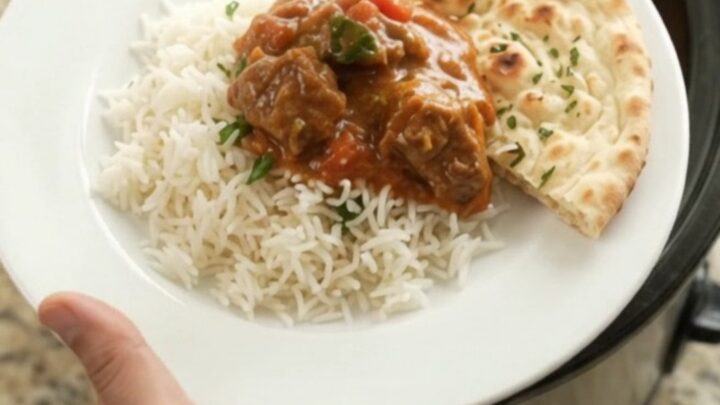
- Serve Over Rice or with NaanSpoon the creamy lamb tikka masala over steamed basmati rice or serve alongside warm garlic naan. Ladle extra sauce over the top for maximum flavor.Look for The lamb cubes are coated in velvety sauce, with a few visible ghee droplets.Tip For a restaurant-style finish, sprinkle with fresh cilantro or a drizzle of cream before serving.
The finished dish shows tender lamb cubes coated in a rich, crimson gravy that clings like a silky glaze. The ghee adds a subtle sheen, and the sauce is thick enough to pool on a plate without being watery.
A spoonful holds its shape and steams gently. The flavors are balanced, with the cream softening the spice and the ghee adding a nutty finish. Serve immediately over rice or with naan.
Common mistakes
One common mistake is lifting the lid to check on the lamb frequently, which releases heat and extends cooking time. Another is using lean lamb that dries out; choose well-marbled shoulder. Adding too much sauce can make the curry thin, so stick to the amounts listed.
If the cream curdles, it may be because the slow cooker was on high or the cream was too cold; use low heat and room-temperature cream. Finally, don't skip the resting time after cooking; it allows the juices to redistribute and ensures the meat stays moist.
How to tell it’s done
The lamb is done when it is fork-tender and easily pulls apart with no resistance. The internal temperature should reach at least 145°F (63°C) for food safety, but because it cooks low and slow, it will likely be much higher.
The sauce should be thick enough to coat the back of a spoon, and the color will have deepened to a rich crimson. A gentle stir will incorporate the creamy top layer into a uniform, glossy gravy. If the sauce is too thin, simmer it on the stovetop for a few minutes to reduce.
- Steaks, chops and roasts: 145°F (63°C) in the thickest part, then a 3-minute rest
Up next · Part 3 of 3
4 variations · storage & make-ahead · 5 answers · printable card
Tips, FAQ & printable recipe (Part 3)← Back to the ingredients (Part 1)