Dinner · Part 2 of 3: Instructions
Creamy Garlic Parmesan Chicken Skillet Step-by-step instructions
- Prep
- Cook
- Total
- Serves
- 4
Before you start
Before beginning, gather all ingredients and prep them fully. Mince the garlic cloves finely and grate the parmesan cheese to ensure it melts quickly and smoothly into the sauce. Ensure the chicken breasts are patted dry with paper towels to facilitate a better sear.
Have your tongs and serving plates ready to go. Because this dish comes together rapidly once the cooking starts, having everything measured and within reach will prevent the sauce from over-reducing or the chicken from overcooking during the final assembly phase of the recipe.
Ingredients at a glance (5)
- 4 pieces boneless skinless chicken breasts
- 4 cloves garlic, minced
- 1 cup heavy cream
- 1/2 cup parmesan cheese, grated
- 2 tbsp fresh parsley, chopped
Instructions
Searing the chicken
- Sear the chickenHeat a heavy cast-iron skillet over medium-high heat. Add the chicken breasts to the pan and sear until golden brown on both sides. Ensure the chicken cooks through to an internal temperature of 165°F (74°C). Remove the chicken from the skillet and set it aside to rest for at least 5 minutes before serving.Look for a deep golden brown crustSafe temperature 165°F (74°C) internal temperature (poultry)Tip Do not overcrowd the pan to ensure a perfect sear.
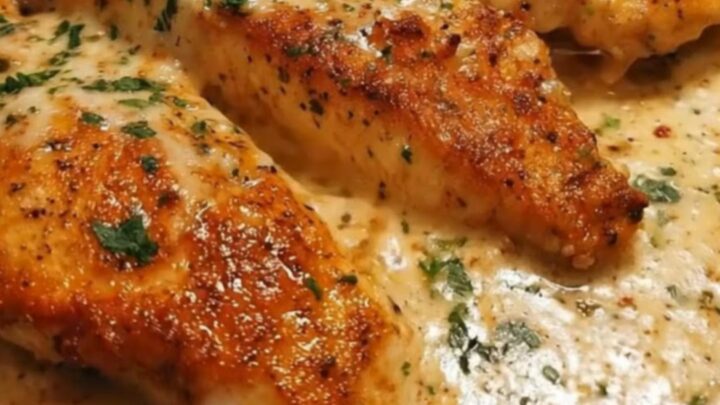
The chicken should have a deep golden-brown crust on both sides. When you lift the chicken with tongs, it should feel firm but tender. The surface should be evenly browned without any burnt patches.
Verify the internal temperature has reached the safe threshold of 165°F (74°C) before removing the breasts from the pan. Ensure the skillet is clean enough to proceed with the sauce, though leaving the small browned bits behind is encouraged as they contribute significant flavor to the final cream base.
Creating the sauce
- Prepare the sauceIn the same skillet, add the minced garlic and sauté until fragrant. Pour in the heavy cream and bring to a gentle simmer. Stir in the grated parmesan cheese until the sauce thickens and becomes smooth. Watch the heat closely to prevent the cream from boiling over.Look for sauce thickens and coats the back of a spoonTip Whisk constantly to help the cheese melt evenly into the cream.
The sauce should smell intensely of garlic and parmesan. As you whisk in the cheese, the consistency should transform from a thin liquid into a smooth, thick sauce that bubbles gently around the edges. There should be no lumps of cheese remaining. If the sauce becomes too thick, a small splash of pasta water or additional cream can be added to adjust the texture. The color should be a uniform, creamy white, with the minced garlic evenly distributed throughout the mixture.
Final assembly
- Combine and serveReturn the cooked chicken breasts to the skillet, coating them thoroughly in the creamy sauce. Garnish with chopped fresh parsley before serving warm. Ensure any leftovers are cooled within 2 hours before refrigerating.Look for sauce bubbling around the chickenTip Serve immediately while the sauce is at its peak consistency.
The chicken should be fully coated in the sauce, looking glossy and inviting. The aroma of the dish should be rich and savory, with the fresh parsley providing a bright, herbaceous contrast. The chicken should be warm throughout, having absorbed some of the sauce's flavor during the final minute of cooking. Before serving, verify that all components are at the desired temperature and that the sauce has not thickened too much while waiting for the final plating to be completed.
Common mistakes
One common mistake is overcrowding the skillet, which causes the chicken to steam rather than sear, resulting in a lack of golden-brown color. Another error is using heat that is too high when simmering the sauce, which can cause the cream to separate or the cheese to become stringy.
Always keep the heat at a gentle simmer after adding the cream. Additionally, failing to let the chicken rest for at least 5 minutes after cooking will cause the juices to run out, resulting in dry meat.
How to tell it’s done
The chicken is done when the internal temperature reaches 165°F (74°C) as measured by a meat thermometer inserted into the thickest part of the breast. The juices should run clear. The sauce is ready when it is thick enough to coat the back of a spoon comfortably.
If the sauce appears too thin, continue to simmer gently for another minute or two, stirring constantly to avoid scorching. The overall texture should be velvety and uniform, with no signs of separation or curdling in the dairy.
- Poultry: 165°F (74°C) in the thickest part
Up next · Part 3 of 3
2 variations · storage & make-ahead · 3 answers · printable card
Tips, FAQ & printable recipe (Part 3)← Back to the ingredients (Part 1)