Dinner · Part 2 of 3: Instructions
Creamy Garlic Parmesan Chicken for an Easy Weeknight Dinner Step-by-step instructions
- Prep
- Cook
- Total
- Serves
- 3
Before you start
Before beginning, ensure all ingredients are measured and ready, as the cooking process moves quickly. Mince the garlic finely to ensure it dissolves into the sauce without leaving large, pungent chunks. Grate the parmesan cheese using a fine grater to help it melt rapidly into the cream.
Pat the chicken breasts dry with paper towels to ensure a perfect sear, as excess moisture on the surface will prevent the meat from browning properly in the butter.
Remove the chicken from the refrigerator about 20 minutes before cooking to bring it closer to room temperature for more even results.
Ingredients at a glance (6)
- 3 pieces chicken breasts, sliced into cutlets
- 2 tbsp butter
- 3 cloves garlic, minced
- 1 cup heavy cream
- 1/2 cup parmesan cheese, freshly grated
- 1 tbsp fresh parsley, finely chopped
Instructions
Searing the chicken
- Sear the chickenHeat a cast-iron skillet over medium-high heat and melt the butter. Add the chicken breast cutlets to the pan in a single layer. Sear the chicken until it develops a deep golden-brown crust on both sides and reaches an internal temperature of 165°F (74°C). Remove the chicken from the skillet and set aside to rest for at least 5 minutes.Look for The chicken should be golden brown and opaque throughout with no pink remaining.Safe temperature 165°F (74°C) internal temperature (poultry)Tip Do not crowd the skillet to ensure the chicken sears properly rather than steaming in its own juices.
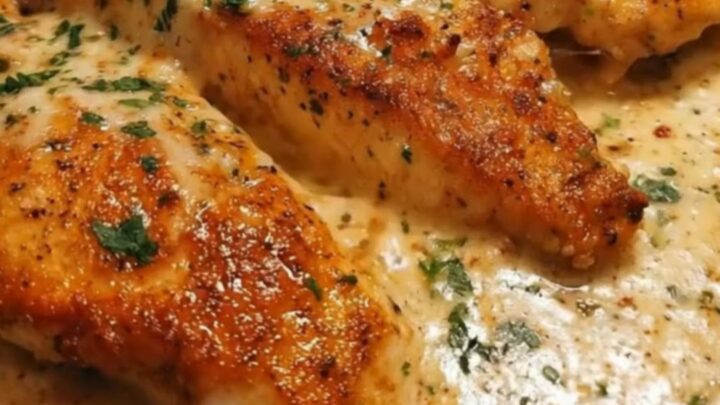
The chicken should be deep golden brown on both sides. The kitchen should smell of browned butter and seared poultry, and the meat should be cooked through to 165°F (74°C) without any signs of pink in the center, ensuring a succulent and safe result.
Developing the cream sauce
- Prepare the sauceIn the same skillet used for the chicken, reduce the heat to medium. Add the minced garlic and sauté until fragrant, about one minute. Pour in the heavy cream, scraping up any browned bits from the bottom of the pan to incorporate the flavor. Bring the cream to a gentle simmer, then stir in the grated parmesan cheese until the sauce is smooth, velvety, and thickened.Look for The sauce will bubble gently and thicken enough to coat the back of a spoon.Tip Use a wooden spoon or spatula to scrape the bottom of the pan thoroughly to capture all the flavor from the chicken drippings.
The garlic should be soft and aromatic, not browned or crispy. The heavy cream should be at a steady, gentle simmer, and the parmesan cheese should be fully incorporated, resulting in a thick, smooth, and pale-colored sauce that coats the spoon.
Finishing the dish
- Combine and serveReturn the rested chicken breasts to the skillet, spooning the creamy garlic parmesan sauce over each piece until well coated. Let the chicken warm through in the sauce for one minute. Sprinkle the finely chopped fresh parsley over the top just before serving directly from the skillet.Look for The sauce should be glossy and clinging to the chicken, with the parsley providing a fresh, vibrant green contrast.Tip Serving directly from the cast-iron skillet helps keep the dish warm throughout the meal.
The chicken should be heated through and coated in the glossy sauce. The final dish should be visually appealing with a distinct separation between the golden-brown chicken and the creamy, herb-flecked sauce, with the fresh parsley providing a bright, clean finish.
Common mistakes
A common mistake is overcrowding the pan, which lowers the surface temperature and causes the chicken to steam instead of sear. Ensure there is enough space between the pieces for moisture to evaporate.
Another error is burning the garlic; keep the heat at a manageable medium level when sautéing. If the sauce becomes too thick, a splash of water or chicken broth can be added to adjust the consistency, but do so sparingly to maintain the rich flavor profile.
How to tell it’s done
The chicken is perfectly cooked when it reaches an internal temperature of 165°F (74°C) measured at the thickest part of the breast. When pressed with a finger, the meat should feel firm but springy.
The sauce is done when it has reduced slightly and coats the back of a spoon with a smooth, glossy consistency. The parmesan should be completely melted and integrated into the heavy cream, resulting in a rich, velvety texture that smells fragrant and savory.
- Poultry: 165°F (74°C) in the thickest part
Up next · Part 3 of 3
2 variations · storage & make-ahead · 3 answers · printable card
Tips, FAQ & printable recipe (Part 3)← Back to the ingredients (Part 1)