Dinner · Part 2 of 3: Instructions
Creamy Garlic Parmesan Cajun Chicken Spaghetti Step-by-step instructions
- Prep
- Cook
- Total
- Serves
- 4
Before you start
Before beginning, organize all ingredients for efficient cooking. Thinly slice the chicken breast cutlets, mince the garlic cloves, and grate the parmesan cheese. Ensure the pasta water is boiling before starting the chicken, as the sauce comes together rapidly once the heavy cream is added.
Having the cajun seasoning measured and ready to use will prevent any issues with over-browning while cooking the meat. Clear the workspace to allow for fluid movement between the stove and the sink.
Ingredients at a glance (6)
- 1 lb chicken breast cutlets, thinly sliced
- 1 tbsp cajun seasoning
- 8 oz spaghetti
- 3 cloves garlic, minced
- 1 cup heavy cream
- 1/2 cup parmesan cheese, grated
Instructions
Searing the chicken
- Sear the seasoned chickenSeason the chicken cutlets generously with cajun seasoning. Heat a nonstick skillet over medium-high heat. Add the chicken in a single layer and cook until deeply browned and cooked through, reaching an internal temperature of 165°F (74°C). Remove the chicken from the skillet and set aside to rest for at least five minutes before slicing.Look for The chicken should be deeply browned on both sides and firm to the touch.Safe temperature 165°F (74°C) internal temperature (poultry)Tip Do not overcrowd the pan, as this prevents the chicken from developing a nice crust.
At this stage, the chicken should be deeply browned and fragrant from the cajun seasoning. The skillet will have small, dark brown bits stuck to the bottom, which are vital for the flavor of the sauce. Ensure the meat is cooked through and has developed a nice crust before removing it from the heat. The chicken should look firm and feel resilient when pressed with tongs, signaling it is ready to be set aside for resting.
Building the sauce
- Prepare the pasta and sauceCook the spaghetti in a large pot of boiling water according to package instructions until al dente. While the pasta cooks, add the minced garlic to the same skillet used for the chicken over medium heat. Sauté the garlic for one minute until fragrant, then pour in the heavy cream and bring to a gentle simmer.Look for The garlic should be soft and aromatic, and the cream should begin to bubble slightly around the edges.Tip Reserve a small amount of pasta water to adjust the sauce thickness if it becomes too concentrated.
The kitchen should smell strongly of garlic and warm dairy. The heavy cream should be bubbling gently, and the garlic should be softened but not burnt. At this point, the sauce should look smooth and begin to thicken slightly.
Check that no garlic pieces have scorched, as this would add a bitter taste. The consistency should be starting to transition from a thin liquid into a more cohesive, velvety state before the cheese is introduced.
Final assembly
- Combine and serveStir the grated parmesan cheese into the simmering cream sauce until melted and smooth. Add the cooked, drained spaghetti directly into the skillet and toss thoroughly to coat each strand in the glossy sauce. Slice the rested chicken into strips and serve alongside the creamy pasta immediately while steaming hot.Look for The sauce should be thick enough to coat the back of a spoon and cling to the spaghetti.Tip Add the chicken at the very end to keep the crispy edges from softening too quickly in the sauce.
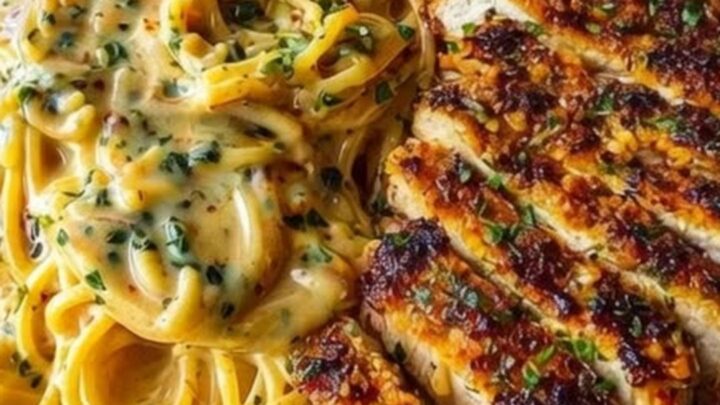
The final dish should look vibrant, with the spaghetti strands completely coated in a rich, creamy, and glossy sauce. The parmesan should be fully incorporated, with no visible clumps remaining.
When plated, the sliced chicken should sit neatly on top, showcasing the contrast between the crispy, blackened exterior and the tender interior. The overall aroma should be savory, garlicky, and slightly spicy, indicating that all the components are balanced and ready for serving.
Common mistakes
A common mistake is adding the parmesan while the sauce is at a rolling boil, which can cause the cheese to separate and create a grainy texture. Always reduce the heat to a low simmer before incorporating the cheese to maintain a silky emulsion.
Another error is failing to rest the chicken; slicing it immediately releases the juices, which thins the sauce and robs the meat of its tenderness. Allow the chicken to rest for at least five minutes to ensure the juices redistribute throughout the fibers.
How to tell it’s done
The chicken is perfectly cooked when it reaches an internal temperature of 165°F (74°C) and the exterior is deep bronze. The sauce is done when it is thick, glossy, and coats the back of a spoon. The pasta should be al dente, offering a slight resistance to the bite. Taste the sauce once the parmesan has melted to ensure the seasoning is balanced, adding more seasoning if desired before combining with the noodles.
- Poultry: 165°F (74°C) in the thickest part
Up next · Part 3 of 3
2 variations · storage & make-ahead · 3 answers · printable card
Tips, FAQ & printable recipe (Part 3)← Back to the ingredients (Part 1)