Dinner · Part 2 of 3: Instructions
Creamy Garlic Herb Beef Roast with Tender Roasted Potatoes Step-by-step instructions
- Prep
- Cook
- Total
- Serves
- 6
Before you start
Start by gathering all your ingredients and ensuring the beef roast is patted dry with paper towels; moisture on the surface is the enemy of a good sear. Preheat your oven to 325°F (163°C) well in advance so it is ready when the meat is browned.
Have your garlic minced and fresh herbs chopped, and ensure your cast-iron pan is clean and ready for immediate use. Preparing these elements ahead of time allows for a seamless transition from the stovetop to the oven, ensuring the process remains stress-free and the timing precise.
Ingredients at a glance (5)
- 3 lb beef roast, such as chuck or round
- 2 lb baby potatoes, halved
- 4 cloves garlic, minced
- 1 cup heavy cream
- 2 tbsp fresh herbs, such as rosemary and thyme
Instructions
Searing and Roasting
- Sear the beefPlace the beef roast into the hot cast-iron pan and sear on all sides until a deep brown crust forms.Look for The meat should be deeply browned and caramelized on all surfaces before proceeding.Tip Ensure the pan is hot enough before adding the meat to get a good sear.
- Roast the beef and potatoesAdd the halved baby potatoes to the pan around the roast. Transfer the pan to a preheated oven at 325°F (163°C). Roast until the beef reaches an internal temperature of 145°F (63°C). Let the meat rest for at least 3 minutes before slicing.Look for The potatoes should be fork-tender and the beef should register the correct temperature.Safe temperature 145°F (63°C) internal temperature (steaks, chops and roasts)Tip Use a meat thermometer to ensure accuracy for the best texture.
At this stage, the beef should have a deep, mahogany-brown crust on all sides. The potatoes should be arranged evenly around the roast, ready to absorb the flavors in the oven. The kitchen should smell wonderful as the meat and herbs begin to release their aromas. Ensure the oven temperature is stable before placing the pan inside to guarantee consistent cooking throughout the roasting duration.
Creating the Cream Sauce
- Prepare the sauceRemove the beef from the pan to a cutting board. Place the pan back on the stovetop over medium heat. Add the minced garlic and sauté until fragrant. Pour in the heavy cream and fresh herbs, simmering until the sauce thickens slightly.Look for The sauce should coat the back of a spoon comfortably.Tip Scrape the bottom of the pan to incorporate the flavorful browned bits into the sauce.
Once the beef is removed, the pan will contain flavorful drippings. As you sauté the garlic, it should become golden and highly fragrant without burning. When the cream and herbs are added, the sauce should begin to thicken into a glossy, velvety consistency. Check that all the browned bits from the bottom of the pan have been fully incorporated, as these are the secret to the depth of the finished sauce.
Final Assembly
- Serve the roastSlice the rested beef roast into thick, tender pieces. Arrange the slices on a serving platter with the roasted potatoes. Pour the glossy garlic herb cream sauce generously over the meat and serve immediately.Look for The sauce should look smooth and glossy over the tender meat.Tip Serve while steaming hot for the best flavor experience.
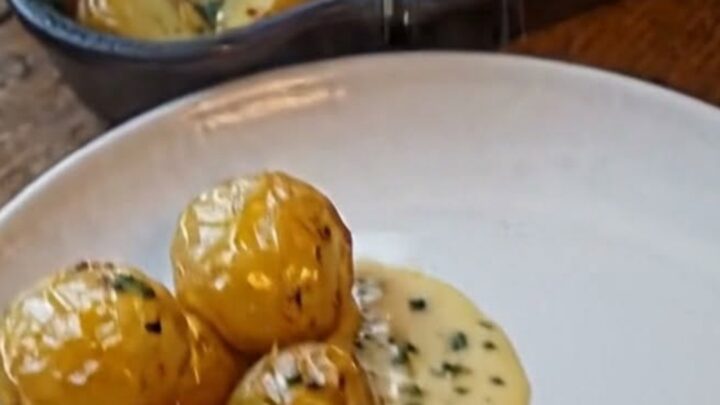
The final dish should feature thick, tender slices of roast beef arranged beautifully alongside the golden, roasted potatoes. The cream sauce should coat the meat and vegetables with a luxurious, silky layer.
Ensure the plate is warm if possible to keep the dish at the perfect serving temperature. The overall appearance should be inviting, with the fresh herbs providing a vibrant pop of color against the rich, creamy sauce.
Common mistakes
Avoid overcrowding the pan during the searing process, as this will steam the meat rather than brown it, preventing the development of that essential caramelized crust.
Another common mistake is rushing the resting phase; cutting into the roast too soon will cause the juices to run out, leaving the meat dry. Finally, be careful not to boil the cream sauce at too high a temperature, as this can cause it to separate or curdle; maintain a gentle simmer for the best texture.
How to tell it’s done
The beef is perfectly cooked when it reaches an internal temperature of 145°F (63°C) for medium-rare to medium doneness, ensuring it stays tender and juicy. Use a reliable meat thermometer inserted into the thickest part of the roast to check this.
If the roast feels firm but has a slight give, it is likely ready. Always allow the meat to rest for at least 15 minutes before slicing, as this allows the juices to redistribute, ensuring every slice remains succulent and flavorful.
- Steaks, chops and roasts: 145°F (63°C) in the thickest part, then a 3-minute rest
Up next · Part 3 of 3
2 variations · storage & make-ahead · 3 answers · printable card
Tips, FAQ & printable recipe (Part 3)← Back to the ingredients (Part 1)