Dinner · Part 2 of 3: Instructions
Creamy Garlic Chicken Rigatoni in One Skillet Step-by-step instructions
- Prep
- Cook
- Total
- Serves
- 4
Before you start
Before turning on the stove, organize your workspace and prepare all your ingredients. Dice the chicken breasts into uniform, bite-sized pieces so they cook evenly. Mince the garlic cloves finely, and grate your fresh parmesan cheese.
Chop the fresh parsley and set it aside for the final garnish. Having these elements ready prevents the garlic or cream from burning while you scramble to prep, ensuring a smooth and stress-free cooking process from start to finish.
Ingredients at a glance (8)
- 12 oz rigatoni pasta
- 1.5 lb boneless skinless chicken breasts, cut into bite-sized pieces
- 2 tbsp olive oil
- 1 tbsp chicken seasoning
- 4 cloves garlic, minced
- 1.5 cups heavy cream
- 1 cup grated parmesan cheese
- 2 tbsp fresh parsley, minced
Instructions
Boiling the Pasta and Seasoning the Chicken
- Boil the RigatoniBring a large pot of salted water to a boil. Add the rigatoni and cook according to the package directions until al dente. Drain the pasta, reserving half a cup of the starchy cooking water, and set aside.Look for The pasta should be tender but still retain a firm bite in the center.Tip Never rinse the pasta after draining; the surface starch helps the cream sauce cling to each tube.
- Season the ChickenPat the chicken pieces dry with paper towels. In a medium bowl, toss the chicken pieces with the chicken seasoning until evenly coated on all sides.Look for The chicken pieces should look uniformly covered in seasoning.Tip Drying the chicken thoroughly with paper towels is crucial for achieving a deep, golden sear.
At the end of this initial phase, the rigatoni should be cooked to a firm al dente texture, drained, and set aside while reserving some of the starchy cooking water. The chicken pieces must be completely dry before seasoning, ensuring the chicken seasoning adheres perfectly to the surface. The seasoned meat should look evenly coated and smell highly aromatic, ready to hit the hot skillet for searing.
Searing the Protein and Simmering the Cream Sauce
- Sear the Seasoned ChickenHeat the olive oil in a large skillet over medium-high heat. Add the seasoned chicken pieces in a single layer and sear without moving for 3 minutes to develop a golden crust. Flip and cook for another 3 to 4 minutes until the chicken is fully cooked through to an internal temperature of 165°F (74°C). Remove the chicken from the skillet and set aside on a clean plate.Look for The chicken should have a beautiful golden-brown crust on both sides.Safe temperature 165°F (74°C) internal temperature (poultry)Tip Avoid overcrowding the skillet; cook the chicken in batches if necessary to ensure proper searing.
- Sauté Garlic and Simmer CreamReduce the skillet heat to medium. Add the minced garlic to the remaining oil and pan drippings, stirring constantly for about 1 minute until fragrant but not browned. Pour in the heavy cream, scraping up the browned bits from the bottom of the skillet with a wooden spoon. Bring the mixture to a gentle simmer.Look for The garlic should smell aromatic and the heavy cream should begin to bubble gently.Tip Scraping up the browned bits, or fond, from the bottom of the pan infuses the sauce with incredible savory flavor.
- Melt the Parmesan CheeseGradually whisk the grated parmesan cheese into the simmering heavy cream. Stir constantly for 2 to 3 minutes until the cheese is completely melted and the sauce turns thick, smooth, and velvety.Look for The sauce should coat the back of a spoon smoothly without any grainy cheese clumps.Tip Add the parmesan cheese in small handfuls, letting each batch melt completely before adding more.
By the end of this phase, the chicken is beautifully charred, golden-brown, and cooked through to a safe internal temperature. The skillet will be filled with a bubbling, velvety garlic cream sauce that has thickened slightly after the parmesan cheese is fully melted. The sauce should coat the back of a spoon smoothly, smelling intensely of sweet garlic and rich, savory cheese.
Combining the Elements and Garnishing the Dish
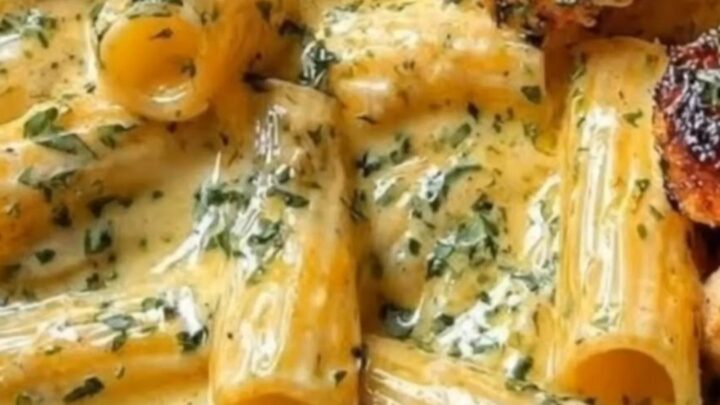
- Toss Pasta and Chicken in SauceAdd the cooked rigatoni and the seared chicken back into the skillet with the bubbling garlic cream sauce. Toss everything together over low heat for 1 to 2 minutes until the pasta is thoroughly coated. If the sauce is too thick, stir in a splash of the reserved pasta water.Look for The rigatoni tubes should be completely filled and coated with the glossy sauce.Tip The starchy pasta water acts as an emulsifier, helping to create a silky, unified sauce.
- Garnish and ServeRemove the skillet from the heat. Garnish the creamy rigatoni and chicken with the fresh minced parsley, and serve immediately while steaming hot.Look for The dish should look vibrant with green parsley scattered across the golden chicken and creamy pasta.Tip Serve this dish immediately, as cream-based sauces will continue to thicken and set as they cool.
At the final checkpoint, the rigatoni and seared chicken are fully integrated into the garlic cream sauce, with every tube of pasta glossy and well-coated.
The sauce should be bubbling gently and clinging to the pasta without pooling excessively at the bottom of the skillet. The dish is finished with a vibrant sprinkle of fresh green parsley, creating a beautiful contrast against the rich, creamy sauce.
Common mistakes
One common mistake is overcrowding the skillet when searing the chicken. If the chicken pieces are packed too tightly, they will steam in their own juices instead of developing a deep, golden-brown crust. Sear the chicken in batches if necessary.
Another frequent error is boiling the cream sauce on high heat, which can cause the dairy to split or curdle. Keep the heat at a gentle simmer, and stir constantly when adding the parmesan to ensure a perfectly smooth emulsion.
How to tell it’s done
The chicken is done when it is golden-brown on the outside and reaches a safe internal temperature of 165°F (74°C) when tested with an instant-read meat thermometer in the thickest part.
The pasta is done when it is al dente, meaning it still has a slight bite in the center. The sauce is properly reduced when it coats the back of a wooden spoon and does not run off immediately, indicating a rich, velvety consistency.
- Poultry: 165°F (74°C) in the thickest part
Up next · Part 3 of 3
2 variations · storage & make-ahead · 3 answers · printable card
Tips, FAQ & printable recipe (Part 3)← Back to the ingredients (Part 1)