Dinner · Part 2 of 3: Instructions
Creamy Garlic Chicken Bowtie Pasta with Mushrooms Step-by-step instructions
- Prep
- Cook
- Total
- Serves
- 4
Before you start
Before starting the cooking process, organize all ingredients to ensure a smooth workflow. Slice the mushrooms evenly and mince the garlic cloves. Chop the boneless, skinless chicken breasts into bite-sized pieces.
Measure out the heavy cream, grate the fresh parmesan cheese, and set them aside. Bring a large pot of water to a rolling boil so the pasta can cook concurrently with the chicken and sauce preparation, ensuring everything finishes at the perfect moment.
Ingredients at a glance (7)
- 12 oz bowtie pasta
- 1 lb boneless skinless chicken breasts, cut into bite-sized pieces
- 4 tbsp butter, divided
- 8 oz sliced mushrooms
- 3 cloves garlic, minced
- 1 cup heavy cream
- 1/2 cup grated parmesan cheese
Instructions
Pasta Boiling and Chicken Searing
- Boil the Bowtie PastaBring a large pot of water to a rolling boil. Add the bowtie pasta and cook according to the package instructions until al dente. Reserve a half cup of the pasta cooking water, then drain the pasta and set it aside.Look for The pasta should be tender but still hold a firm bite in the center.Tip Stirring the pasta occasionally during the first few minutes of boiling prevents it from sticking together.
- Sear the Chicken BreastMelt half of the butter in a large skillet over medium-high heat. Add the chicken breast pieces in a single layer. Cook, stirring occasionally, until the chicken is golden brown and cooked through to a safe internal temperature of 165°F (74°C). Transfer the chicken to a plate.Look for The chicken pieces should be beautifully browned with no pink remaining.Safe temperature 165°F (74°C) internal temperature (poultry)Tip Avoid crowding the skillet so the chicken sears rather than steams.
At the end of this first phase, the bowtie pasta should be boiled to an al dente texture, holding its shape with a slight bite. Meanwhile, the chicken pieces in the skillet should be beautifully browned on all sides, releasing a savory, roasted aroma.
The chicken must be fully cooked through, showing no pinkness, and reaching a safe internal temperature of 165°F (74°C) before being transferred to a plate to rest.
Sautéing Mushrooms and Garlic
- Sauté the Mushrooms and GarlicIn the same skillet over medium heat, melt the remaining butter. Add the sliced mushrooms and sauté until they are tender and golden brown, about five minutes. Stir in the minced garlic and cook for one minute until highly fragrant, being careful not to burn the garlic.Look for The mushrooms should be browned and the garlic should smell rich and sweet.Tip Scrape the bottom of the skillet to loosen the delicious browned chicken bits.
During this second phase, the sliced mushrooms should transform from pale and firm to deeply golden brown and tender, having absorbed the rich garlic butter. The kitchen will be filled with a highly fragrant aroma of toasted garlic and earthy mushrooms. There should be no raw garlic smell remaining, and the mushrooms should have shrunk slightly in size, with caramelized edges ready to enrich the sauce.
Sauce Assembly and Final Toss
- Build the Cream SauceReduce the heat to low and pour the heavy cream into the skillet, stirring to combine with the mushrooms and garlic. Bring to a gentle simmer, then gradually stir in the grated parmesan cheese until fully melted and the sauce becomes smooth and slightly thickened.Look for The sauce should bubble gently and coat the back of a spoon smoothly.Tip Keep the heat low to prevent the cream from splitting or the cheese from clumping.
- Combine and ServeAdd the cooked bowtie pasta and seared chicken pieces back into the skillet. Toss everything together gently until the pasta and chicken are thoroughly coated in the creamy sauce. If the sauce is too thick, stir in a splash of the reserved pasta water.Look for The dish should be piping hot and evenly coated in a glossy cream sauce.Tip Let the combined pasta sit for one minute off the heat to absorb the flavors.
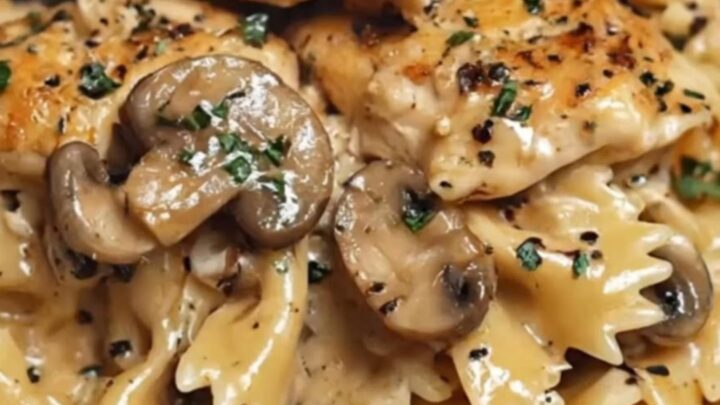
In this final phase, the heavy cream and grated parmesan cheese should merge into a cohesive, bubbly, and thickened ivory sauce. When the bowtie pasta and seared chicken are tossed back into the skillet, the sauce should coat every piece evenly without pooling at the bottom. The finished dish should look glossy, steam gently, and exude a rich, cheesy, and garlic-infused aroma that signals it is ready to serve.
Common mistakes
One common mistake is crowding the skillet when searing the chicken or sautéing the mushrooms, which causes them to steam in their own juices rather than brown beautifully. Cook them in batches if necessary to maintain high heat.
Another frequent error is boiling the heavy cream over excessively high heat, which can cause the dairy to split or the parmesan cheese to become stringy and clump. Always lower the heat to a gentle simmer before stirring in the cream and cheese to ensure a silky, emulsified sauce.
How to tell it’s done
To determine doneness, the chicken must reach a safe internal temperature of 165°F (74°C) when tested with an instant-read digital food thermometer. The pasta should be cooked until al dente, meaning it is tender but still offers a firm bite in the center.
The cream sauce is perfectly done when it thickens enough to coat the back of a spoon, leaving a clear path when a finger is drawn through it, indicating it will cling beautifully to the bowtie pasta.
- Poultry: 165°F (74°C) in the thickest part
Up next · Part 3 of 3
2 variations · storage & make-ahead · 3 answers · printable card
Tips, FAQ & printable recipe (Part 3)← Back to the ingredients (Part 1)