Dinner · Part 2 of 3: Instructions
Creamy Garlic Butter Beef Rigatoni Step-by-step instructions
- Prep
- Cook
- Total
- Serves
- 4
Before you start
Before beginning, ensure all ingredients are measured and ready at your workstation. Mince the garlic finely so it integrates smoothly into the sauce. Grate the parmesan cheese ahead of time to ensure it is ready to be folded into the sauce quickly.
Have a large colander placed in the sink for draining the pasta, and make sure your skillet is large enough to accommodate both the meat sauce and the cooked rigatoni comfortably without overcrowding.
Ingredients at a glance (7)
- 1 lb rigatoni
- 1 lb ground beef
- 3 cloves garlic, minced
- 2 tbsp butter
- 1 cup tomato sauce
- 1/2 cup parmesan cheese, grated
- fresh parsley, for serving
Instructions
Pasta preparation
- Cook the pastaBring a large pot of salted water to a boil. Add the rigatoni and cook according to the package instructions until al dente. Drain the pasta using a colander and set aside.Look for The pasta should be firm to the bite but cooked through.Tip Reserve a splash of pasta water to help thin the sauce later if needed.
The pasta should be cooked in a large pot of boiling salted water until it reaches an al dente state. It is essential to drain it thoroughly but avoid rinsing it, as the starch on the surface helps the sauce adhere better to the rigatoni. Once drained, set the pasta aside and keep it covered to maintain warmth while you prepare the meat sauce in the skillet.
Beef browning
- Brown the beefIn a large skillet over medium-high heat, cook the ground beef until browned and no longer pink. Ensure the internal temperature reaches at least 160°F (71°C). Drain excess fat from the skillet if necessary.Look for The beef should be deeply browned and cooked through with no pink remaining.Safe temperature 160°F (71°C) internal temperature (ground meat)Tip Use a wooden spoon to break the beef into small, uniform crumbles for better texture.
The ground beef should be cooked in a large skillet over medium-high heat until it is deeply browned and no longer shows any pink color. Use a wooden spoon to break it down into small, even crumbles. The skillet should smell savory and fragrant, and you should see a good amount of fond developing at the bottom of the pan, which will add significant depth to the final sauce.
Sauce finishing
- Prepare the sauce and combineAdd the butter and minced garlic to the skillet with the beef. Sauté for one minute until fragrant. Pour in the tomato sauce, bringing the mixture to a gentle simmer. Stir in the parmesan cheese until melted and smooth. Add the cooked rigatoni to the skillet and toss until evenly coated in the sauce. Serve immediately, garnished with fresh parsley.Look for The sauce should be thick, glossy, and cling to the ridges of the pasta.Tip Do not overcook the sauce to prevent it from separating.
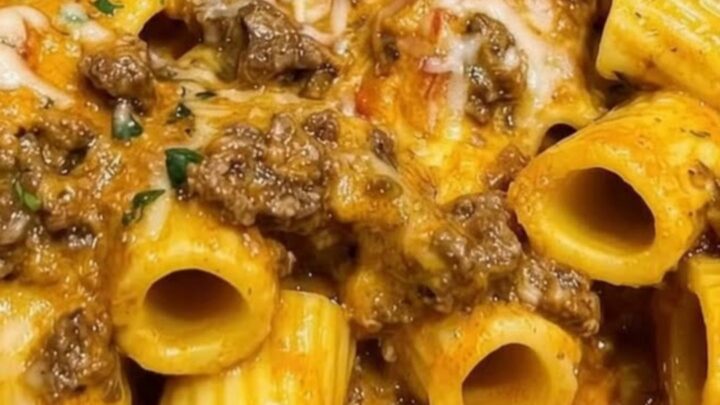
The final sauce should be smooth, creamy, and have a rich orange-red color from the combination of tomato sauce and cheese. The garlic should be aromatic without any signs of burning.
When the pasta is tossed in, the sauce should coat every ridge of the rigatoni evenly. The dish should look glossy and inviting, with the cheese fully melted and incorporated into the velvety texture of the sauce.
Common mistakes
Avoid overcooking the pasta, as it will continue to soften slightly when tossed with the hot sauce. Another common mistake is adding the cheese over high heat, which can cause the sauce to split or become grainy.
Always keep the heat at a gentle simmer once the dairy components are introduced. Additionally, ensure the beef is thoroughly drained of excess fat before adding the sauce ingredients; too much residual grease can make the final dish feel overly heavy and oily.
How to tell it’s done
The dish is done when the rigatoni is cooked to an al dente texture, meaning it is tender but still offers a slight resistance when bitten. The beef must be fully cooked, reaching an internal temperature of at least 160°F (71°C) to ensure safety.
The sauce should be thickened, glossy, and uniformly coating the pasta with a rich, creamy consistency that holds well on the plate and does not pool excessively at the bottom.
- Ground meat: 160°F (71°C) in the thickest part
Up next · Part 3 of 3
2 variations · storage & make-ahead · 3 answers · printable card
Tips, FAQ & printable recipe (Part 3)← Back to the ingredients (Part 1)